DePIN and crypto gaming led a surprising end-of-year rebound
BTC finished the week up 1.6%, while L2s, RWAs and the treasury trade continued to grind lower

Shutterstock AI/Adobe modified by Blockworks
This is a segment from the 0xResearch newsletter. To read full editions, subscribe.
It was a mixed week for crypto, with BTC ending higher but sharp divergence across sectors. DePIN and Gaming led a surprising rebound after a rough year, while L2s, RWAs and the treasury trade continued to grind lower as flows stayed choppy.
To add some insight to the new year, we’ve rounded up some weekend reads on stablecoin yield, payments infrastructure, interoperability and last year’s fastest-moving narratives.
Indices
With a shortened equity trading week due to the holidays, the focus shifts to crypto performance over the past week. BTC finished the week up 1.6%, though performance across altcoins remains highly fragmented.
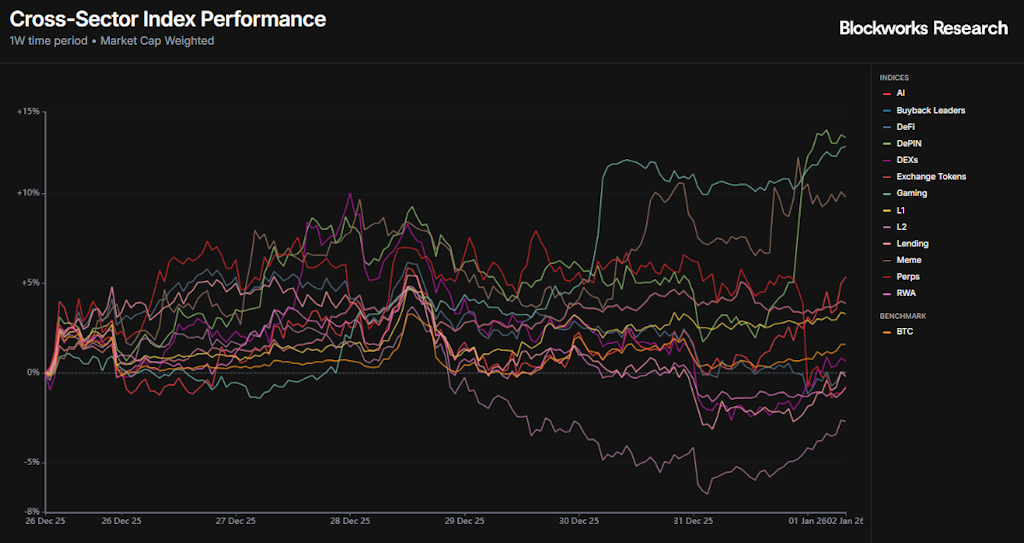
The biggest movers may come as a surprise. DePIN and Gaming led all sectors with gains of 13.1% and 12.6%, respectively. These have been two of the weakest performers in 2025, down -79.5% and -81.3% on the year, making the rebound notable.
DePIN strength was driven by FIL and RENDER, which rose 22% and 13% on the week and together account for 49% of the index. Gaming followed a similar pattern, with IMX up 11%, doing most of the heavy lifting for the sector.
On the downside, L2s and RWAs lagged, falling -2.67% and -0.84% over the week. L2 weakness was led by MNT and ZORA, down -5.7% and -6.4%. At the same time, other L2 names such as OP, ARB, and ZK posted gains between 10% and 20%, highlighting sharp divergence within the sector. RWAs were pressured by a pullback in Gold after its strong run this year, with PAXG and XAUT both down around -3.4%.
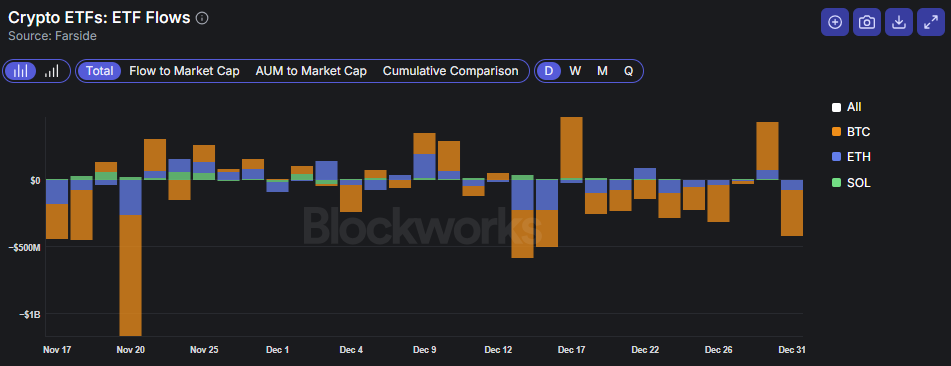
Flows remain choppy. On Dec. 31, ETFs saw $417.8 million of outflows, nearly offsetting the $428.2 million of inflows recorded the day prior.
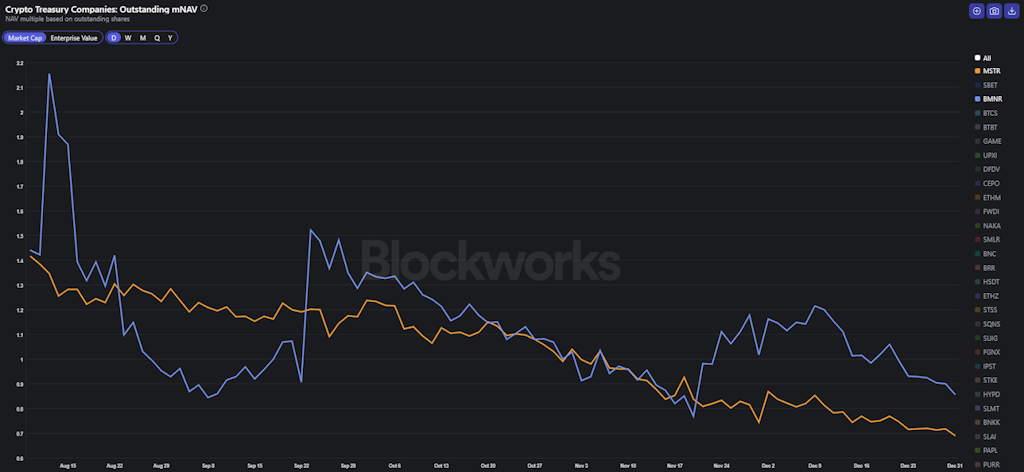
Digital asset treasuries continue to feel the strain, with mNAV multiples compressing further. MSTR and BMNR now trade at mNAV levels of 0.69 and 0.85, underscoring the pressure on the treasury trade as the new year begins.
Recommended end-of-year analyses
Neutrl: Unlocking Institutional OTC Yield for Stablecoins
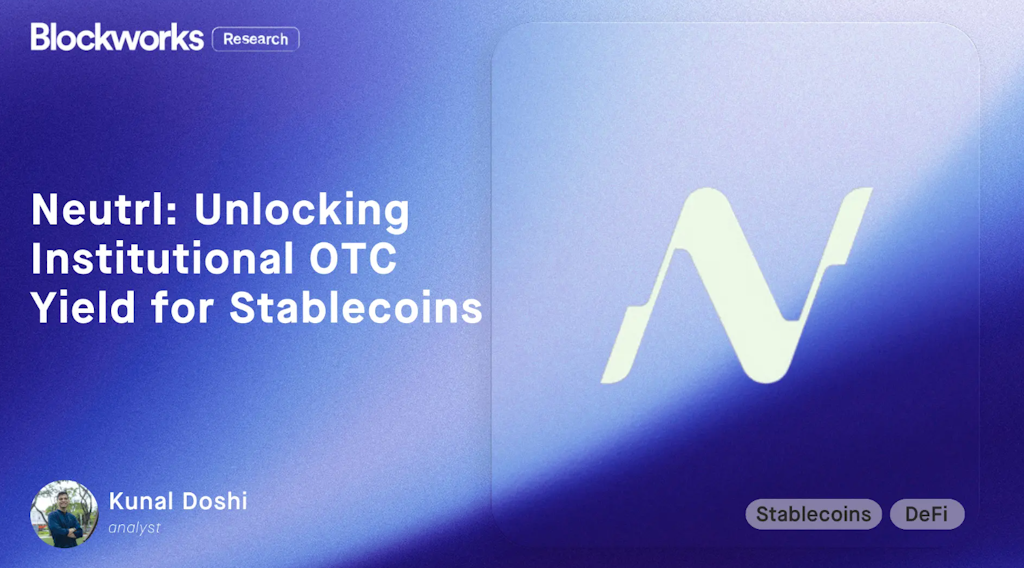
Blockworks Research finds that Neutrl brings institutional-grade OTC arbitrage into a stablecoin wrapper, offering market neutral yields that are less reliant on funding cycles than existing synthetic dollars. Early traction and double-digit sNUSD yields suggest strong demand, supported by deep token unlock pipelines and privileged OTC access via STIX. The core upside rests on scalable deployment into hedged OTC deals, while risks center on execution, counterparty performance and liquidity management. If yields hold as TVL grows, Neutrl could mirror early Ethena dynamics in a more structurally defensive form.
Crypto Card Moats
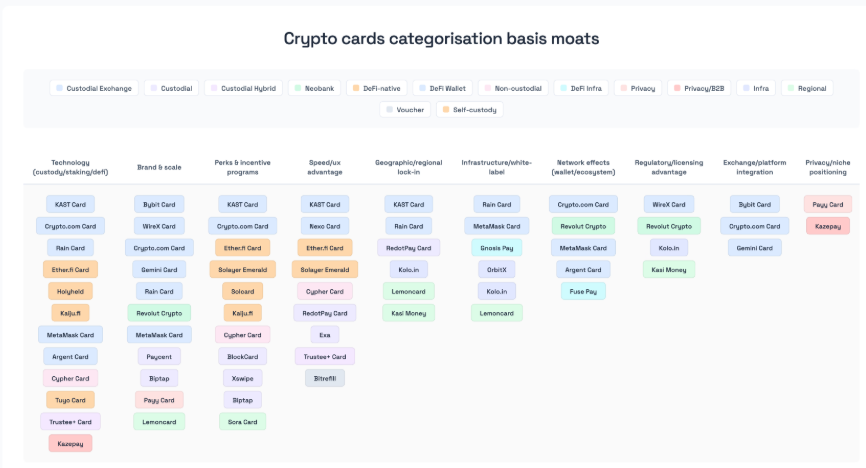
Polaris Fund finds that crypto cards and neobanks have reached a real inflection point where value is shifting away from rewards and branding toward infrastructure, compliance and liquidity control. The analysis shows that durable moats come from owning primitives like regulated access, programmable liquidity and deep integrations, not cashbacks. Infra rail providers and DeFi native card models capture the most leverage through recurring fees and aligned economics, while CeFi distributors face margin compression. As regulation tightens, scale will increasingly favor players that control licensing, settlement and compliance workflows rather than consumer-facing incentives.
25 Stats Explaining How LayerZero Accelerated Crypto in 2025
LayerZero finds that 2025 marked the shift of interoperability from a theory into core infrastructure for crypto. Data shows tokenized assets and stablecoins increasingly distributed across many chains, with interoperability accelerating asset velocity, capital mobility and global access. Rather than chains competing in isolation, crypto now functions as a connected network where value moves freely to where demand exists. Adoption of message-based transfers and open primitives reduced costs and friction, making cross-chain activity feel more like software than finance. Interoperability is no longer the bottleneck, but the default layer enabling scale.
2025: The Year Narratives Moved Too Fast
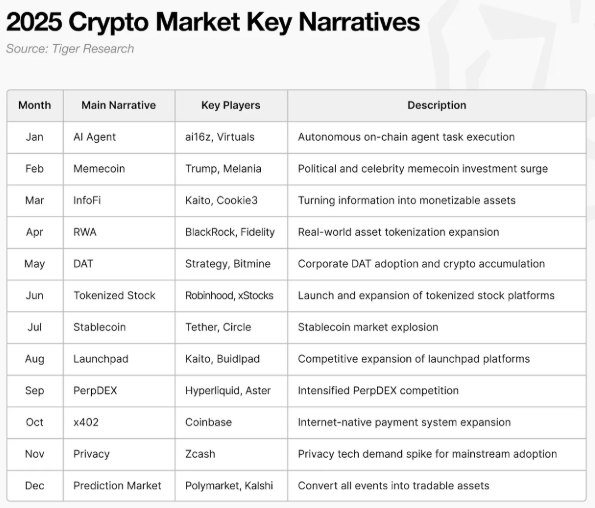
Tiger Research finds that 2025 was defined by rapid narrative cycles that generated attention faster than they could be validated, leading to widespread fatigue and skepticism. Most narratives faded quickly, but a subset translated into real use cases that pushed the market forward, particularly where retail access was simple and intuitive. Memecoins showed how quickly users can onboard, but also how fragile engagement is without retention. Experiments like InfoFi highlighted incentive-driven growth but exposed quality and trust issues. The clearest progress came where crypto demonstrated product-market fit, including stablecoins, prediction markets and payment rails, showing that durable value emerges only when narratives align with real utility.
Get the news in your inbox. Explore Blockworks newsletters:
- The Breakdown: Decoding crypto and the markets. Daily.
- 0xResearch: Alpha in your inbox. Think like an analyst.