Friday charts: Finding good news, in spite of bad headlines
2025 was far from perfect, but much better than we think it was.
TonStocker/Romolo Tavani/Shutterstock and Adobe modified by Blockworks
This is a segment from The Breakdown newsletter. To read full editions, subscribe.
“Despite what we hear on the news… the great story of our era is that we are witnessing the greatest improvement in global living standards ever to take place.”
— John Norberg
As years go, 2025 was a pretty good one, I think.
Derek Thompson goes so far as to say it was “an exceptional year for America,” citing, among other things, huge declines in traffic deaths, drug overdoses and suicides, the largest-ever drop in murder rates, and dramatic advances in healthcare.
“This seems to be the first period on record when every major cause of premature death — overdose, auto accident, homicide, obesity — is falling at the same time,” he adds.
Noah Smith similarly lists 10 reasons America might be “putting itself back together,” including rising life expectancy, peaking social media usage, and a surge in business dynamism.
Most comprehensively, Human Progress collates 1,084 good-news stories reported this year: everything from the astonishing decline of poverty in India to the return of puffins to the UK.
If I wasn’t a regular reader of the Human Progress website, I’m not sure I’d be familiar with any of them, because good news rarely makes headlines.
This has always been the case — as the old newsroom saying goes, “If it leads, it bleeds.”
But it’s even more true now. In the fierce competition for our scarce attention, news outlets appear to be doubling down on the traditional strategy of terrifying us with bad news.
In 2022, an academic study found “a pattern of increasing negative sentiment in headlines.” Specifically, headlines in 2019 were found to be 314% more likely to reflect anger, disgust, fear or sadness compared to 2000.
It feels like things have only gotten worse since.
“We are experiencing a contagion of negativity,” Marain Tupy warns, “driven by the hypercompetitive media environment, with newspapers, television stations, radio and websites presenting a highly skewed picture of the state of the world.”
The state of the world was far from perfect in 2025, of course. War continued to rage, the climate continued to warm, governments continued to fall ever deeper in debt, migrants everywhere continued to be persecuted.
But the world is almost certainly better than we think it is.
Consider the Gallup poll that found that 81% of Americans are satisfied with the way things are going in their life — and only 20% are satisfied with the way things are going in the country.
“A country cannot be doing that poorly if a supermajority of its citizens are having an excellent time,” Malcolm Cochran observes.
Or consider as well the “affordability crisis” that is currently making headlines. After examining the evidence, The Economist concludes that “never has life been so affordable in America for so many.”
Excellent news! But I suspect that won’t get many clicks.
So here’s my New Year’s resolution: Give more of my clicks to reports of good news.
Let’s check the charts.
All the bad news that’s fit to print:
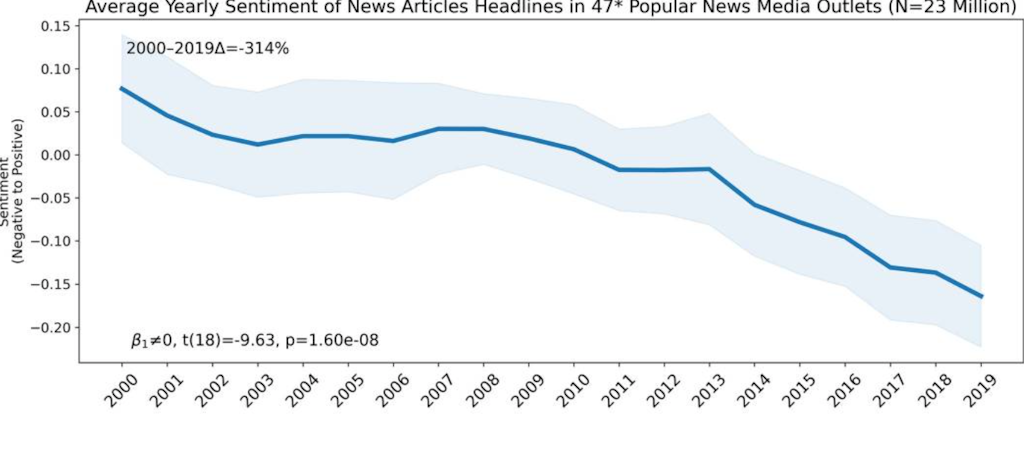
Here’s the graphic from the study finding “a pattern of increasing negative sentiment in headlines.” Whatever the current state of the world, it’s not 314% worse than it was in 2000.
I’m alright, but we’re not:
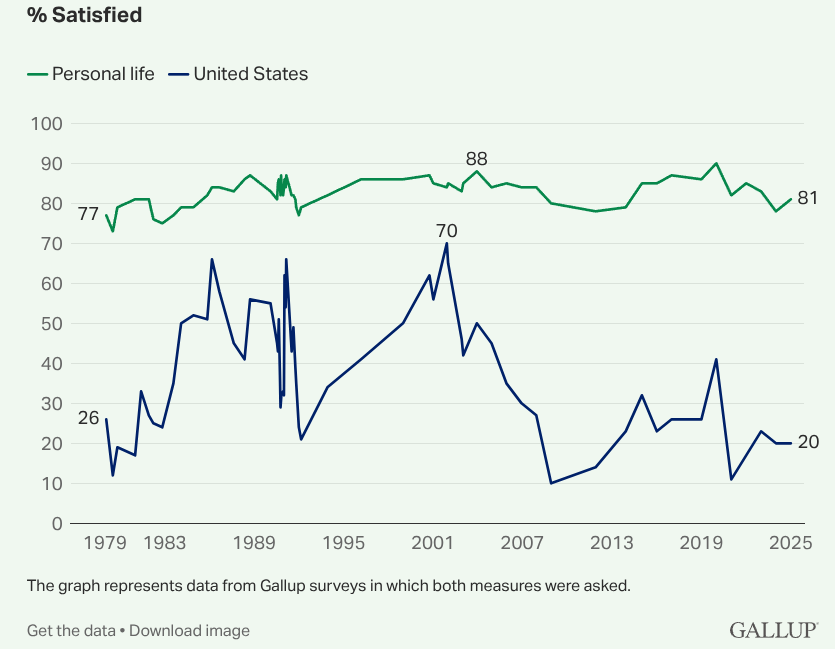
The aforementioned Gallup poll: 81% of Americans say they are satisfied with their lives but only 20% say they are satisfied with America.
The kids are not alright:
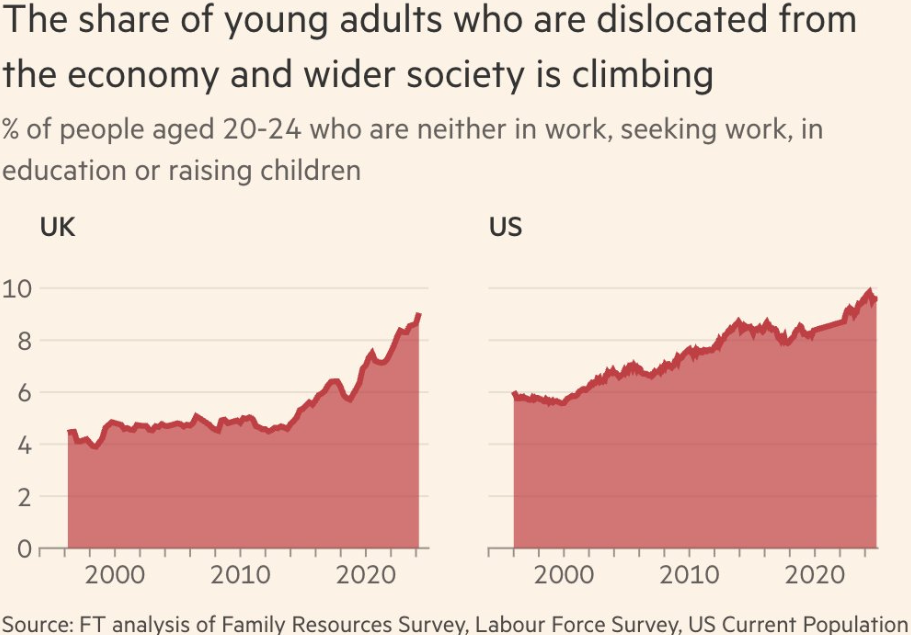
As measured by employment and parenthood, the FT reports that young adults are becoming increasingly disengaged from society. I’m guessing this upward trend is at least partially caused by the upward trend in negative headlines.
Not making headlines:
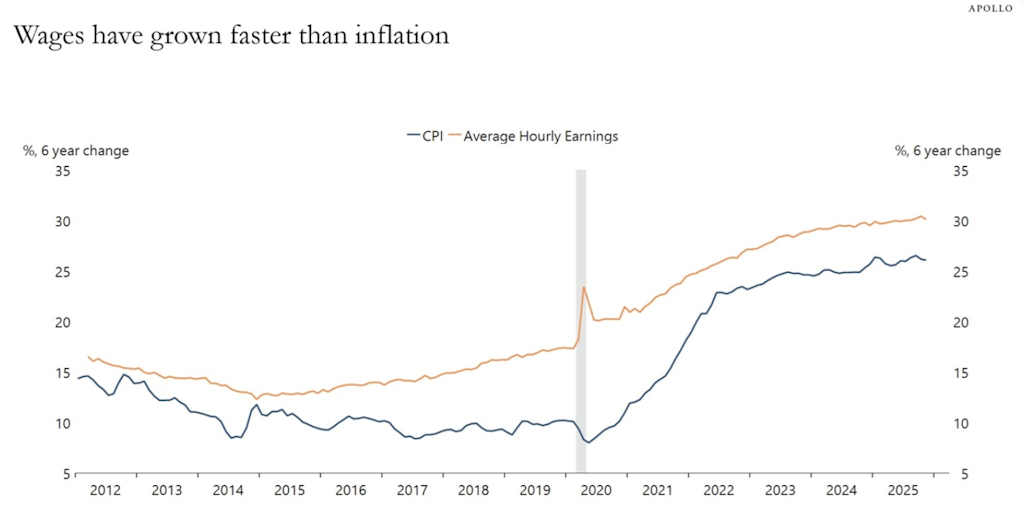
For all the hand-wringing over the “affordability crisis,” wages have grown faster than prices for the last decade, at least. In other words, things have gotten more affordable, not less. (Yes, this accounts for housing.)
Sentiment disconnect:
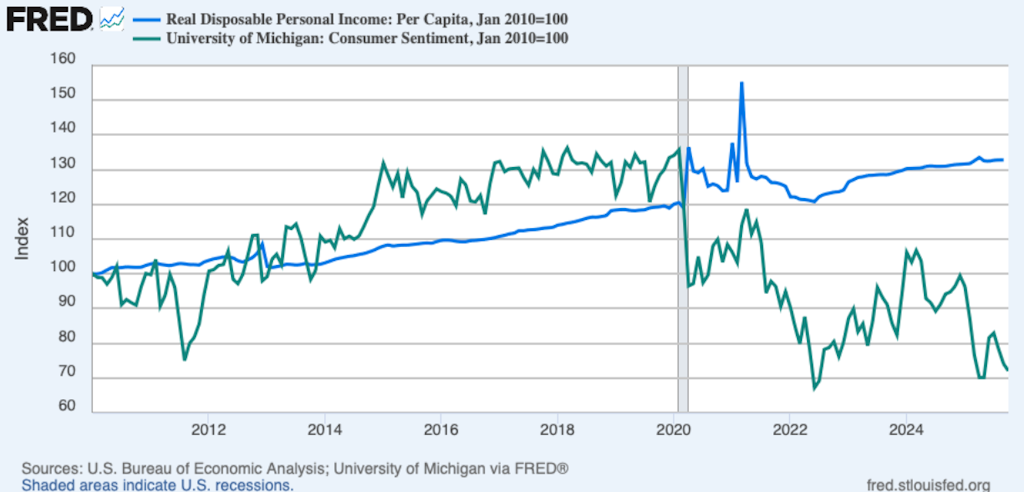
Starting with the pandemic, consumer sentiment (in green) decoupled from real disposable income (blue) and has never recovered. More than ever, people are more pessimistic than the data suggests they should be.
Some other things that never recovered:
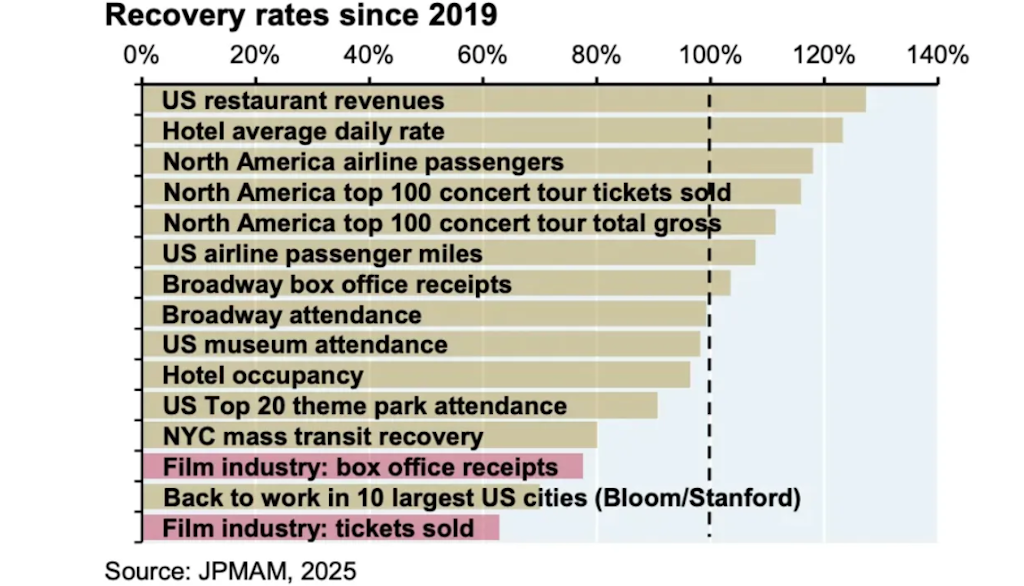
JPMorgan finds that things like restaurants and air travel have fully recovered from the pandemic, but the film industry and mass transit have not.
Trend change?
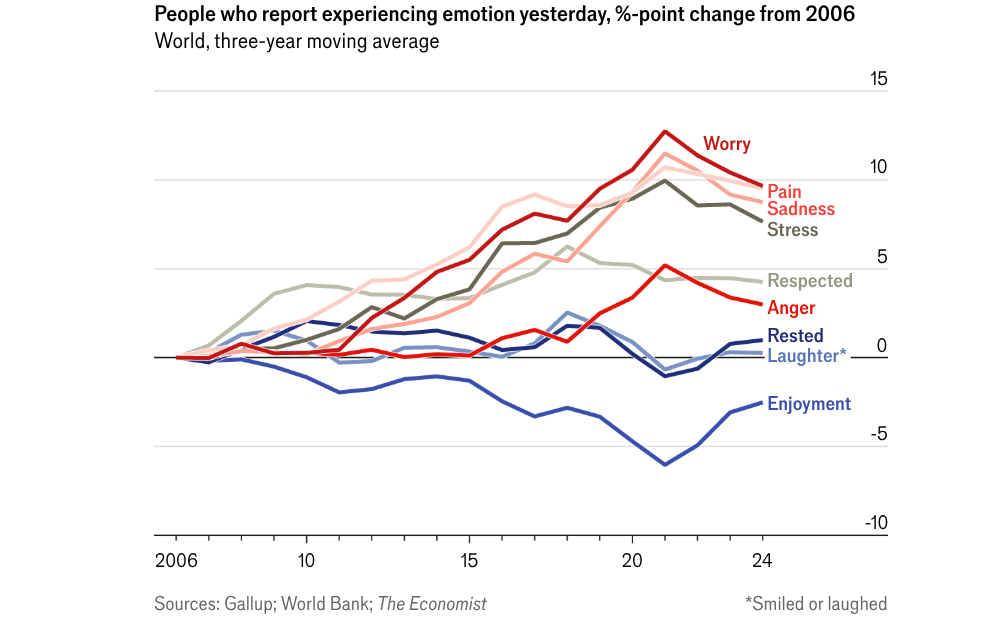
The Economist reports that “the world has become surprisingly less grump.” Feelings of worry, stress and anger are off their highs, while feelings of laughter are recovering.
Generation alpha is here:
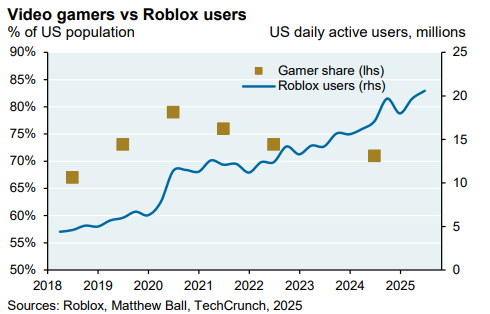
Over 20% of Americans now play Roblox daily. I don’t know what that means for America, but I’m sure it means something.
The changing world:
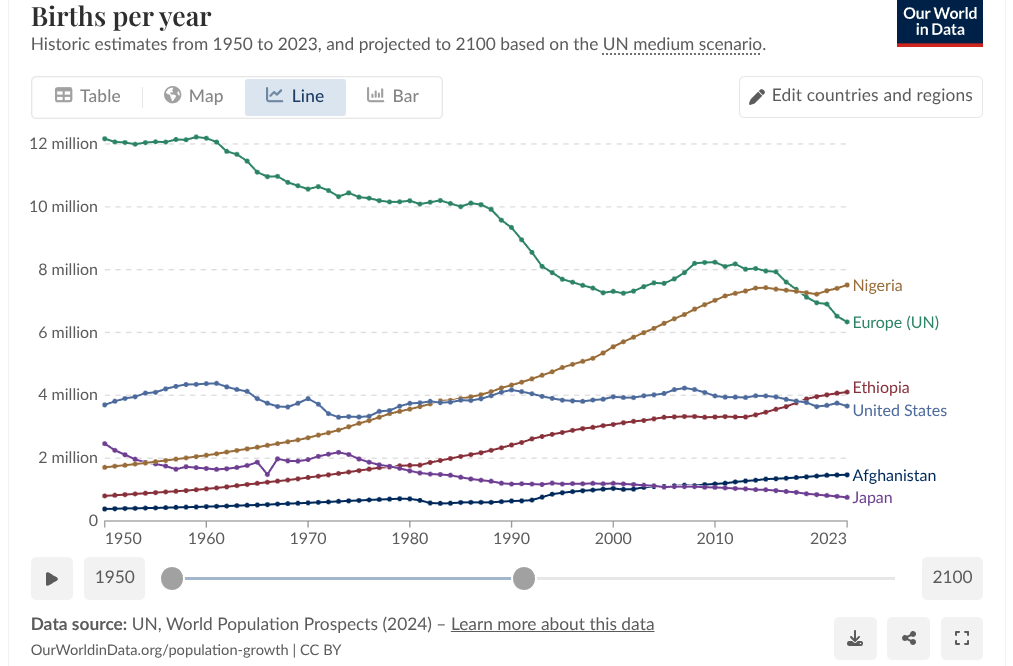
There are now more births per year in Nigeria than all of Europe; more in Ethiopia than the US; and more in Afghanistan than Japan.
In 2026, maybe there will be more optimists than pessimists, too.
I doubt it would make the news, though.
Have a great year, headline readers.
Get the news in your inbox. Explore Blockworks newsletters:
- The Breakdown: Decoding crypto and the markets. Daily.
- 0xResearch: Alpha in your inbox. Think like an analyst.