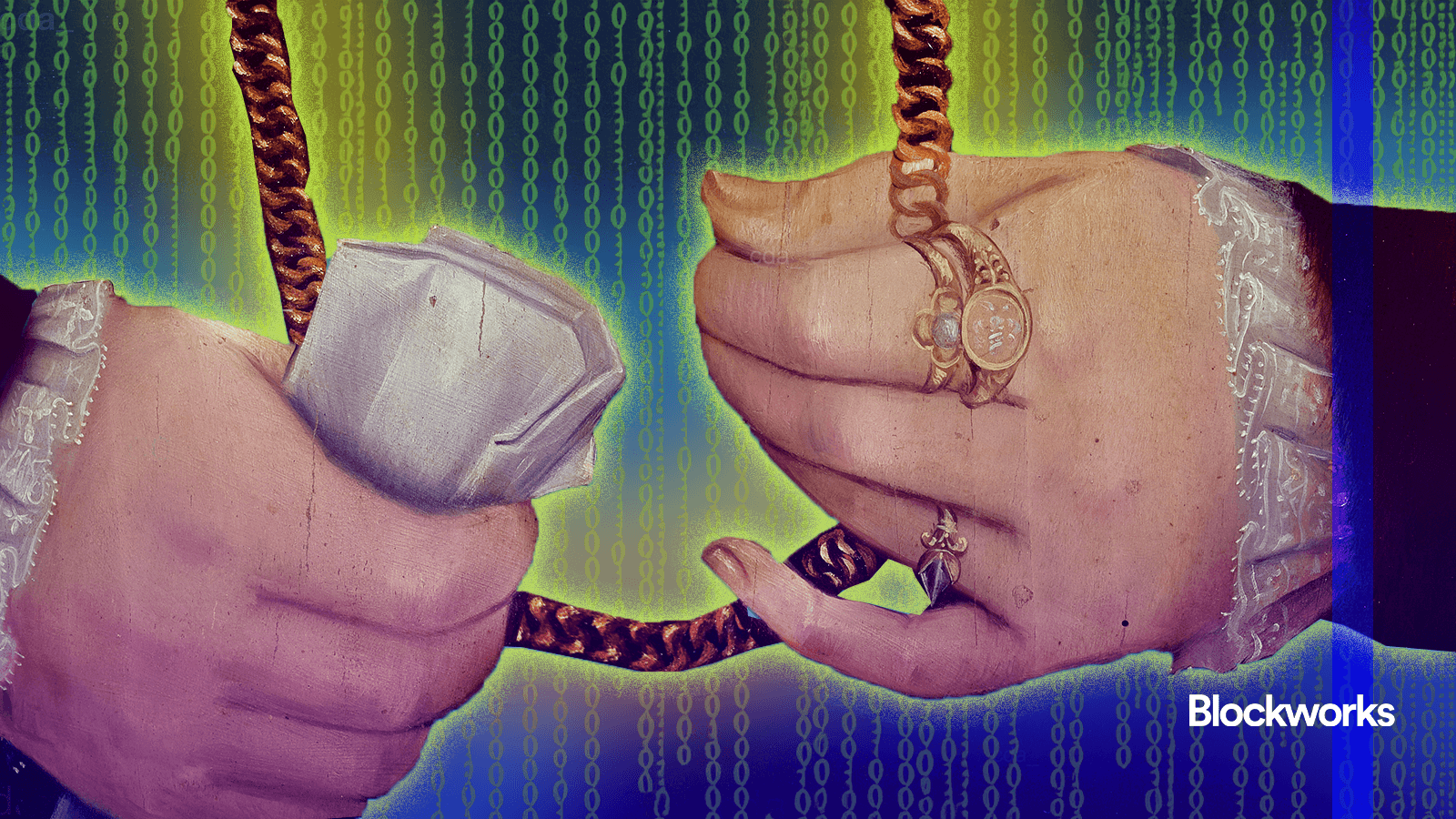
Georg Cracow by Lucas Cranach | Cranach Digital ArchivePortrait of Georg Cracow"
This is a segment from The Breakdown newsletter. To read full editions, subscribe.
“The house of every one is to him as his castle and fortress.”
— Sir Edward Coke, the Attorney General of England, 1604
In 1604, the Court of King’s Bench decided what’s now known as Semayne’s Case in favor of the defendant, Richard Gresham. Gresham had refused to open his door for a sheriff seeking to seize goods in Gresham’s possession to cover a debt.
Establishing what would become a foundational privacy principle — the home as a protected sanctuary — Sir Edward Coke reported that “the house of every one is to him as his castle and fortress.”
But even as Coke established those castle walls, he left open a gate for the King’s men to breach them: The court held that officers of the law, if in pursuit of criminal matters, were permitted to break down doors if they had to (but only after announcing themselves first).
421 years later, that’s still about where things stand.
Semayne’s Case is the ancestral reason why American law enforcement is today required to knock on your door and announce their presence when they have some business there — and also why they can, in some circumstances, knock the door down.
The Fourth Amendment protects against the search of your castle and seizure of your goods, but only if it’s unreasonable.
That is approximately the current state of financial privacy, too: Your banking transactions are private in the sense that your bank keeps them behind closed doors for only you to see.
But if law enforcement comes knocking, they have to open the door for them.
In the world of crypto finance, however, “privacy” has taken on a different, more absolute meaning.
To many in the industry, a “private” transaction is one that cryptography makes invisible to anyone but the user — a true financial castle with no backdoor gate for the King’s men to saunter through at will.
This is a return to crypto’s cypherpunk roots: absolute financial privacy, guaranteed by code.
But how cypherpunk are things really going to get?
Sometimes, it seems the answer is very — like when SEC Commissioner Hester Peirce self-identifies as a “freedom maximalist.”
As such, Peirce applauds the new emphasis on privacy: “We have to recast the narrative around privacy mechanisms, because it’s become the presumption that if you want to keep your transactions private, you’re doing something wrong.”
That is a remarkably cypherpunk-sounding statement for a government regulator to make.
But what, exactly, does she mean by “private”?
“People in this country,” Peirce continues, “have a right to keep their financial transactions private absent suspicion they’re engaged in some illegal activity.”
And if there is a suspicion of illegal activity?
“There are ways for governments to get access to information to bring a case.”
In other words, nothing’s really changed since 1604: “Privacy” is the ability to keep your information private from everyone other than a government that thinks it has a good reason to see it.
Perhaps surprisingly, lots of crypto people seem to agree — including some crypto-privacy people.
Here, for example, is how Eli Ben-Sasson concisely defined privacy on a recent episode of Empire: “People who shouldn’t see your stuff don’t get to see it.”
That seems to imply that some people should see it — like a representative of law enforcement in possession of a warrant, maybe?
Ben-Sasson was the founding scientist of Zcash, crypto’s most cypherpunk project, so his privacy credentials are unimpeachable.
But his definition of privacy is not particularly radical: It’s “just like your everyday definition of privacy,” he said on Empire.
Notably, that would seem to include our everyday use of banks: “Everyone’s familiar with privacy in financial applications.”
So, is that all this renewed enthusiasm for crypto-enabled privacy is doing then? Recreating the degree of privacy we already have with banks?
Maybe not.
Shaul Kfir’s definition of privacy, also shared on Empire, implies something more than that: “Privacy,” he says, “is I get to choose who sees my stuff.”
So, not like banks then!
You can’t choose whether or not law enforcement sees your bank stuff, of course. The bank won’t even tell you when they do.
Kfir, who led development of the privacy protocol Canton Network, says that privacy, however defined, is both a “human right” and a “business need.”
I’m sure Ben-Sasson would agree.
I’m also pretty sure he would agree with Kfir’s stricter definition of privacy, even though it differs from his own — because Kfir’s is a better description of what Zcash does: Zcash empowers users to pick and choose who sees their stuff.
The service Canton Network offers, by contrast, does not appear to meet Kfir’s definition of privacy: “We did not try to solve for, like, ‘Hey, I can move money in my Chase bank account without Chase seeing it.’”
Nor does he think there’s much need for that: “It’s not a real problem [for our users],” Kfir says. “It’s an imagined problem.”
That implies that Canton Network fits our everyday banking definition of privacy, where the stakeholders who “should” see your transactions, can.
In other words — perhaps ironically — Kfir’s definition of privacy better fits what Ben-Sasson has built and Ben-Sasson’s definition better fits what Kfir has built — a fitting illustration of the confusion around what “privacy” really is.
Ben-Sasson told Empire that “it’s somewhat of a mystery [as to] why this is an issue in crypto.”
But is a blockchain only “private” if disclosure is strictly voluntary, as with Zcash?
Or does Canton Network’s more institutionally compliant model also qualify?
Either way, the old question of privacy has given the crypto industry a renewed sense of purpose.
Now we just have to decide what it means.
Get the news in your inbox. Explore Blockworks newsletters:
- The Breakdown: Decoding crypto and the markets. Daily.
- 0xResearch: Alpha in your inbox. Think like an analyst.