Justice department plots personnel boost for crypto enforcement team
The move comes more than a year after the National Cryptocurrency Enforcement Team was first formed
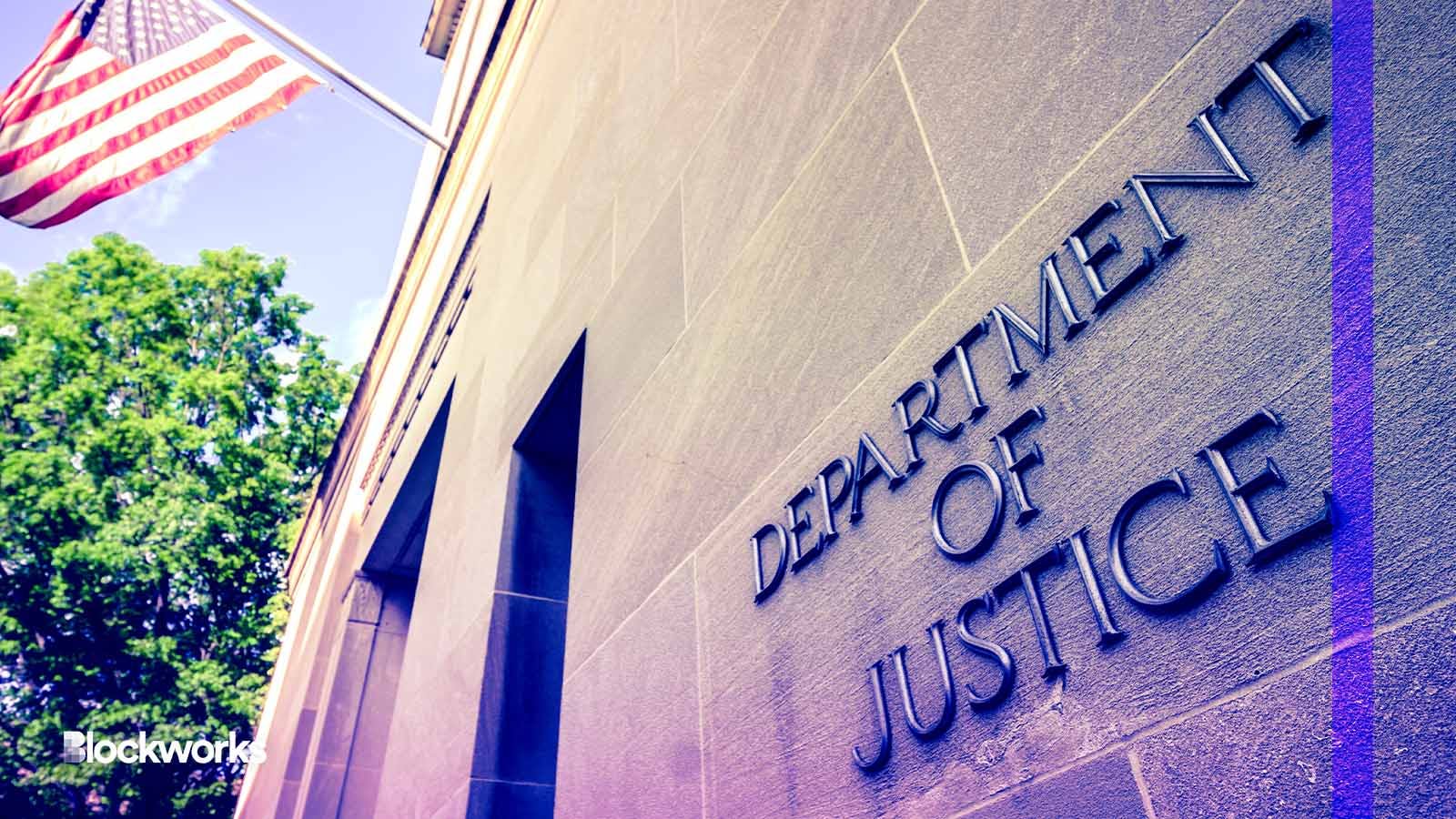
CHRISTOPHER E ZIMMER/Shutterstock modified by Blockworks
The US Department of Justice will soon double the number of prosecutors who handle crypto-related crimes.
The DOJ is set to merge the National Cryptocurrency Enforcement Team (NCET) and the Computer Crime and Intellectual Property Section (CCIPS), according to Deputy Assistant Attorney General Nicole Argentieri.
Claudia Quiroz will serve as the new acting head of the NCET, replacing former director Eun Young Choi. Quiroz is a longtime US attorney and was a deputy director of the NCET from its founding in 2021.
The NCET, under Choi’s leadership, contributed to the apprehension of Mango Markets attacker Avraham Eisenberg, who allegedly drained $110 million from the exchange in October 2022.
The team also busted a little-known crypto exchange called Bitzlato in January 2023, charging founder Anatoly Legkodymov for allegedly processing more than $700 million of illicit funds.
The way crypto exploits often involve cybercrimes, including the Mango Markets case, was cited as a major factor in the combination of the two teams.
“It’s become obvious to everyone in the cybercrime field that cryptocurrency work and cyber prosecutions are intertwined, and will become even more so in the future,” Argentieri said in her speech.
Argentieri further explained that this approach “will multiply the entire Department’s ability to trace cryptocurrency, to charge cases involving the criminal use of cryptocurrency, and to seize legally forfeitable cryptocurrency as a way to get those funds back to victims.”
Get the news in your inbox. Explore Blockworks newsletters:
- The Breakdown: Decoding crypto and the markets. Daily.
- 0xResearch: Alpha in your inbox. Think like an analyst.