BlackRock CEO Still in Crypto for the Tech Despite FTX Scandal
BlackRock CEO Larry Fink has appeared unfazed by losing $24 million through the sudden demise of crypto exchange FTX
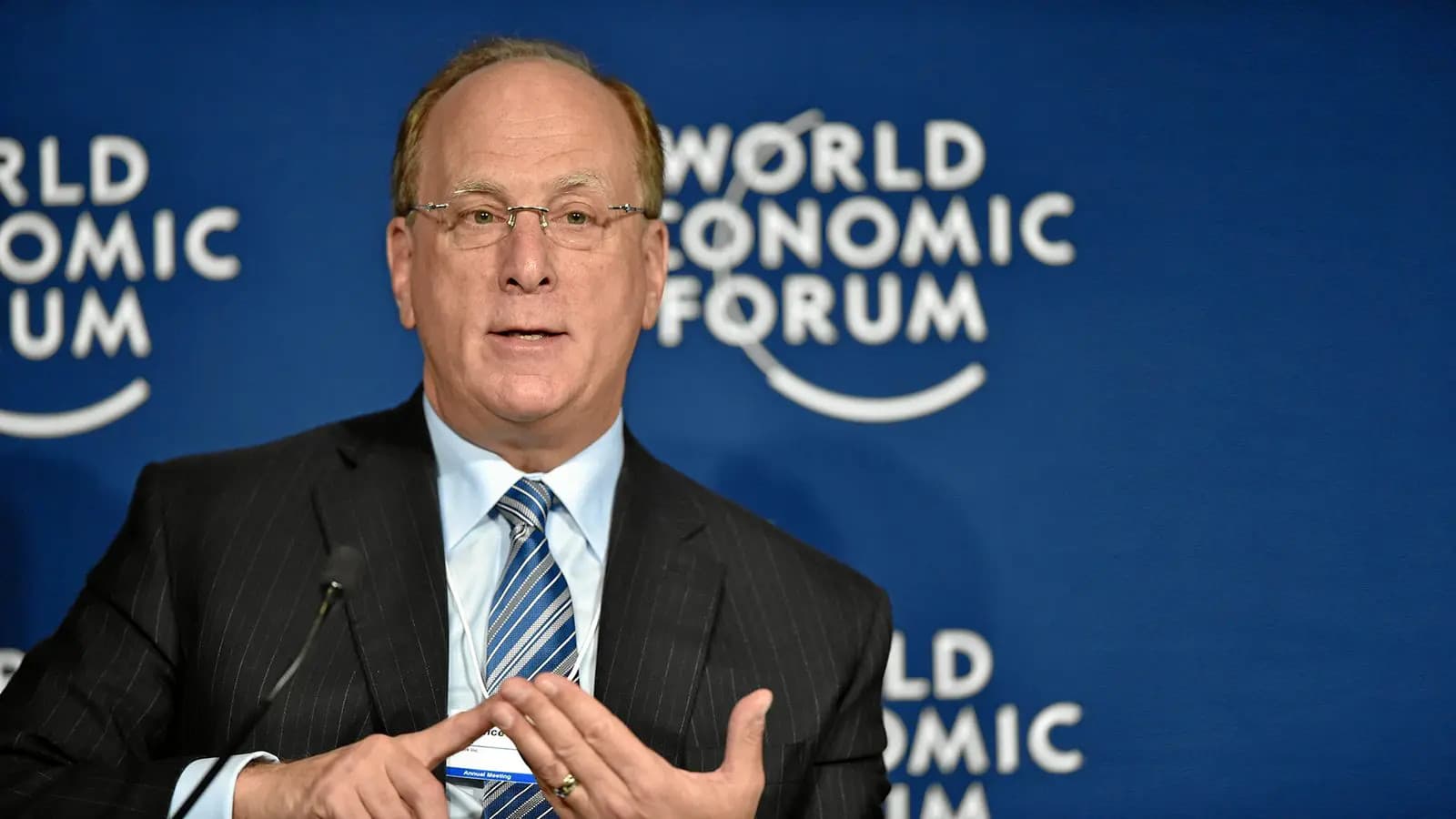
Source: WORLD ECONOMIC FORUM/swiss-image.ch/Photo Michael Buholzer (CC BY-NC-SA 2.0)
BlackRock chief executive Larry Fink says he still sees promise in cryptocurrency’s underlying technology despite everything that happened with FTX.
The billionaire money manager touched on the FTX scandal at the New York Times DealBook Summit on Wednesday. “I actually believe most of the [crypto] companies are not going to be around,” Fink said.
BlackRock, the world’s largest asset manager overseeing some $8 trillion, had previously invested $24 million in FTX through a fund of funds. Fink noted Sam Bankman-Fried’s firm may have misled investors.
“We’re going to have to wait to see how this all plays out…I mean, right now, we can make all the judgment calls. It looks like there were some misbehaviors of major consequences,” Fink said.
FTX’s valuation shot to $32 billion at the start of the year, having raised funds across seven venture capital rounds starting from 2018 per Crunchbase, including a meme-bound Series B-1 worth $420 million last October.
All that quickly crumbled earlier this month after a debilitating $6 billion bankrun triggered by concerns of shallow liquidity and gross mismanagement. FTX is now undergoing bankruptcy proceedings, and the latest figures show it owes $3.1 billion to its 50 largest creditors with up to a million users out-of-pocket.
Former CEO Sam Bankman-Fried said at the DealBook Summit that he didn’t intentionally commit fraud, and he was “frankly surprised” at how big Alameda’s position was in his exchange’s native token, FTT — a reference to its leaked balance sheet that surfaced about two weeks before its demise.
Fink reasoned that FTX issuing its own cryptocurrency, especially without appropriately disclosing its own balances, ultimately led to its downfall.
Major venture capital firms Sequoia and Temasek were among those exposed to the embattled exchange. Sequoia had been vocally enthusiastic about Bankman-Fried, once saying in a now-deleted blog that his intellect was “as awesome as it is intimidating.”
Both Temasek and Sequoia have since marked their FTX equity down to zero, while the Ontario Teachers’ Pension Fund plans to do the same with its own $95 million investment.
Despite problems surrounding the collapsed exchange, Fink — once a crypto skeptic — said the tech powering it will be “very important,” harking back to the “blockchain, not Bitcoin” mantra heard across Wall Street in cycles past.
“I believe the next generation for markets and next generation for securities will be tokenization of securities,” Fink said.
There have indeed been novel and important developments in this area of late, with major institutions dabbling in trading tokenized securities and bonds on public, reasonably decentralized blockchains.
On-chain decentralized exchanges are indeed increasingly successful, but blockchain-powered traditional markets may still be a ways off. The Australian Securities Exchange earlier this month canned its $170 million project to transform its settlement layer into a blockchain-powered system after more than three years of development.
Consulting giant Accenture found the shift untenable due to the distributed ledger’s high latency.
David Canellis contributed reporting.
Get the news in your inbox. Explore Blockworks newsletters:
- The Breakdown: Decoding crypto and the markets. Daily.
- 0xResearch: Alpha in your inbox. Think like an analyst.