Republican Stablecoin Bill Draft Likely Won’t Make It to the Floor, Insiders Say
Even the revamped draft will need more bipartisan support
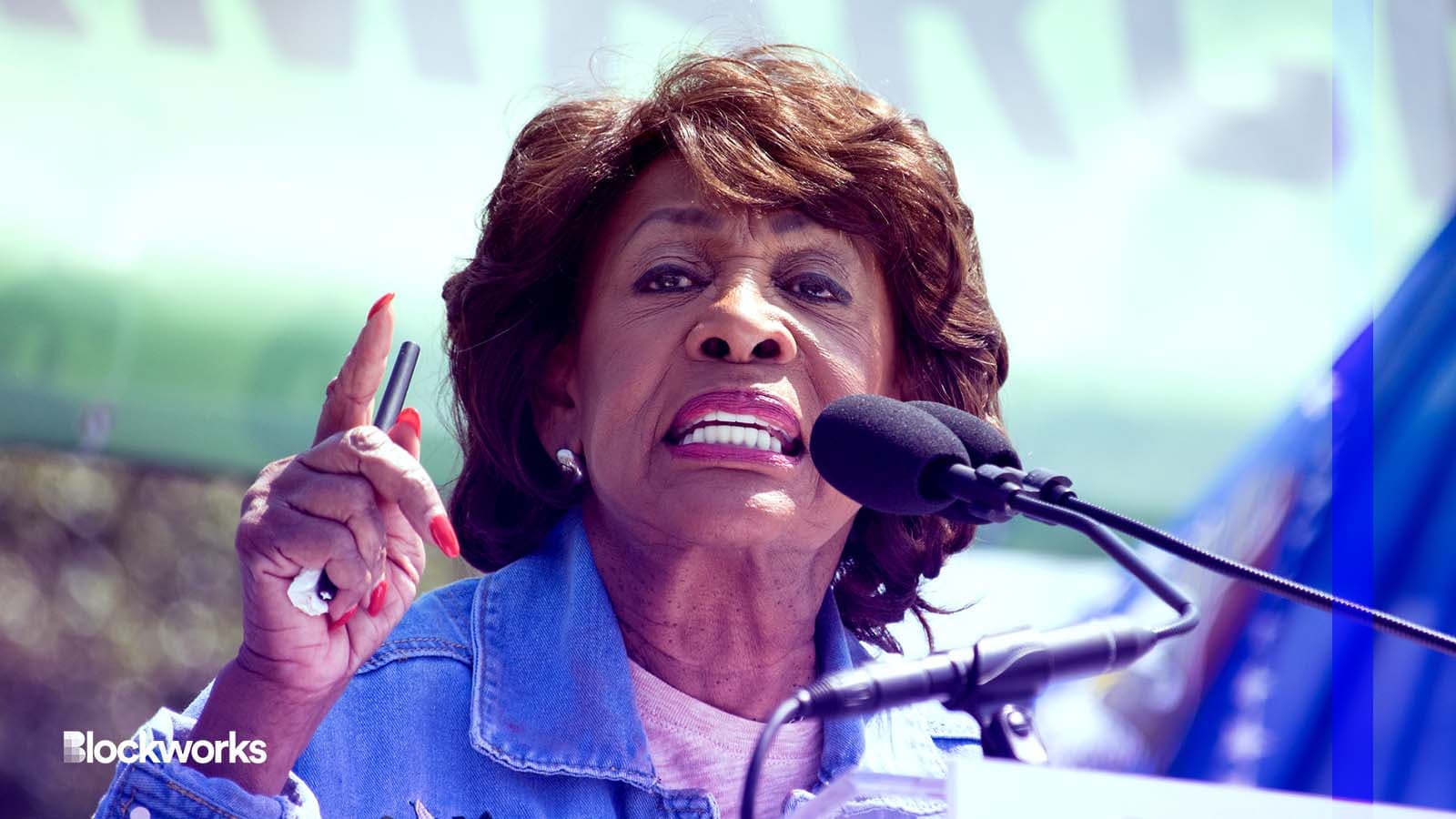
US Rep. Maxine Waters | majunznk/"Maxine Waters" (CC license)
House Republicans have some work to do if they want their stablecoin bill to pass, Hill insiders say, but both parties seem inclined to leave the SEC out.
The current draft, which was revamped earlier this week, doesn’t have much chance of making it to the floor, people familiar with the matter said.
Democrats and Republicans appear to agree somewhat on keeping the SEC out of stablecoin regulation. Both the new draft bill and former draft based on bipartisan negotiations have the Federal Reserve listed as the applicable regulator, according to Congressional documents obtained by Blockworks.
But, insiders added, House Financial Services Committee Chair Patrick McHenry, the current draft’s main champion, will be giving up his seat as chair at the end of next session, so he may prioritize pushing this legislation through the House.
An additionally amended version, ideally with some bipartisan support, is more likely to get introduced this session. A bill only endorsed by Republicans has next to no chance of making it through the Senate, sources added.
House Republicans unveiled the first iteration of their stablecoin bill ahead of last week’s subcommittee hearing. The newest version, released Monday, gives state legislators more control over the asset class, presumably in response to comments made at the hearing.
Rep. Ritchie Torres, D-N.Y., said last week that he was unlikely to support any legislation that undermines the current stablecoin regulatory framework in New York. Hearing witness Adrienne A. Harris, superintendent of the New York State Department of Financial Services, highlighted advantages in allowing states to be more proactive in their approach.
“Federal regulators are able to comprehensively address macroprudential considerations and establish foundational consumer and market protections,” Harris said. “[States can] act more nimbly to respond to industry developments and support responsible innovation given their ability to modernize regulations more quickly and leverage their more immediate understanding of consumer needs.”
Industry members and House Republicans are expecting a Democratic bill to drop soon, based on comments from Rep. Maxine Waters, D-Cali., at last week’s hearing.
The Republicans’ draft “in no way recommends the final work on stablecoins by negotiations between the two of us,” Waters said, referring to unresolved conversations with Hill. Democrats will have to “start from scratch,” she added.
Neither Waters nor other committee Democrats have provided clarity on when an opposing bill may be introduced, or if one is even in the works. The party has also not yet publicly commented on the Republican’s new version of the bill.
If a Democratic stablecoin bill does make it to the floor, it is likely to focus on issuer requirements; Democrats have largely maintained a view that issuers should be federally insured depository institutions. Clauses requiring stablecoin issuers and/or distributors to maintain some sort of know-your-customer and anti-money laundering standards can also be expected.
Representatives from Waters’ office did not respond to Blockworks’ repeated requests for comment.
Get the news in your inbox. Explore Blockworks newsletters:
- The Breakdown: Decoding crypto and the markets. Daily.
- 0xResearch: Alpha in your inbox. Think like an analyst.