The ECB and Bank of England Grapple With Inflation
Policymakers in the UK opted to raise interest rates for the first time since 2018, while the ECB retains a relatively more accommodative stance
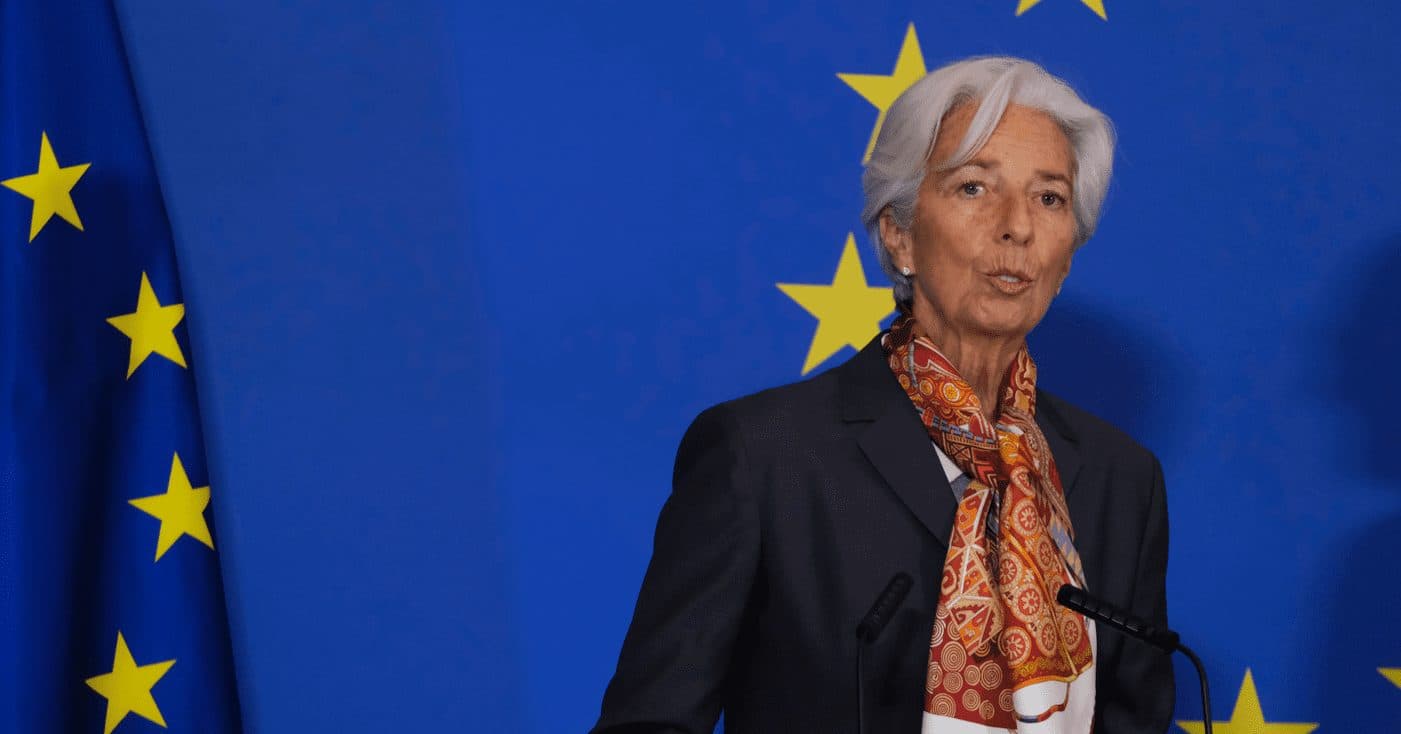
ECB President Christine Lagarde; Source: Shutterstock
- The Bank of England raised interest rate by 15 basis points to 0.25%, in a near unanimous vote
- The European Central Bank leaves rates unchanged, but will taper its government bond purchases
The Bank of England’s monetary policy committee (MPC), decided on Thursday to raise its Bank Rate to 0.25%, according to the committee’s minutes, in a bid to dampen inflation. The 12-month CPI rate jumped from 5.1% in November, up from 3.1% in September, and the highest level since September 2011. The Committee voted by an eight to one margin in favor of the rate hike.
The move comes a day after the US Federal Reserve’s analogous group left rates unchanged but also moved to tighten monetary policy by decelerating its asset purchase program more quickly than earlier planned.
Like the Fed, the Bank of England (BoE) policymakers expect that upward pressure on CPI inflation is driven primarily by supply disruption and should dissipate over time, returning closer to the committee’s long-term 2% target rate.
The MPC notes that the Omicron Covid-19 variant is spreading rapidly in the UK, but it’s medium-term economic effects remain unclear, while inflation has risen faster than anticipated.
The International Monetary Fund (IMF) UK staff weighed in with a policy statement, Tuesday, targeted squarely at the BoE, warning against “inaction bias, in view of costs associated with containing second-round impacts.”
Unemployment in the UK is expected to be 4% in November, down 0.5%, indicating the labor market remains tight.
ECB calls for “flexibility”
In the Eurozone, inflation surged to 4.9% in November, the highest level ever recorded, according to Eurostat.
At Thursday’s European Central Bank (ECB) policy meeting in Frankfurt, Germany, ECB President Christine Lagarde announced a scaling back of asset purchases under the pandemic emergency purchase program (PEPP), and its full discontinuance in March 2022.
“We judge that the progress on economic recovery and towards our medium-term inflation target permits a step-by-step reduction in the pace of our asset purchases over the coming quarters. But monetary accommodation is still needed for inflation to stabilise at our two per cent inflation target over the medium term,” Lagarde said in her prepared remarks.
The key ECB interest rates were left unchanged. Similar to the Fed’s policy, the ECB plans to wind down net asset purchases prior to raising rates.
Eurozone inflation is expected to remain elevated next year, but to decline over the course of the year, mirroring the outlook in both the UK and the US.
The US dollar weakened following the BoE and ECB announcements. The DXY, an index representing the USD against a basket of major foreign currencies, fell almost 0.5% in the two hours following the policy updates, but recovered by midday in New York.
Get the day’s top crypto news and insights delivered to your inbox every evening. Subscribe to Blockworks’ free newsletter now.