Crypto Market Caps Collapsed in 2022 – With These Notable Exceptions
Metaverse token ApeCoin’s market cap has soared 38% since its March debut, a rarity in rocky crypto markets this year
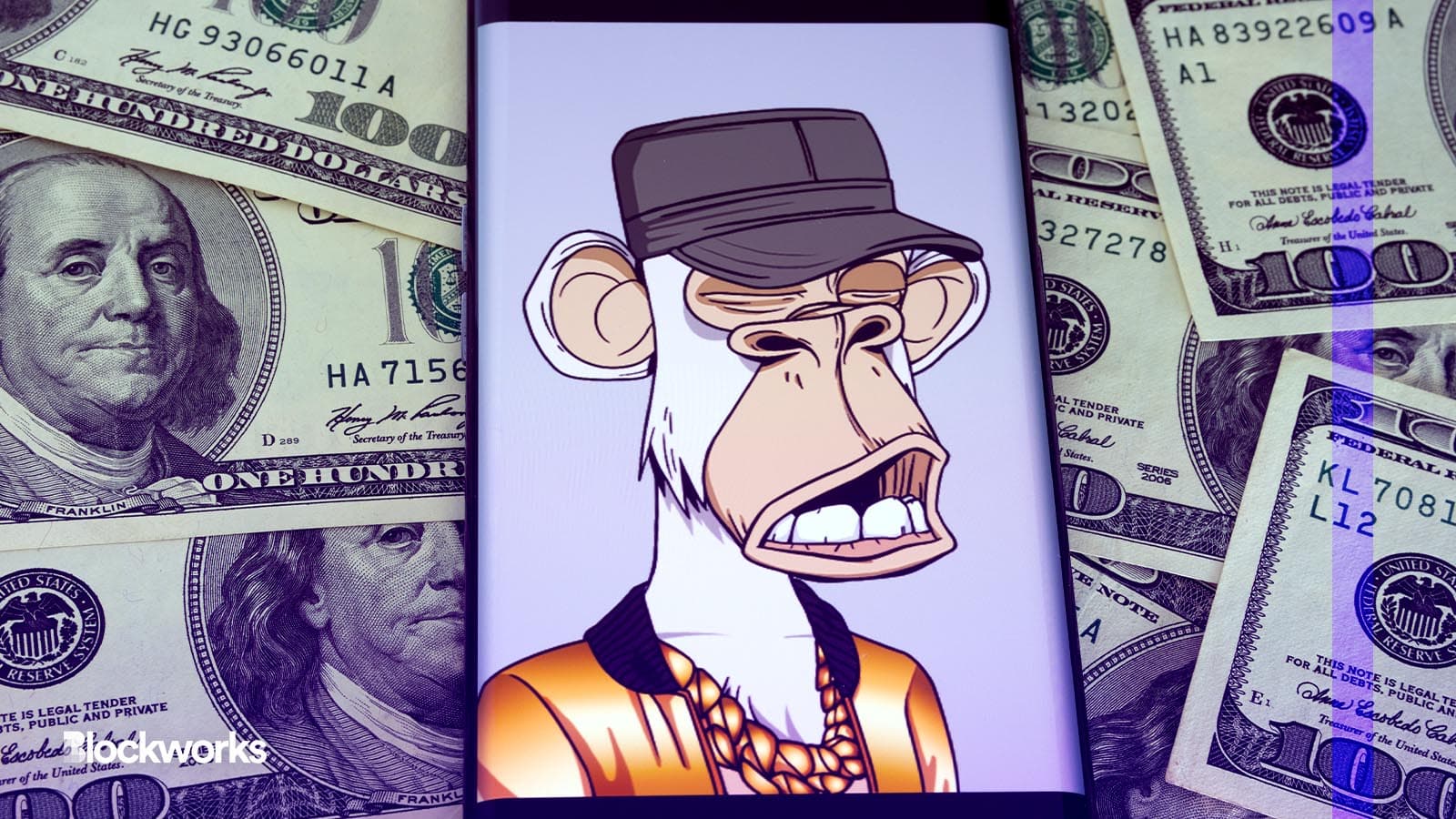
mundissima/Shutterstock.com modified by Blockwork
Just a handful of top-100 cryptocurrencies recorded any growth in their market capitalization this year: two stablecoins and one monkey-themed metaverse offering, ApeCoin, capping off a nightmarish 12 months for digital assets.
Binance’s branded stablecoin, BUSD, added more than 16% to its market cap in 2022, representing nearly $2.4 billion in additional supply, to secure seventh place on the leaderboard for all cryptoasssets.
Circle’s USDC grew around 5%, or $2.2 billion, bringing its total market value closer to $44.6 billion.
USDC ranked fourth, behind rival tether ($66.3 billion of USDT), ether ($143.5 billion of ETH) and bitcoin ($317 billion of BTC) on Dec 30. — the latter two both shrunk by around 65%.
On Jan. 1 2022, tether was the only stablecoin in the top four, with USDC and BUSD in seventh and sixteenth place, respectively. Stablecoin dominance set new records in the second half, with markets seeking shelter from volatility in dollar-pegged assets.
Both stablecoin spurts were eclipsed by ApeCoin, which debuted with a $946 million market cap in March. In December’s waning days, it was valued as much as $1.3 billion, representing a 38% increase.
Every other cryptocurrency in the top 100 booked an annual loss.
Failed Terra tokens, namely its algorithmic stablecoin, TerraUSD, and affiliated LUNA, performed the worst, collapsing 98% and 97%, respectively.
Gala, Harmony and Amp fared almost as badly, as did cryptocurrencies backed by arrested FTX founder Sam Bankman-Fried, “Sam coins.”
FTX native token FTT, Solana’s SOL and Helium (HNT) all lost more than 93% of their market valuations this year, finding themselves in the bottom 10%.
Market caps for the top 100 on average tanked about 70% this year. ETH staked on Lido gave up less than 5%, just ahead of Bitfinex’s buy-and-burn utility token UNUS and SED LEO’s 6% losses.
Stablecoins Tether and Pax Dollar (USDP) performed unexceptionally, losing 15% and 21%, respectively.
Granted, digital asset markets are notoriously noisy. One should rarely read too much into market valuations given how illiquid they can be, even at the top end of the scale.
Still, stablecoins are clearly having a moment —- sans TerraUSD. DAI went from the 24th largest cryptocurrency to 11th, BUSD went from 15th to seventh and USDC from seventh to fourth.
There was also some reconfiguration of layer-1 market cap rankings. Avalanche started the year at 11th, but was bumped down to 18th. Direct rival Polygon jumped from 14th to 10th, while TRON surged from 26th to 12th.
As it turns out, none grew as much as ApeCoin, a token intended to power the still in-development Bored Ape Yacht Club metaverse.
ApeCoin may have outperformed, but “metaverse” ominously came in second to “goblin mode” in the Oxford University Press’ word of the year rankings this year.
Get the news in your inbox. Explore Blockworks newsletters:
- The Breakdown: Decoding crypto and the markets. Daily.
- 0xResearch: Alpha in your inbox. Think like an analyst.