New York regulator directs banks to use blockchain analytics
DFS tells banking organizations to integrate blockchain monitoring tools to curb money laundering and sanctions risks
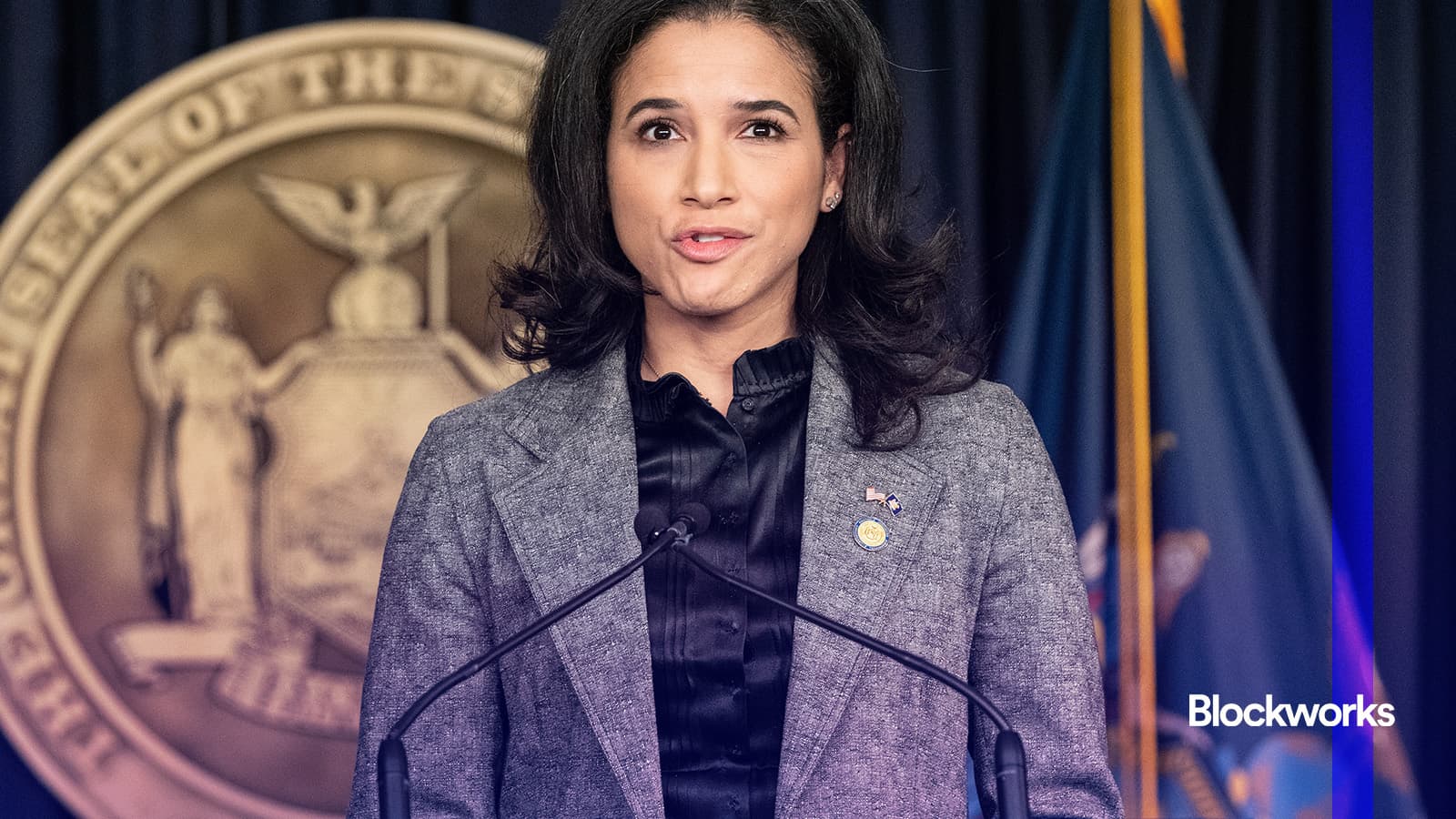
New York. Superintendent Adrienne Harris | lev radin/Shutterstock and Adobe modified by Blockworks
The New York State Department of Financial Services (NYDFS) has instructed banking organizations under its supervision to adopt blockchain analytics tools as part of their compliance frameworks.
The notice, issued on Sept. 17, applies to state-chartered banks and branches of foreign institutions licensed in New York. Superintendent Adrienne Harris suggested the move reflects increasing exposure to digital assets through both customer activity and bank-led virtual currency initiatives.
The department first issued guidance in April 2022 requiring licensed virtual currency firms to employ blockchain analytics to trace transactions and assess risk. It later expanded oversight in December 2022, mandating prior approval for new or materially different virtual currency-related activity.
With traditional banks now engaging in similar activities, the regulator said analytics tools should be used to screen customer wallets, verify fund origins, monitor exposure to high-risk virtual asset service providers, and detect money laundering or sanctions evasion.
NYDFS emphasized that the guidance is not a formal rulemaking but a supervisory expectation. Institutions are expected to tailor controls to their risk appetite and business models, while reassessing them regularly as market conditions evolve.
The regulator warned that growing adoption of digital assets increases the potential for illicit finance. “Covered institutions play a critical role in safeguarding the integrity of the financial ecosystem,” the agency said in its notice.
The directive underscores New York’s role as one of the strictest crypto oversight regimes in the United States, alongside its BitLicense framework.
This is a developing story.
This article was generated with the assistance of AI and reviewed by editor Jeffrey Albus before publication.
Get the news in your inbox. Explore Blockworks newsletters:
- The Breakdown: Decoding crypto and the markets. Daily.
- 0xResearch: Alpha in your inbox. Think like an analyst.