Risk back on the table as crypto ETFs bounce back
Kalshi raises a billion dollars, and Trump’s new Fed Chair pick is imminent

Joshua Sukoff/Shutterstock and Adobe modified by Blockworks
This is a segment from the 0xResearch newsletter. To read full editions, subscribe.
Today, we break down the BTC move over the past week, how ETFs have seen net inflows for the first time in nearly four weeks, and application and chain revenue. We also look into who President Trump’s next Federal Reserve Chair nominee might be.
Indices
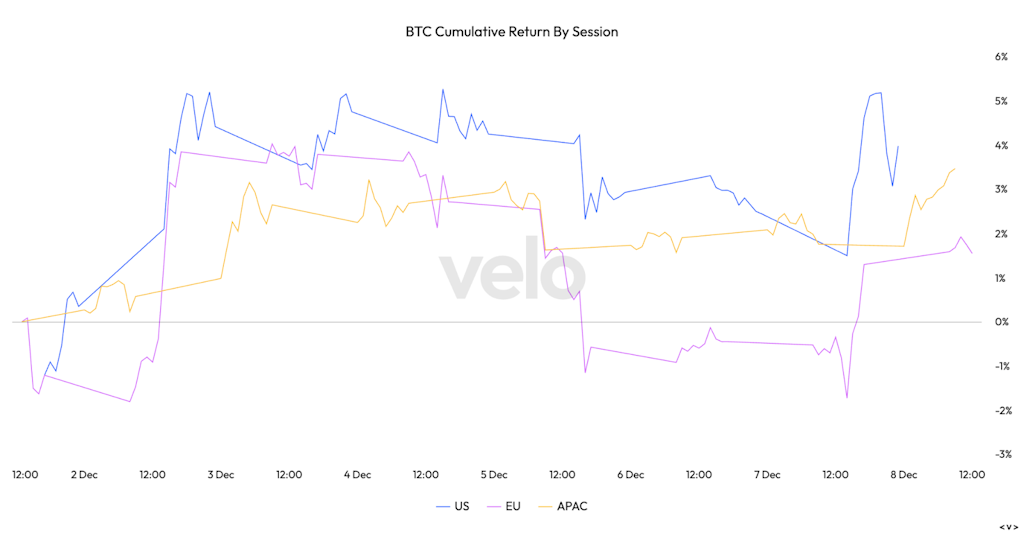
BTC bounced off $85,000 lows, and is back up to $92,000. Over the past three weeks, BTC has increased 5%, with significant volatility throughout. In particular, BTC has been underperforming through the EU session, while outperforming in the US and APAC sessions.
Over the past week, oracles, lending and Ethereum ecosystem tokens performed well, with each up just over 4%. Crypto equities performed the best, up 6.7%, primarily due to outperformance by HOOD.
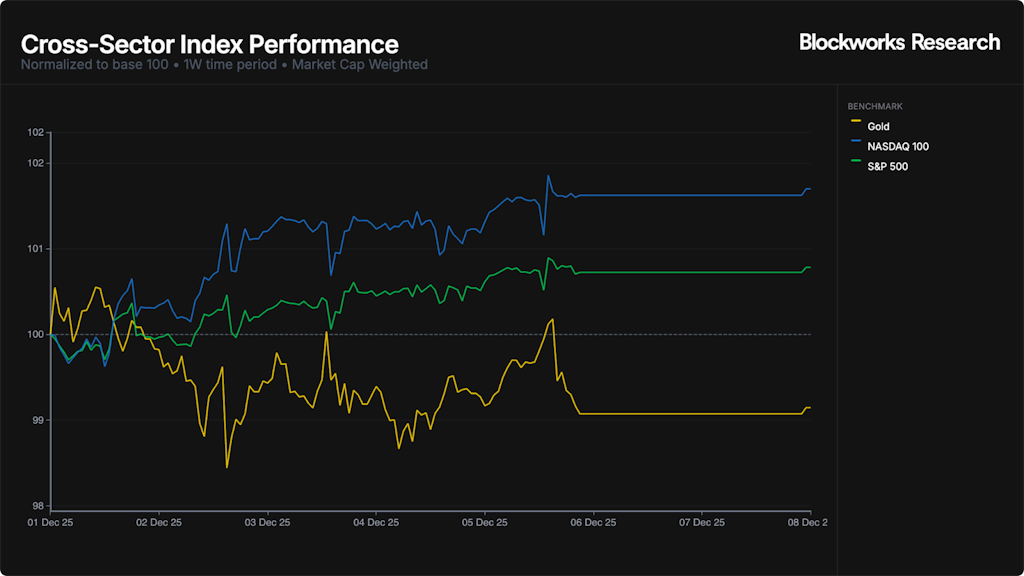
The Nasdaq 100 (+1.70%) and S&P 500 (+0.78%) continue to grind up, while Gold underperforms slightly (-0.85%).
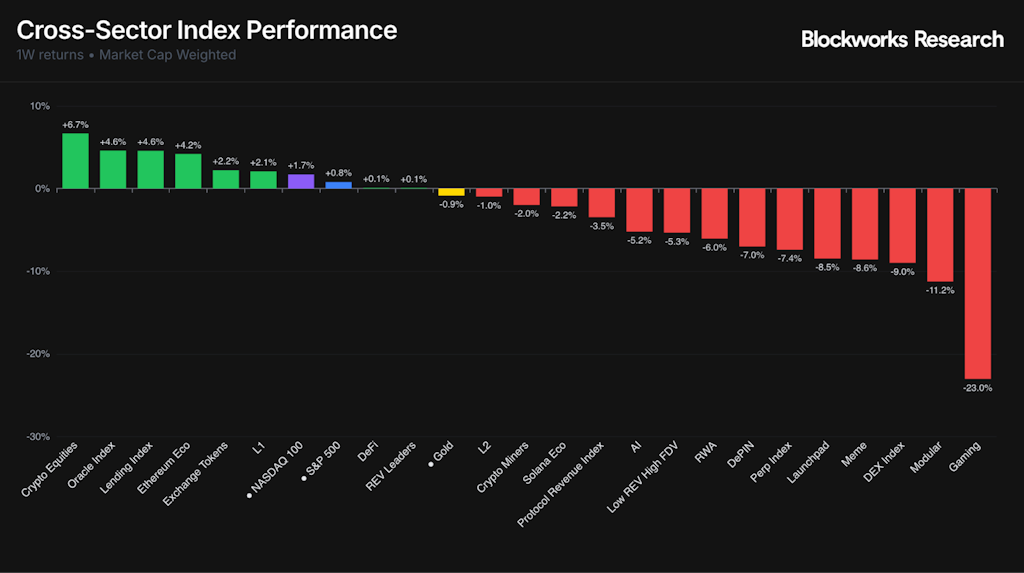
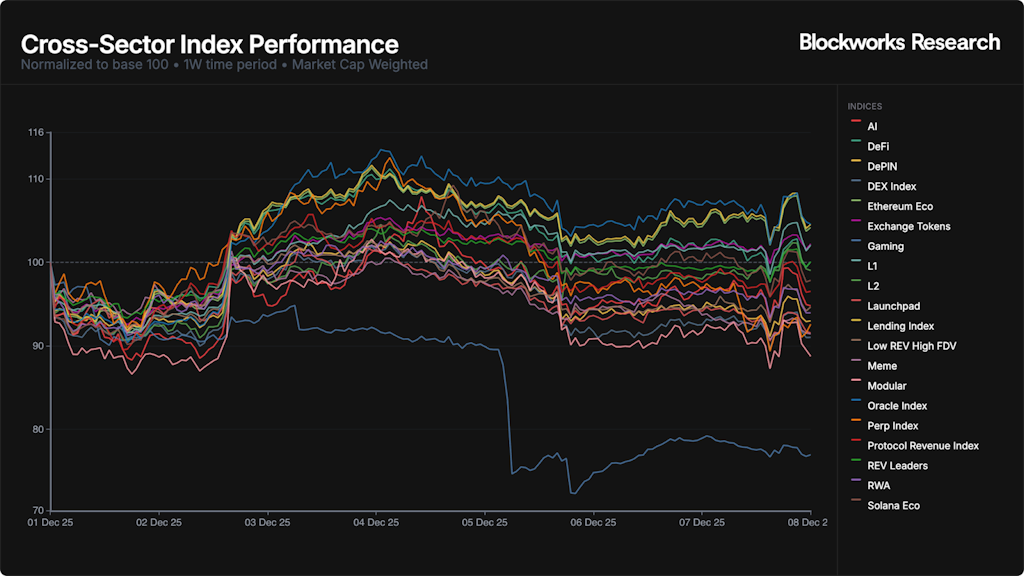
In terms of worst-performing, gaming has outperformed significantly toward the downside, with -23% returns over the past week. LGCT was the worst performer, and declined in price by -75% over the past week.
Charts for The Week
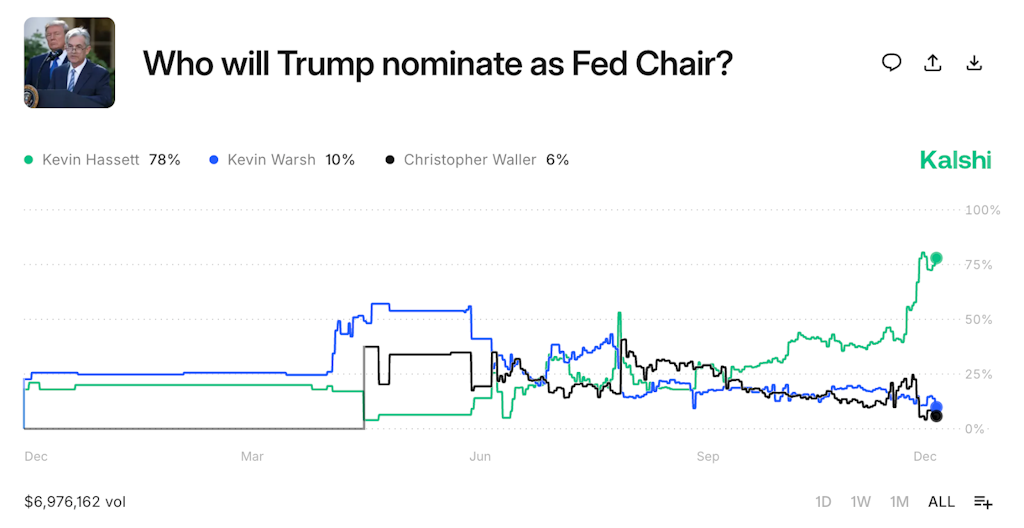
Odds have surged (up to 78% on Kalshi) that Kevin Hassett will be President Trump’s next Federal Reserve chair nominee, an announcement Trump recently confirmed is imminent. Hassett, a close White House ally, is favored because he aligns with the president’s demand for much lower interest rates to provide cheaper consumer loans and mortgages.
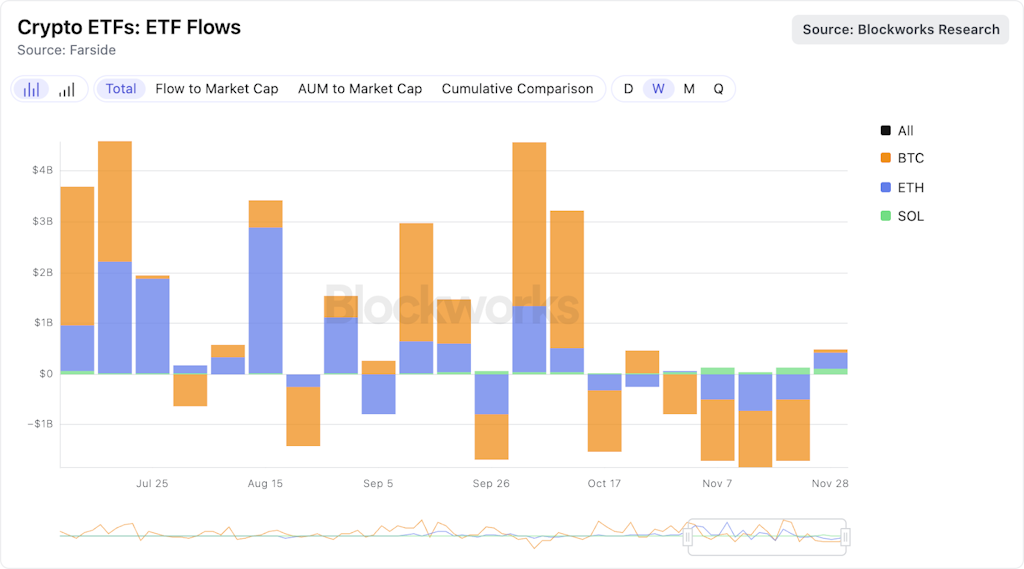
Bitcoin ETF flows reversed sharply in November, posting significant net outflows after a steady run of inflows from May through October. The month saw roughly $3.46 billion in redemptions, completely erasing the $3.42 billion in new inflows seen last month and the worst outflows since February 2025 ($3.56 billion). The reversal highlights how quickly sentiment deteriorated despite months of strong accumulation. The alignment between ETF flows and price action remained intact, with November’s outflows closely mirroring BTC’s double-digit monthly decline.
The first week of December has been the first positive net inflow week for BTC ETFs since the last week of October, with $70.2 million in net BTC ETF inflows. Ethereum and Solana ETFS have both seen higher net inflows this past week, at $312 million and $108 million, respectively.
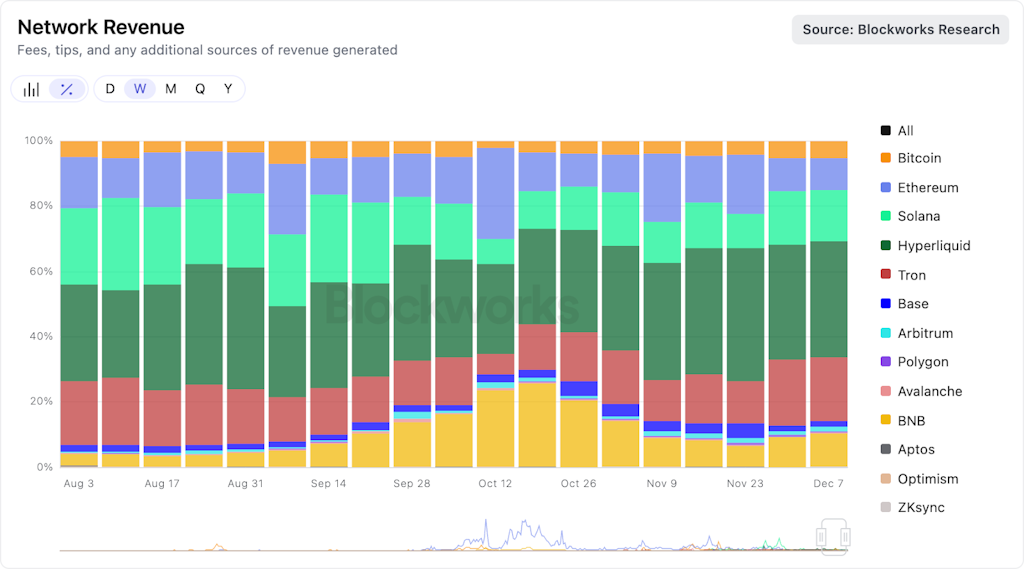
In terms of network revenue, we’re seeing similar figures to what we saw the week prior, with Hyperliquid leading the charge with 35% of all network revenues, followed by Tron (20%) and Solana (15%). Noticeably, BNB revenue is still at lows following the highs it put in October, and the majority of that has been captured by Hyperliquid and Solana.
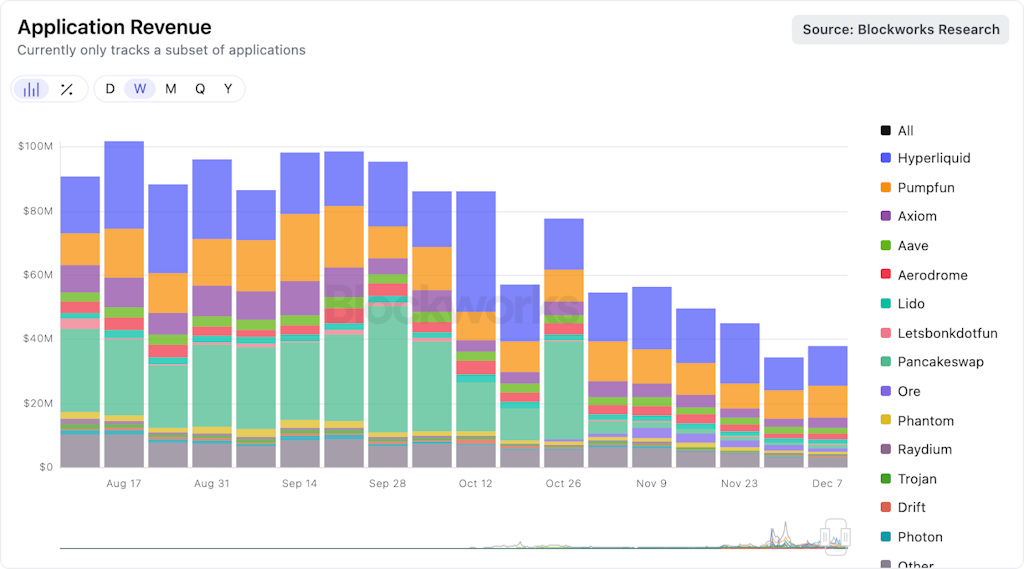
Application revenue has stopped declining (now at $38 million, 10% higher than last week), following four weeks of net decline across all tracked applications. Hyperliquid continues to lead the way (35%), followed by pump.fun (25%) and Axiom (8%).
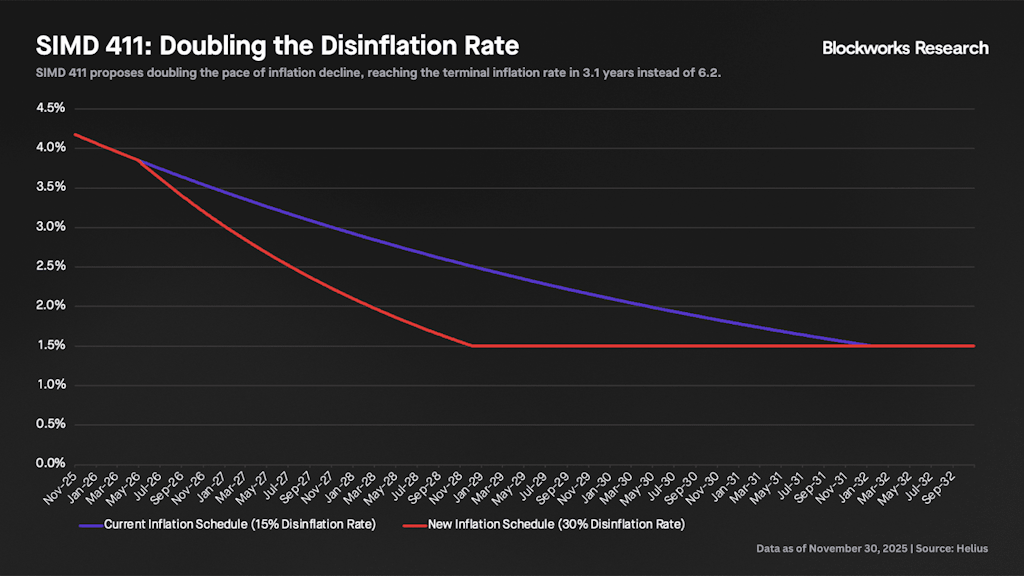
Helius’ Lostin and Ichigo proposed SIMD411, which aims to accelerate Solana’s emission schedule by doubling the disinflation rate from -15% to -30%, keeping the 1.5% terminal inflation unchanged. This simple, predictable parameter change would bring inflation from ~4.14% today to 1.5% in ~3.1 years (early 2029), rather than ~6.2 years (early 2032). If implemented, SIMD411 would cut 22.3 million SOL ($2.9 billion) in emissions after six years vs. the current inflation path, reducing the “leaky bucket” sell pressure.
Get the news in your inbox. Explore Blockworks newsletters:
- The Breakdown: Decoding crypto and the markets. Daily.
- 0xResearch: Alpha in your inbox. Think like an analyst.