Bukele was right: El Salvador timed the bitcoin bottom almost perfectly
El Salvador started buying bitcoin every day less than a week after FTX collapsed in November 2022. That was the cycle bottom
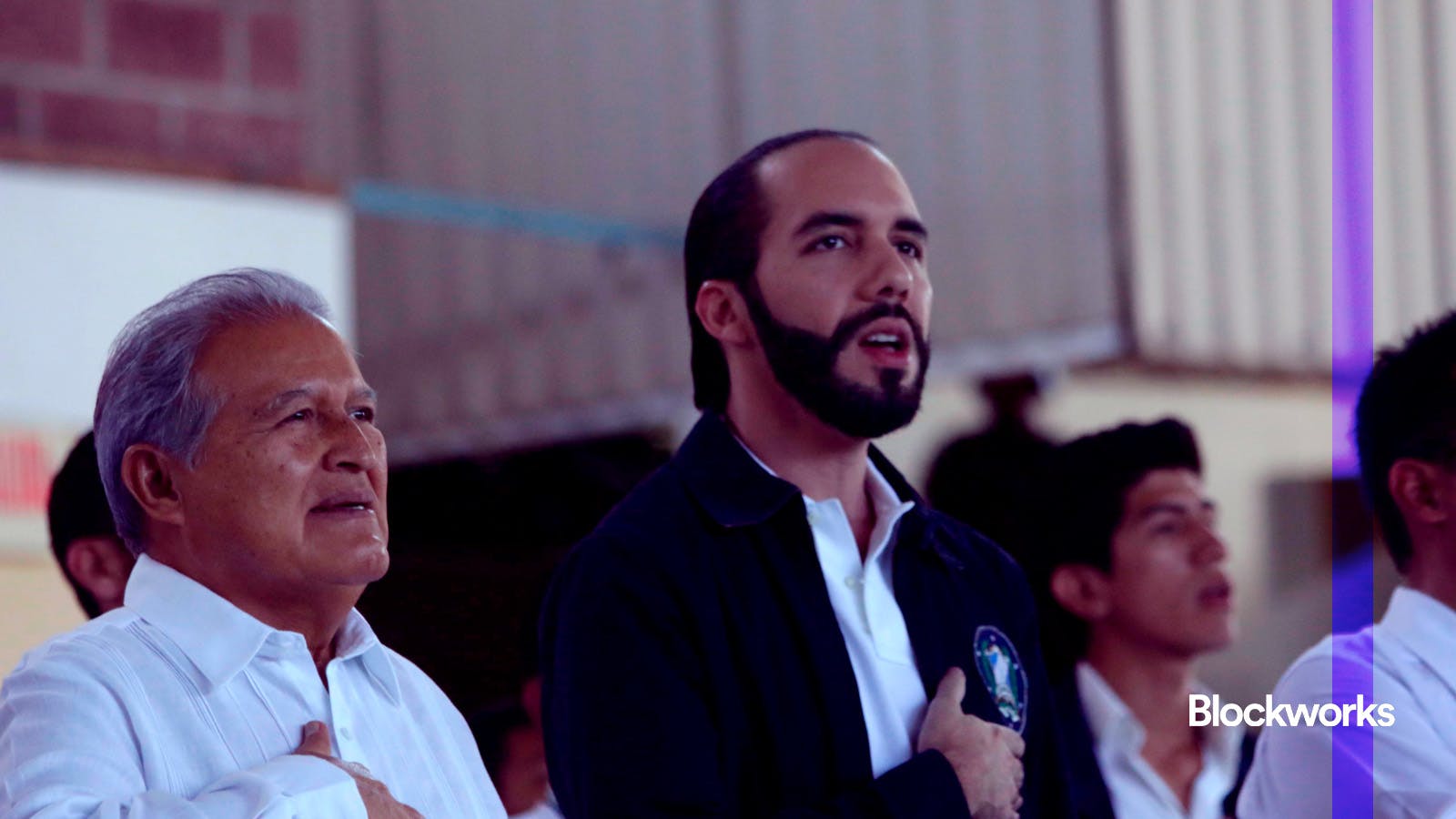
President of El Salvador Nayib Bukele | Muago/"Inauguracion Juventour 2015″ (CC license)
Today, enjoy the Empire newsletter on Blockworks.co. Tomorrow, get the news delivered directly to your inbox. Subscribe to the Empire newsletter.
Dollar-cost Awesome
Central banks may be buying gold at a record-setting pace — but El Salvador is still busy stacking sats.
And while gold is at fresh all-time highs, Nayib Bukele’s government has given itself every advantage with its strategy of dollar-cost averaging bitcoin.
Bukele couldn’t have picked a better time to start buying regularly: less than a week after FTX filed for bankruptcy.
Bitcoin had just tanked by one-fifth amid the Sam Bankman-Fried debacle, from over $21,000 to under $17,000, bringing its year-to-date losses to over 65%. It was then that Bukele opted to start buying bitcoin every day.
El Salvador had already acquired thousands of bitcoin in the 14 months leading up to the FTX crash. The first purchases came in September 2021, a few days before bitcoin officially became legal tender thanks to a law that was passed in June.
At least, that’s going by the posts on Bukele’s timeline (shown by the big colorful plus signs on the chart below).
 The symbols in red reflect the dollar-cost averaging strategy
Bukele never really showed onchain receipts for his first set of purchases, so we don’t know at what price El Salvador was buying — except for one post that celebrated buying 85 BTC at $19,000 each.
But if we take the price of bitcoin around the time of Bukele’s tweets, El Salvador potentially spent $105.11 million on its initial 2,381 BTC, giving an average price of $44,145.
Bitcoin currently trades for $58,460, so the same amount would be worth $139.33 million, converting to paper gains of over 32%.
From there, it gets murkier before it gets much clearer (and onchain). Bukele only disclosed an official bitcoin wallet in March of this year, when El Salvador consolidated its bitcoin treasury to a single address.
There were 482 days between Bukele announcing his DCA plan at the cycle bottom and the March consolidation. So, El Salvador should’ve bought 482 BTC for $14.84 million, at an average price of $30,800.
The same haul would fetch nearly $28.2 million, putting the government ahead on those particular purchases by 90%.
One surprise, however, was that El Salvador’s bitcoin wallet contained nearly double the bitcoin than expected. The government should’ve held 2,863 BTC based purely on the buying patterns telegraphed by Bukele’s Twitter posts.
After moving bitcoin to a “cold wallet in a physical vault within our national territory,” El Salvador’s bitcoin address contained 5,689.7 BTC.
It seems as though the difference was never really addressed. Bukele did post around the same time to say that the government had earned bitcoin revenue from its mining and passport programs, currency conversions and government services.
 El Salvador’s bitcoin portfolio (sans the mysterious additional coins) is in blue, bitcoin is in orange, and the total bought is in the background in purple
In any case, El Salvador is indeed still buying bitcoin. Its onchain history shows a new bitcoin coming into cold storage almost every day (sometimes there are breaks where no deposits happen, but they always come in eventually).
We still can’t see at precisely what price El Salvador buys its daily bitcoin, we can only spot the purchased bitcoin being sent to the cold storage wallet. There’s been 172 BTC sent to cold storage in the 173 days since we learned of the government’s bitcoin address.
Overall (and ignoring the extra bitcoin that showed up during Bukele’s wallet reorganization), my calculations suggest that El Salvador has bought 3,035 BTC for $131.02 million since September 2021, at an average price of $43,169.
That would put El Salvador up over 35% on its bitcoin buys to date, or $46.38 million.
Focusing just on bitcoin bought via dollar-cost averaging meanwhile returns 47.5% ($38.23 million from $25.9 million) — mostly because of how well Bukele timed the market.
Keep cooking, I say.
Data Center
- BTC and ETH are up 1% and 2.5% on the day, respectively. (BTC: $58,635; ETH: $2,530.)
- Both are still down around 8% in the past week, per CoinGecko.
- HNT is the top performer of the front-page over that period with 14% gains. XMR is the only other top-100 token to rise by more than 1%.
- Weekly DEX volume on TON falls 55% as Telegram CEO Pavel Durov posts $5.5 million bail.
- Pump.fun competitor Sun Pump contributed 10% of all smart contract calls on Tron in the past week. 76% are still related to USDT.
Get the news in your inbox. Explore Blockworks newsletters:
- The Breakdown: Decoding crypto and the markets. Daily.
- 0xResearch: Alpha in your inbox. Think like an analyst.