Ethereum Scaling Startup Reportedly Triples Valuation in 4 Months
The Ethereum layer-2 developer is raising at least $100 million, Israeli newspaper Calcalist reported
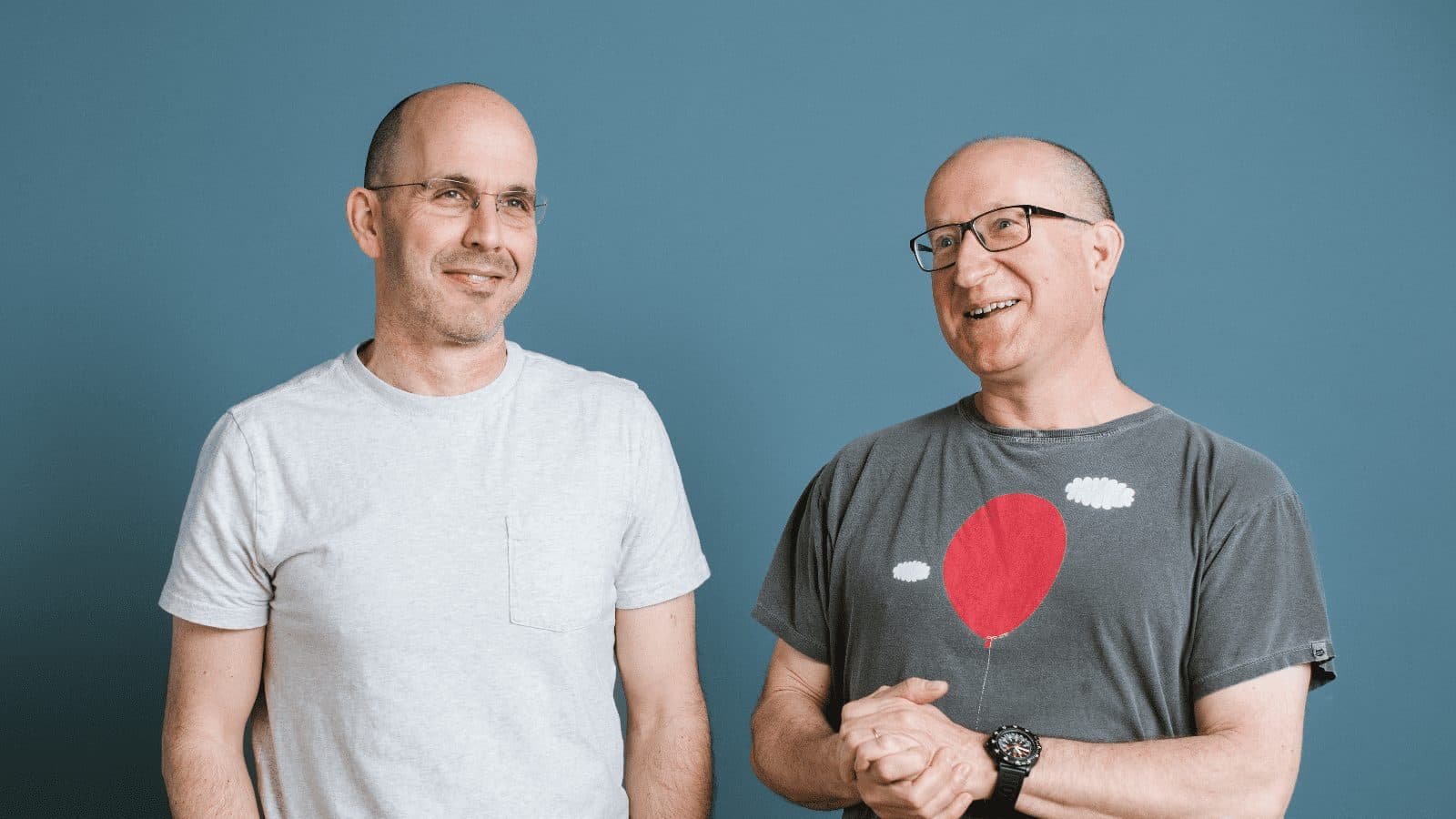
StarkWare co-founders Uri Kolodny (left) and Eli Ben-Sasson (right)
- “Since StarkNet was launched, interest from devs and investors has gone through the roof,” an anonymous company source told Blockworks
- In an interview with Blockworks in November 2021, one of the four co-founders said that they “didn’t need the money” from its Series C, but the funds helped them grow their operations even faster
Ethereum layer-2 developer StarkWare is raising at least $100 million, for a valuation of $6 billion, Israeli newspaper Calacalist reported.
StarkWare declined to comment Thursday. However, a company source, who spoke under anonymity to Blockworks, said they couldn’t confirm it, “but it sounds entirely plausible.”
“Since StarkNet was launched, interest from devs and investors has gone through the roof,” the source said.
The new valuation is triple its previous $2 billion valuation from just four months ago, when the company raised $50 million in a Series C round led by Sequoia Capital.
“It seems to be the idea of letting anyone build Web3 that’s caught the imagination of venture capital,” the source said. “So, while the numbers cited are high, if I arrive at work and hear it’s accurate, I won’t be surprised.”
StarkWare is a four-year-old startup — created by four co-founders Eli Ben-Sasson, Alessandro Chiesa, Uri Kolodny and Michael Riabzev — that offers blockchain scaling services through “STARK” proofs, which are Ethereum-based products using rollups technology invented by Ben-Sasson and Riabzev.
The StarkWare-based solutions include its two products — StarkEx, a permissioned validity rollup, and StarkNet, a permissionless decentralized zero-knowledge rollup — which aim to increase speed and reduce the cost of Ethereum gas fees.
The largest dApp on StarkEx, by total-value-locked (TVL), is decentralized derivatives exchange dydx, with roughly $1 billion in TVL, according to DeFi Llama.
Two weeks ago, StarkNet began deploying decentralized apps, or dApps, with zero-knowledge rollup technology to help alleviate the blockchain’s scaling problem.
In an interview with Blockworks in November 2021, Kolodny said StarkNet “didn’t need the money” from the Series C, but the funds helped them grow their operations faster.
Get the news in your inbox. Explore Blockworks newsletters:
- The Breakdown: Decoding crypto and the markets. Daily.
- 0xResearch: Alpha in your inbox. Think like an analyst.