Court orders Ripple to pay $125M civil penalty in SEC lawsuit
The payment falls between the SEC’s requested $2 billion penalty and Ripple’s proposal of $10 million
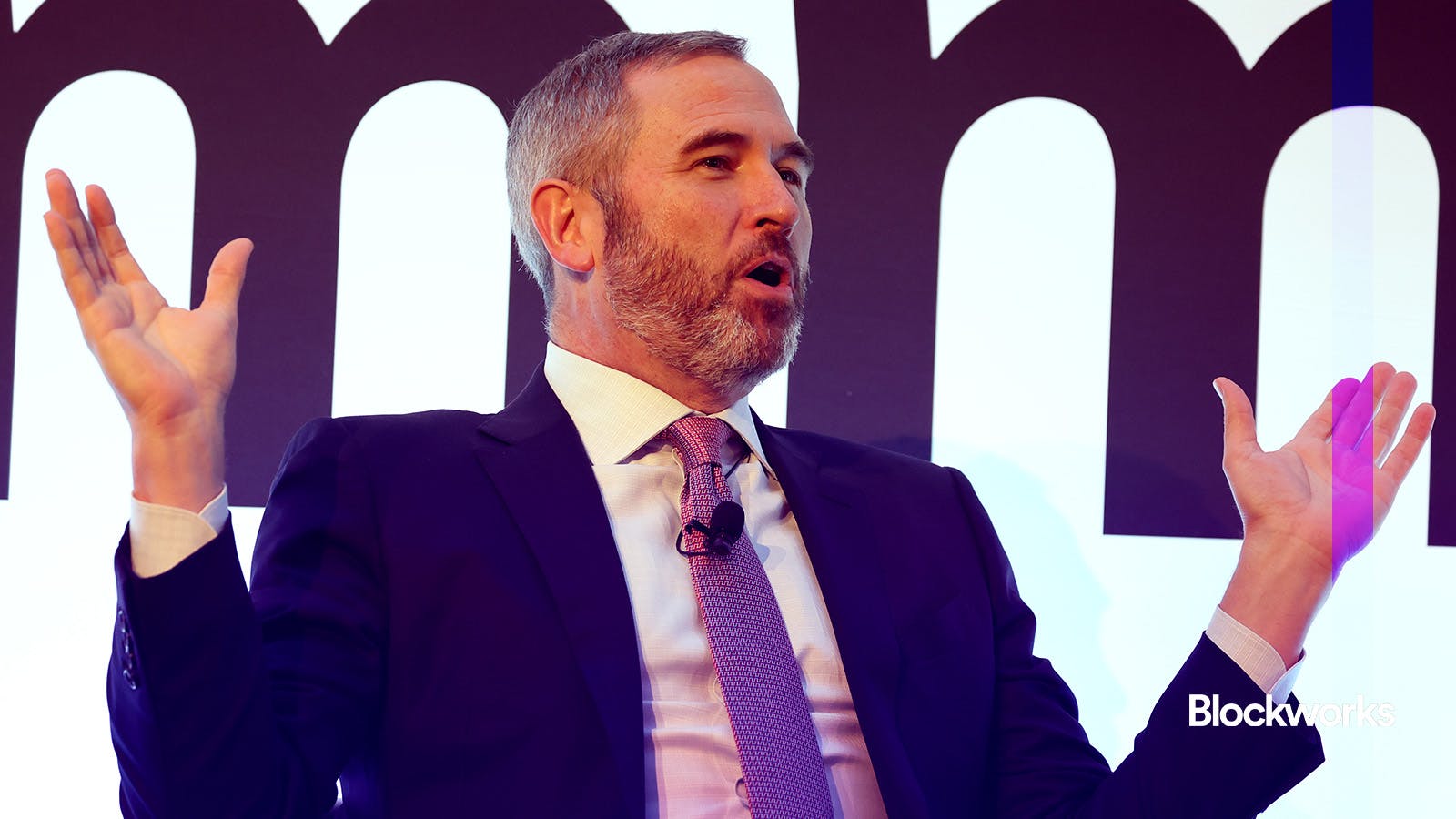
Ripple CEO Brad Garlinghouse | Ben Solomon Photo LLC for Blockworks
A federal judge has ordered Ripple to pay a civil penalty of $125,035,150 in its lawsuit with the US Securities and Exchange Commission. The SEC had sought a remittance payment of $2 billion while Ripple had requested a maximum penalty of $10 million.
Ripple is also ordered to stop any further violations of securities laws, Judge Analisa Torres wrote in Wednesday’s court filing. Torres denied the SEC’s motion for disgorgement and prejudgment interest, claiming that the securities regulator had not demonstrated “pecuniary harm” to require such.
Read more: Ripple proposes ‘no more than $10M’ in penalties after SEC seeks $1.9B
The ruling comes years after the SEC filed its initial complaint against Ripple in December 2020. The XRP issuer was eventually handed a partial victory through a summary judgment in July 2023, in which Torres ruled that while Ripple’s institutional sales of XRP were found to constitute an unregistered securities offering, programmatic sales were not.
Torres decided on the $125 million figure — which is a remittance payment related to institutional sales of XRP — by determining that there were 1,278 transactions that violated Section 5 of the Securities Act.
The court in 2023 also mandated a trial for the remaining matters in the dispute. These included accusations of aiding and abetting securities law violations against CEO Brad Garlinghouse and Ripple co-founder Chris Larsen. However, the SEC dropped these charges in October.
Get the news in your inbox. Explore Blockworks newsletters:
- The Breakdown: Decoding crypto and the markets. Daily.
- 0xResearch: Alpha in your inbox. Think like an analyst.