Ethereum Merge Attracts SEC Chair’s Attention, ETH Drops 8%
While the SEC continues to fight for jurisdiction over crypto, Ethereum may have just painted a target on its back following the Merge
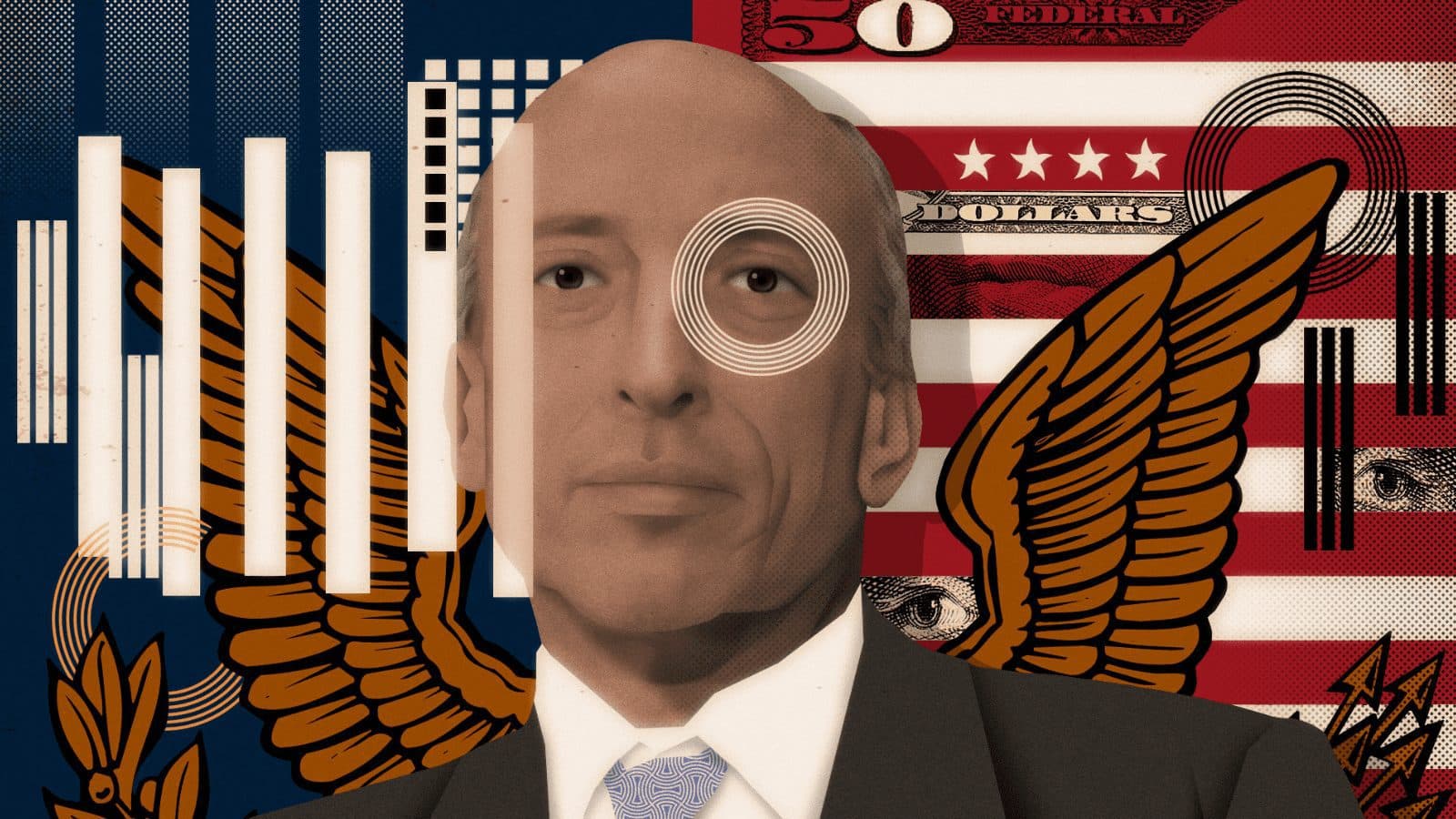
SEC Chair Gary Gensler | Blockworks exclusive art by axel rangel
- SEC chair Gary Gensler believes most cryptocurrencies are securities and should be regulated by his agency
- Gensler’s recent comments indicate Ethereum’s move to PoS could open regulatory attack vectors
Ethereum switched to proof-of-stake following the Merge on Thursday, but its transition towards energy efficiency may just bring stiff resistance from the US Securities and Exchange Commission (SEC).
The SEC has continued to advocate on the basis that most cryptos are securities — by definition under an 80-year-old Supreme Court ruling. That’s opposed to being recognized as commodities, which only explicitly applies to bitcoin, the regulator has said previously.
Now that Ethereum requires validators to stake their holdings to secure the network, alongside many other blockchains including Binance Smart Chain, Avalanche and Solana, questions regarding the role of intermediates in these systems are taking precedent.
Lending, staking and earning rewards, as defined by the 1946 Howey Test, could constitute securities activity, the Wall Street Journal first reported Thursday, citing comments made by SEC chair Gary Gensler to reporters after a congressional hearing. The price of ether has since dropped up to 9%, now trading for about $1,460, while bitcoin shed just 1%.
Both bitcoin and ether may yet be regulated by the more amenable Commodity Futures Trading Commission (CFTC) should a group of bipartisan senators get their way, but certainty over how securities laws maps to cryptocurrencies is still hotly debated.
Addressing the U.S. Senate Banking Committee on Thursday, Gensler defended his agency’s stance which, among other things, believes crypto intermediaries such as brokers and exchanges should register with the regulator.
Multiple crypto exchanges, including Coinbase, Binance and Kraken, offer ether staking services, allowing users to participate in the Ethereum ecosystem directly from their accounts.
Those three platforms recently controlled more than 30% of all staked ether, according data analytics unit Nansen, while liquid staking provider Lido Finance, through its node operators, managed 47%.
Gensler reportedly believes that process seems consistent with lending, which would render Ethereum staking services akin to securities offerings under SEC law.
Long-time crypto advocate Sen. Pat Toomey took aim at the regulator over its approach to securities definition as it relates to digital assets while accusing the regulator of overstepping its legal mandate.
The senator also levied criticism at the SEC’s proposed and controversial climate disclosure rule, which would force public companies to include climate risks within their company filings.
“Crypto tokens have varying degrees of decentralization, usually do not have a financial claim on the issuer, and typically can be settled in real-time without intermediaries,” Toomey said in a statement.
Those varying degrees of decentralization and a lack of financial claim on the issuer are what separates digital assets from traditional securities, the senator said.
They merit a clearly defined and bespoke regulatory framework, he argued, echoing sentiment felt across the industry.
Get the news in your inbox. Explore Blockworks newsletters:
- The Breakdown: Decoding crypto and the markets. Daily.
- 0xResearch: Alpha in your inbox. Think like an analyst.