Fed holds interest rates, US equities and cryptos stay in the green
The FOMC on Wednesday said it would be holding interest rates, marking the central bank’s eighth-straight pause since it stopped hiking rates a year ago
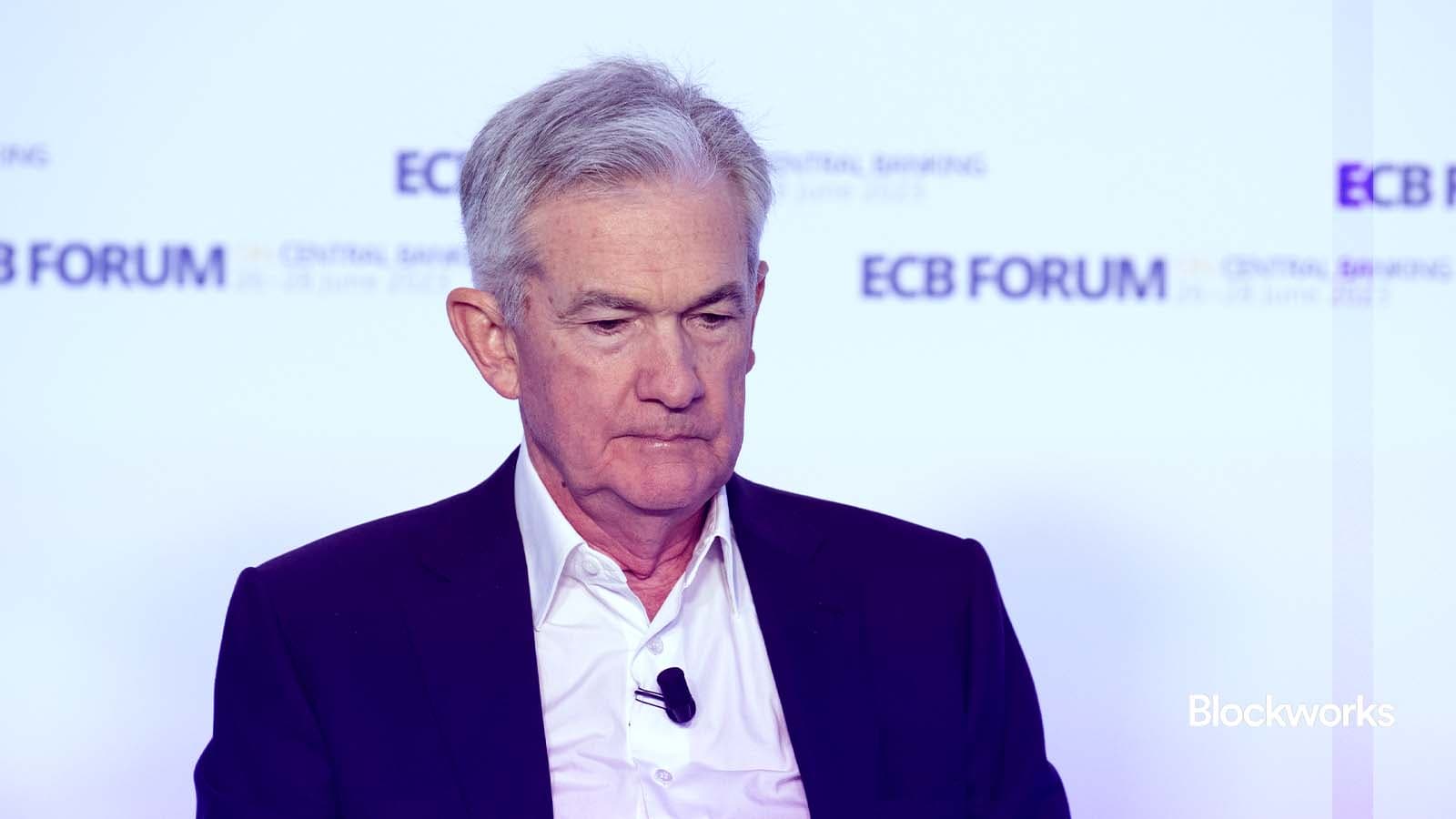
Federal Reserve Chair Jerome Powell | Sérgio Garcia/Your Image for ECB/"ECB Forum on central banking 2023″ (CC license)
On Wednesday, Federal Open Market Committee members opted to hold interest rates steady. This marks their eighth pause since consistently raising interest rates from March 2022 to July 2023.
Stocks showed little immediate change, holding onto gains made earlier in the session. At the time of publication, the S&P 500 and Nasdaq Composite indexes were up 1.6% and 2.4%, respectively.
Many cryptocurrencies dipped across the board, paring gains from earlier in the day. However, bitcoin and ether remained in the green at time of publication, trending 0.7% and 0.3% higher, according to data from Coinbase.
Committee members’ forward guidance, found in the third paragraph of Wednesday’s statement, hinted just slightly at a rate cut in September, which markets have been anticipating.
“The Committee does not expect it will be appropriate to reduce the target range until it has gained greater confidence that inflation is moving sustainably toward [2%],” Wednesday’s statement read. It’s verbatim what central bankers said last month, but this latest statement did have some more encouraging language.
“There has been some further progress” on the inflation front, Committee members wrote. Plus, “job gains have moderated, and the unemployment rate has moved up but remains low,” all positive conditions for a rate cutting cycle.
Further labor market data will be telling about central bankers’ next move in the fall.
Tuesday’s Job Openings and Labor Turnover Survey showed that job openings decreased slightly in June. There were 8.18 million vacancies in June, fewer than in May, but still higher than analysts had expected.
Still to come this week are Thursday’s initial jobless claims and Friday’s July employment report. The latter will be the most telling in terms of whether a September rate cut is on the table.
So far, markets have been just fine accepting some “bad” labor data since it means rate cuts are more likely, but this could change in the near-term, Sevens Report Research founder Tom Essaye said.
“A ‘Too Hot’ number that pushes back against September rate cut expectations is the near-term ‘worst’ outcome for stocks, while a slightly weak number (a bit below expectations) is the ‘best’ short-term outcome for stocks because it implies still-solid economic growth but also clears the Fed to continue to plan to cut rates in September and, most likely, again in December,” Essaye said.
Get the news in your inbox. Explore Blockworks newsletters:
- The Breakdown: Decoding crypto and the markets. Daily.
- 0xResearch: Alpha in your inbox. Think like an analyst.