The state of the labor market
Ahead of the FOMC September meeting, the labor market continues to embolden a dovish lean

BublikHaus/Shutterstock modified by Blockworks
This is a segment from the Forward Guidance newsletter. To read full editions, subscribe.
It’s a big week for labor market data. With everything published except for tomorrow’s NFP report, let’s round up all the data we received this week and get an idea of where things stand — and how that contrasts with the expected Fed rate cut this September.
JOLTS
It’s always important to remember how lagged the JOLTS report is as a datapoint. This report is from July and, much like the jobs report we received last month, it’s quite weak.
Job openings surprised to the downside at 7.18 million, below the expected 7.4 million.
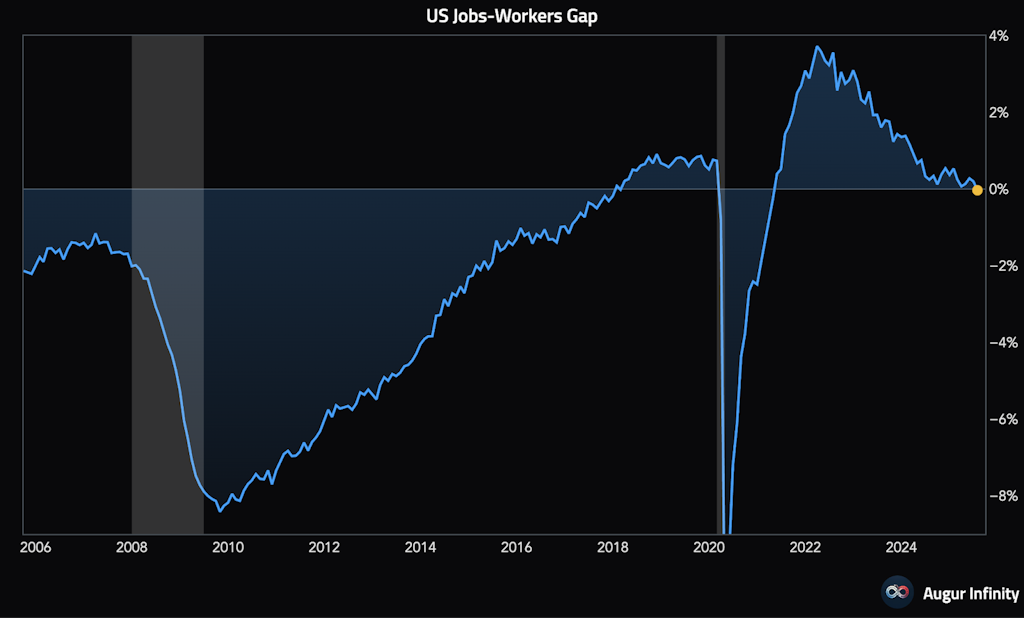
When we contextualize that alongside how many unemployed people there are, we actually saw the jobs-workers gap go negative for the first time since the pandemic.
Although not an outright sign of recession (we spent the entirety of the 2010s in negative territory), it does highlight the relative weakness of the labor market.
A key input into the Beveridge curve is the job vacancy rate that comes from this report.
I’m a big fan of the Beveridge curve as it’s an effective way to gauge the amount of slack in the labor market. Given where we are in the Beveridge curve now, any meaningful weakening in jobs available from this point forward would likely trigger an aggressive increase in the unemployment rate.
ADP report
With the recent firing of BLS Commissioner Erika McEntarfer, ADP’s employment data has taken on increased importance in gauging labor market strength.
Although ADP gets a lot of flack since it comes out before NFP and thus has little predictive power, on a longer-term horizon the two actually track quite nicely:
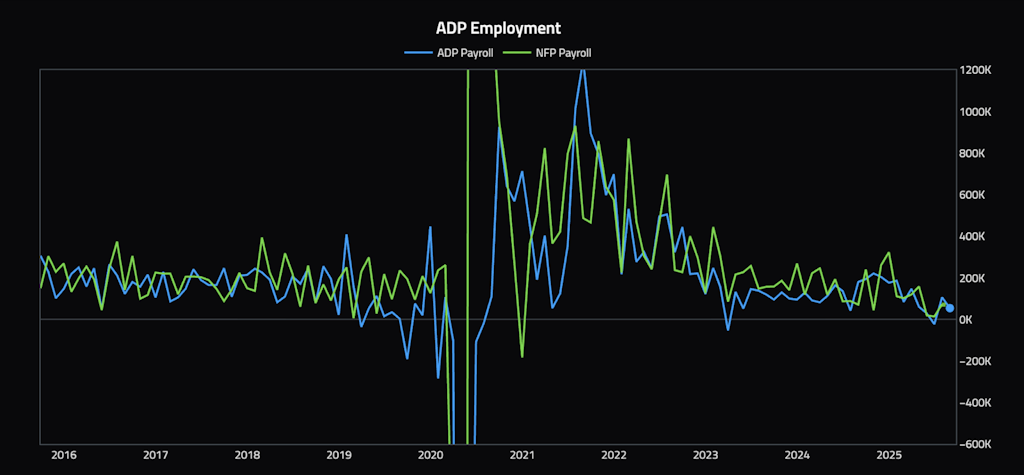
Today’s ADP report came in below expectations and further emboldened the doves on the FOMC to move forward with a cut in September:
Challenger Survey
Finally, we received today’s Challenger Survey layoffs report. It showed a 13% YoY increase, which is significant.
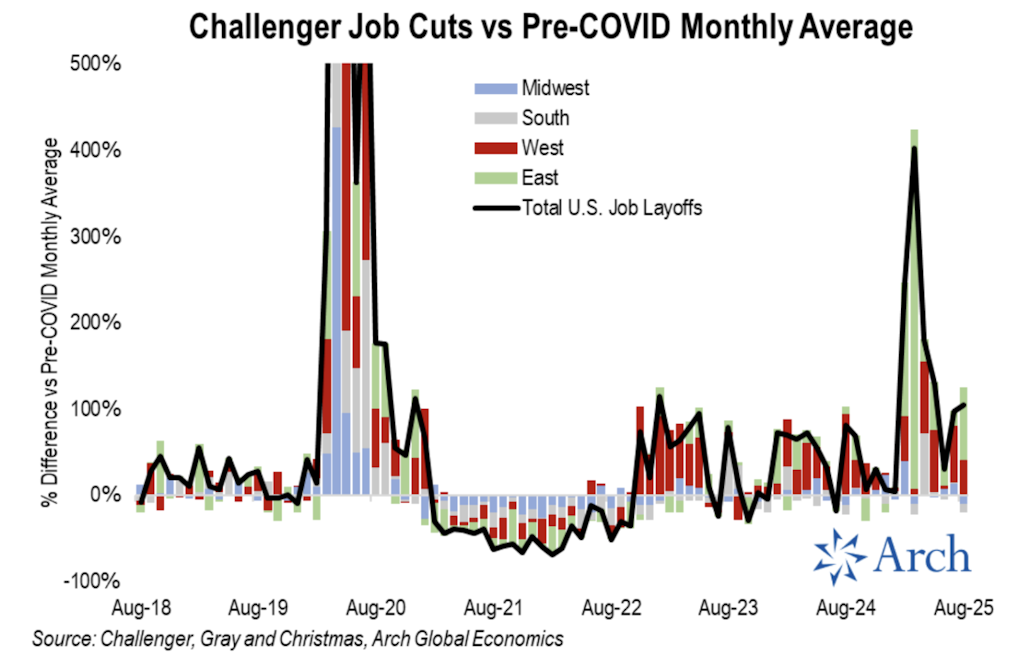
As economist Parker Ross noted in tandem with the chart above: “Last Aug. is a tough benchmark, when layoffs were already 81% above the pre-Covid norm, so the fact we’re up 13% YoY from that elevated level means we’re now 105% above the pre-Covid norm for Aug., up from 98% in July.”
Even without the NFP report in hand, the present labor market data overall offers plenty of rationale to warrant the Fed cutting rates in a couple of weeks.
Get the news in your inbox. Explore Blockworks newsletters:
- The Breakdown: Decoding crypto and the markets. Daily.
- 0xResearch: Alpha in your inbox. Think like an analyst.