Pump.fun revenues hit record as Caitlyn Jenner launches second memecoin
Pump.fun reminds us that crypto casinos can still be extremely profitable
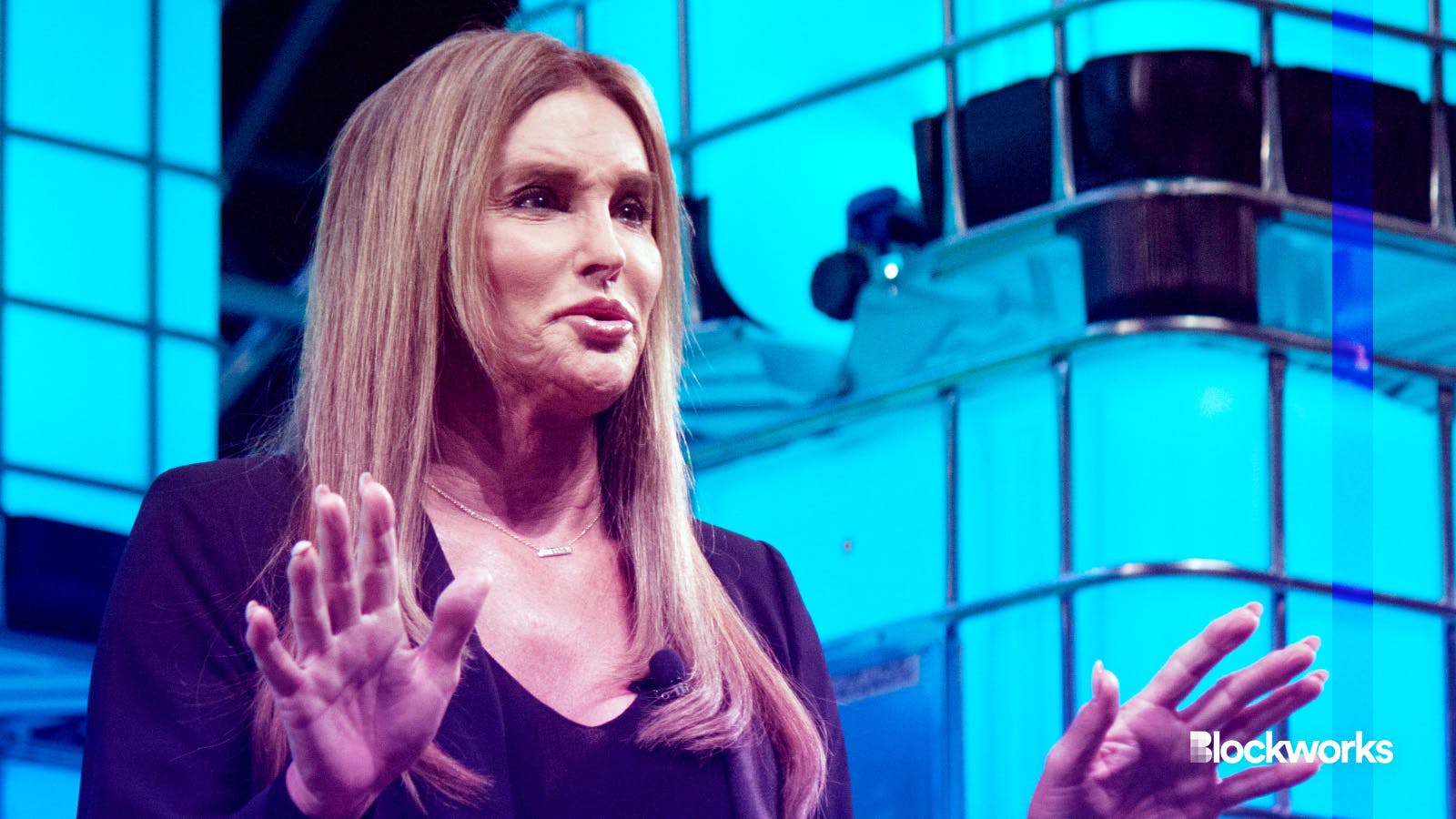
Caitlyn Jenner | G Holland/Shutterstock modified by Blockworks
They say you should sell shovels during a gold rush.
Pump.fun, the Solana memecoin generator, has certainly nailed that strategy. So much so that minting a personalized token on the platform is now, apparently, a rite of passage for celebs.
Over the past four days, Caitlyn Jenner’s X account has nonstop bull-posted about her own token, JENNER, which her team launched on Solana through Pump.fun earlier this week.
The videos are strange and surreal, leading to some speculation that Jenner’s account had been compromised with deepfakes, apparently to pump and dump an unofficial memecoin.
Read more: Is anyone having fun on Pump.fun?
Iggy Azalea confused the matter by launching her own memecoin, MOTHER, amid the hype. She then outed an alleged scammer who had purportedly hustled the rapper, Jenner and other celebs with dodgy token schemes.
Still, the general consensus is that Jenner’s videos are real and this whole thing is perhaps her publicist’s way of latching onto Trump’s recent endorsement of crypto.
Backing that theory is her launch of an Ethereum version of JENNER late Wednesday evening, followed by a pledge to direct the token’s 3% transaction tax to the Trump campaign if it reaches $50 million market cap (currently under $2 million).

Combined with singer-songwriter Davido’s memecoin, as well as short-lived fake IGGY memecoin from the alleged scammer, the tokens had as of Thursday morning seen about $400 million in trade volume.
JENNER on Solana was worth as much as $43.6 million shortly after it first traded, and has since sunk by more than 85%. Iggy’s memecoin is following a similar trend but the volatility could continue for some time.
Token holders have complained that Jenner had torpedoed their holdings by suddenly deploying a different memecoin on Ethereum. The original Solana-based token is down by two-thirds since the announcement, while the Ethereum iteration is doing just as poorly.
There’s 14,000 Solana addresses holding JENNER (slightly more than MOTHER), while the ERC-20 token is in less than 2,000 wallets.
It’s not easy to determine how much money Jenner or Azalea have made by trading their memecoins so far. But it’s really Pump.fun that has found product-market fit.
More than three quarters of a million tokens have been deployed through Pump.fun, and the platform takes a 1% fee on trades and a small amount of SOL when memecoins make it to live trading on Raydium.
Right now, that’s converting to seven-figure fee revenue per day, with yesterday setting a new record of $1.47 million SOL compared to the previous top of $1.2 million earlier this month.

Overall, Pump.fun has brought in nearly $28.9 million in SOL fees since it launched in January, based on a daily tally, which is more than the market cap of JENNER, MOTHER and DAVIDO combined.
How much of that is real profit remains unclear, but the Pump.fun wallet that collects trading fees has so far seen $18.2 million outflows. The purpose of those outflows isn’t known and they shouldn’t be considered irregular, although most occurred around the trading pause in response to a string of flash loan attacks two weeks ago, which resulted in $2 million in losses for the firm.
Ethereum raised only $18 million for its initial coin offering in 2014. Safe to say, Pump.fun has played its hand perfectly so far.
Get the news in your inbox. Explore Blockworks newsletters:
- The Breakdown: Decoding crypto and the markets. Daily.
- 0xResearch: Alpha in your inbox. Think like an analyst.