Ex-CFTC Chair: Crypto Regulation Could Be Joint SEC, CFTC Effort
Neither the SEC nor the CFTC has the power to solely take on crypto regulation, and the industry needs a stake in the game
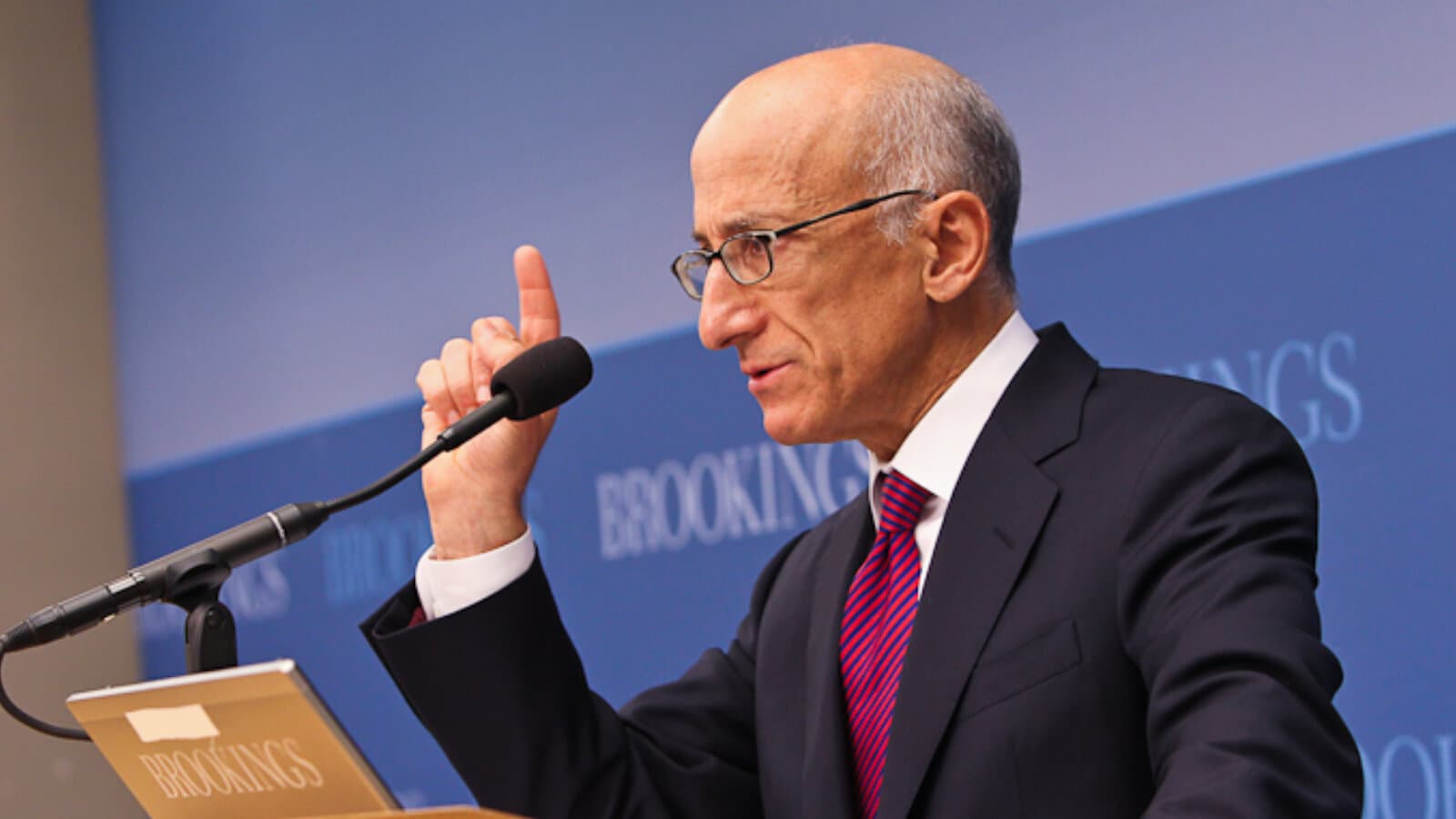
Former CFTC Chair Tim Massad | Brookings Institution/"Timothy Massad" (CC license)
When it comes to US crypto regulation, the two federal agencies at the forefront may need to collaborate to clear up a number of uncertainties, according to a former CFTC chair.
“The SEC and the CFTC could jointly create a self-regulatory organization,” former CFTC head Tim Massad said during a virtual appearance hosted by the Global DCA Wednesday.
Self-regulatory organizations set industry standards and regulations, most notably in the financial sector. While they still are subject to government oversight, they allow industry participants to keep an eye on each other and ensure best practices are followed.
Neither the SEC nor the CFTC has the power to solely tackle the regulation of digital assets, according Massad, now a research fellow at Harvard University’s School of Government.
The lines are currently blurred, Massad said — with the CFTC taking control over exchange-traded bitcoin and ether futures markets and the SEC stepping in when it deems a crypto token a security. Though the exact classification of tokens is a separate issue, Massad said the two agencies need to come together to oversee crypto’s cash market, predominantly housed by exchanges.
A new organization could “develop common standards that would apply to trading venues and other intermediaries, regardless of whether a particular token is a security, a commodity or something else,” he added.
If the SEC and CFTC moved to create a self-regulatory organization, it would not be the first of its kind. The New York Stock Exchange and Fixed Income Clearing Corporation are two examples.
The crypto industry would be responsible for paying for any new collective, which would be responsible for enforcing the rules the SEC and CFTC create.
“It’s ironic, of course, that we’re also at this point where we have these large intermediaries, large trading venues that are essentially unregulated, or only very lightly regulated,” Massad said. “And I say it’s ironic because when you read the original bitcoin white paper and think about the purpose of bitcoin, it was to eliminate large trusted intermediaries, or at least eliminate the need to rely on large trusted intermediaries and create peer-to-peer systems for transferring value.”
Congress, meanwhile, continues to mull over the Digital Commodity Consumer Protection Act (DCCPA), which received vocal support from now-disgraced FTX founder Sam Bankman-Fried. The legislation would grant the CFTC more power in overseeing cryptocurrency markets.
Current CFTC Chair Rostin Behnam appeared before Congress earlier this month, where he highlighted the importance of the bill — and suggested it could have softened the blow of the recent FTX collapse.
“Based on what we know thus far, a lot of the issues that have arisen and sort of come to light are significant conflicts of interest, significant allegations of commingling customer money and house money, lack of books and records, lack of corporate governance and risk controls, just to name a few,” Behnam said. “And these are, from our understanding in working with [bill sponsors] on the DCCPA, core elements of the DCCPA.”
Get the news in your inbox. Explore Blockworks newsletters:
- The Breakdown: Decoding crypto and the markets. Daily.
- Empire: Crypto news and analysis to start your day.
- Forward Guidance: The intersection of crypto, macro and policy.
- 0xResearch: Alpha directly in your inbox.
- Lightspeed: All things Solana.
- The Drop: Apps, games, memes and more.
- Supply Shock: Bitcoin, bitcoin, bitcoin.