Bitcoin miner repurposes former sustainability-focused EU data center prototype
The facility was originally built with the Research Institute of Sweden to address the need for more energy efficient data centers
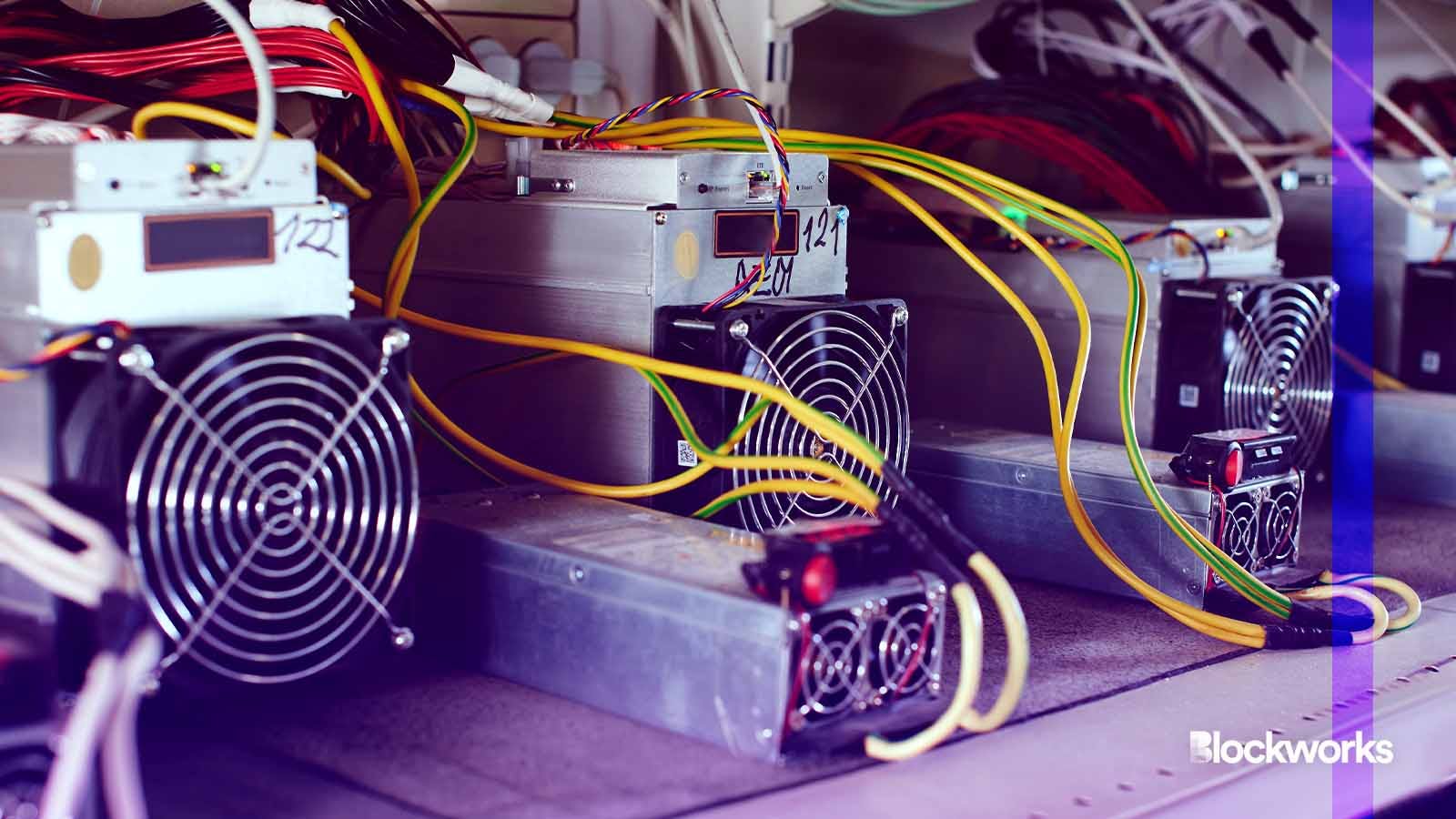
ivan_kislitsin/Shutterstock modified by Blockworks
Crypto miner Hive Digital Technologies is repurposing a Sweden data center formerly used by the European Union as a prototype to test energy efficiency and sustainability.
The facility is set to house Hive’s ASIC servers to increase the company’s mining capacity by roughly 300 petahash, Hive Executive Chairman Frank Holmes told Blockworks.
It was previously constructed as part of EU Horizon 2020 — a research and innovation funding program that ran from 2014 to 2020 with a budget of roughly 80 billion euros ($88 billion). Horizon Europe has since succeeded that program.
The goal of what was known as the Boden Type Data Center was “to build the prototype of the most energy and cost-efficient data [center] in the world,” according to a project brief.
The prototype comprised a fresh air cooling system and evaporative cooler apparatus “using solely harmonic free renewable energy,” it adds.
Read more: Why did Cambridge revise its bitcoin electricity consumption index?
Johanna Thörnblad, president of Hive’s Swedish operations, confirmed to Blockworks this former prototype facility is the data center Hive has purchased.
“This data center was initially built together with the Research Institute of Sweden to address the need for more energy efficient data centers,” she told Blockworks in an email. “It has since been expanded to include four additional buildings using low-carbon and locally sourced building materials.”
The site is near Hive’s existing Boden facility and no more than 500 meters from the city’s hydro plant, Thörnblad said. The data center runs on renewable hydro energy and relies on air and evaporative cooling technologies.
“Hive has always had a strong focus on sustainability and this data center fits very well into our strategy,” Thörnblad added.
HIVE acquired the property with a payment structure that includes up to $750,000 in cash and up to $1.5 million in common shares of the company. According to an announcement from the company, the common shares portion is to be paid in two installments, with the share price determined by specific conditions related to the TSX Venture Exchange’s closing prices.
Holmes noted the data center was most recently in private hands, declining to disclose the owner. The company, which was involved in high-performance computing, sought to sell ahead of the bitcoin halving slated for April — an event expected to put financial pressure on segment players.
Read more: At anniversary of 2016 BTC halving, a look to the next one
The purchase comes just months after the company formerly known as Hive Blockchain Technologies changed its name as it shifted its focus to supporting the growth of artificial intelligence.
Holmes said the Vancouver-based company looks to continue expanding in British Columbia, Manitoba, Ontario and Quebec. Competitors such as Marathon Digital have recently shared plans to continue diversifying geographically.
“Buying this facility right beside us is just another long-term vision of the great digital transformation that we’re putting long-term assets on our balance sheet,” Holmes said.
Updated Nov. 28, 2023 at 1:40 pm ET: Modified headline to emphasize Hive’s bitcoin mining functions.
Get the news in your inbox. Explore Blockworks newsletters:
- The Breakdown: Decoding crypto and the markets. Daily.
- 0xResearch: Alpha in your inbox. Think like an analyst.