Boston Fed seeks software engineer for CBDC research
The LinkedIn posting states that the position would “support the Federal Reserve System’s [CBDC] Research and Development program.”
Adobe and A.Ruiz/Shutterstock modified by Blockworks
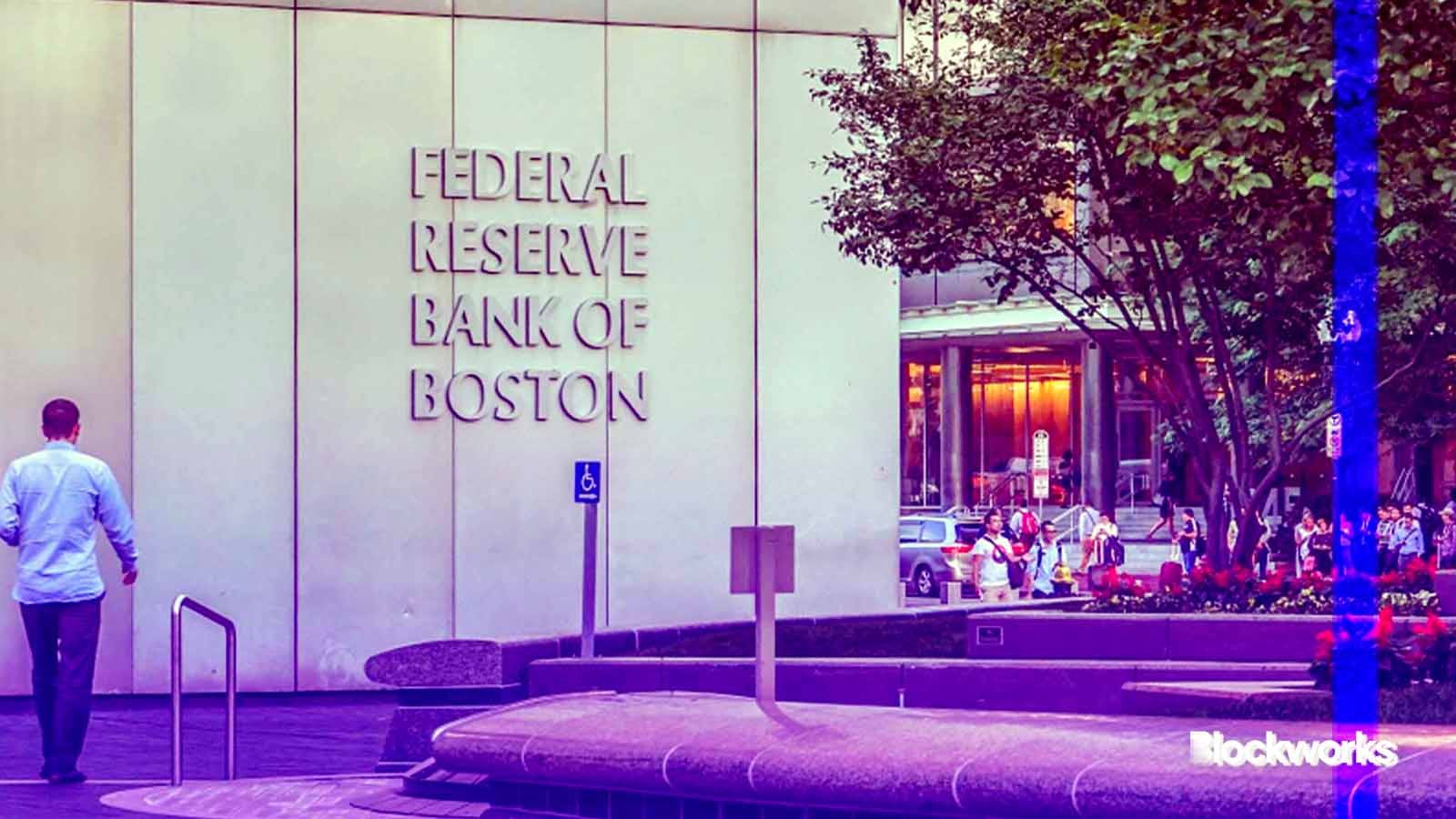
The Federal Reserve Bank of Boston wants to hire a senior software engineer focused on digital currency.
The LinkedIn posting states that the position would “support the Federal Reserve System’s Central Bank Digital Currency (CBDC) Research and Development program.”
The engineer would head up a team focused on the CBDC research and “prototyping.”
“This position offers a unique opportunity to be part of a world-class team working on cutting edge technologies related to CBDC R&D. You will participate in a dynamic work environment that has the feel of a startup while also maintaining the benefits of a larger organization,” the listing said.
The Boston branch of the US central bank is exploring how a CBDC could be implemented and what would be needed to roll one out. However, the Fed has not yet committed to a CBDC.
Read more: Fed official: Stablecoins pose a threat, but could present innovative opportunities
In fact, the US remains unsure about CBDCs, with some lawmakers on Capitol Hill arguing that privacy is a concern. It’s a sticking point that isn’t just a worry for the US government either — the UK and other nations are researching how privacy could be safeguarded in any CBDC rollout.
Even RBC Wealth Management published a report on privacy earlier this year.
In September, US Rep. Warren Davidson, R-Ohio, said that a poorly structured money system is “perhaps the biggest existential threat to Western civilization.”
Earlier this year, Republicans brought forth a Central Bank Digital Currency Anti-Surveillance State Act which aims to prevent the Fed from directly offering a CBDC to individuals. Democrats — including Rep. Maxine Waters, D-CA., have spoken out against the bill.
Waters warned that the bill could impede the Fed’s research into a CBDC.
The proposed legislation is clearly not stopping the Fed from proceeding with its research into a possible digital dollar currently. Michael Barr, Vice Chair of Supervision at the Fed, said in October that while the central bank is no closer to making a decision on a CBDC, it continues to research potential systems.
“The research is currently focused on end-to-end system architecture, such as how ledgers that record ownership of and transactions in digital assets are maintained, secured and verified, as well as tokenization and custody models,” Barr said at the time.
Get the news in your inbox. Explore Blockworks newsletters:
- The Breakdown: Decoding crypto and the markets. Daily.
- 0xResearch: Alpha in your inbox. Think like an analyst.