Friday charts: The rise of zero-sum thinking
Trade isn’t war and prosperity isn’t a contest

Artwork by Crystal Le
This is a segment from The Breakdown newsletter. To read more editions, subscribe.
“The importation of gold and silver is not the principal, much less the sole benefit which a nation derives from its foreign trade.”
— Adam Smith
Capitalism, it is sometimes said, is how we take care of people we don’t know.
People you don’t know grow the food you eat, build the house you live in and sew the clothes you wear.
For Americans, many of those people live in Vietnam, although we don’t seem very thankful for them — this week, the chair of the White House Council of Economic Advisors, Stephen Miran, said a new trade deal with Vietnam is “fantastic” because it’s “extremely one-sided.”
This is a Hunger Games worldview that I wish I could talk him out of.
Dear Mr. Miran: Vietnam doesn’t have to suffer for Americans to prosper!
Just the opposite, in fact.
The entire point of free-market capitalism is that exchanging goods and services is a positive-sum activity.
We learned this from Adam Smith, who explained that every voluntary exchange makes both parties better off — or it wouldn’t happen.
People have an innate “propensity to truck, barter and exchange one thing for another,” he wrote, and the more we do it, the wealthier we all are.
Extracting “extremely one-sided” trade deals, by contrast, makes both sides poorer.
The deal Miran touted is so one-sided that it literally has one side; Vietnam hasn’t even agreed to it, Bloomberg reports.
The president imposed similarly one-sided deals on Japan and Brazil this week, in letters that revive the 18th-century practice of capitalizing random nouns: “We invite you to participate in the extraordinary Economy of the United States, the Number One Market in the World, by far.”
The letter to Japan complained that the relationship between the two countries has been “far from Reciprocal” (again with the capitalization!), because the US sends more money to Japan than it receives.
But Smith would explain that the primary purpose of trade is not “the importation of gold and silver,” but the increased availability of goods and services for all.
To judge trade relationships solely by the flow of money is to assume that trade is a zero-sum activity.
Sadly, this Hunger Games outlook appears to be one of the few areas of bipartisan agreement.
“Zero-sum thinking doesn’t fall neatly along party lines and is not a clearly left-wing or right-wing mindset,” Stefanie Stantcheva wrote for The Economist.
Instead, a study she co-authored found that urban dwellers, PhDs and young people are most likely to have a zero-sum view of the world.
Even PhDs don’t read Adam Smith anymore, I guess.
The stock market doesn’t seem very troubled by this troubling trend. It’s up nearly 7% year to date, as if nothing much has happened.
But I’m sure Adam Smith would tell you that if we insist on making world trade a competition, we’re all going to lose.
Hunger Games had a happy ending, after all, but only because they stopped playing the game.
Let’s check the charts.
Something is happening:
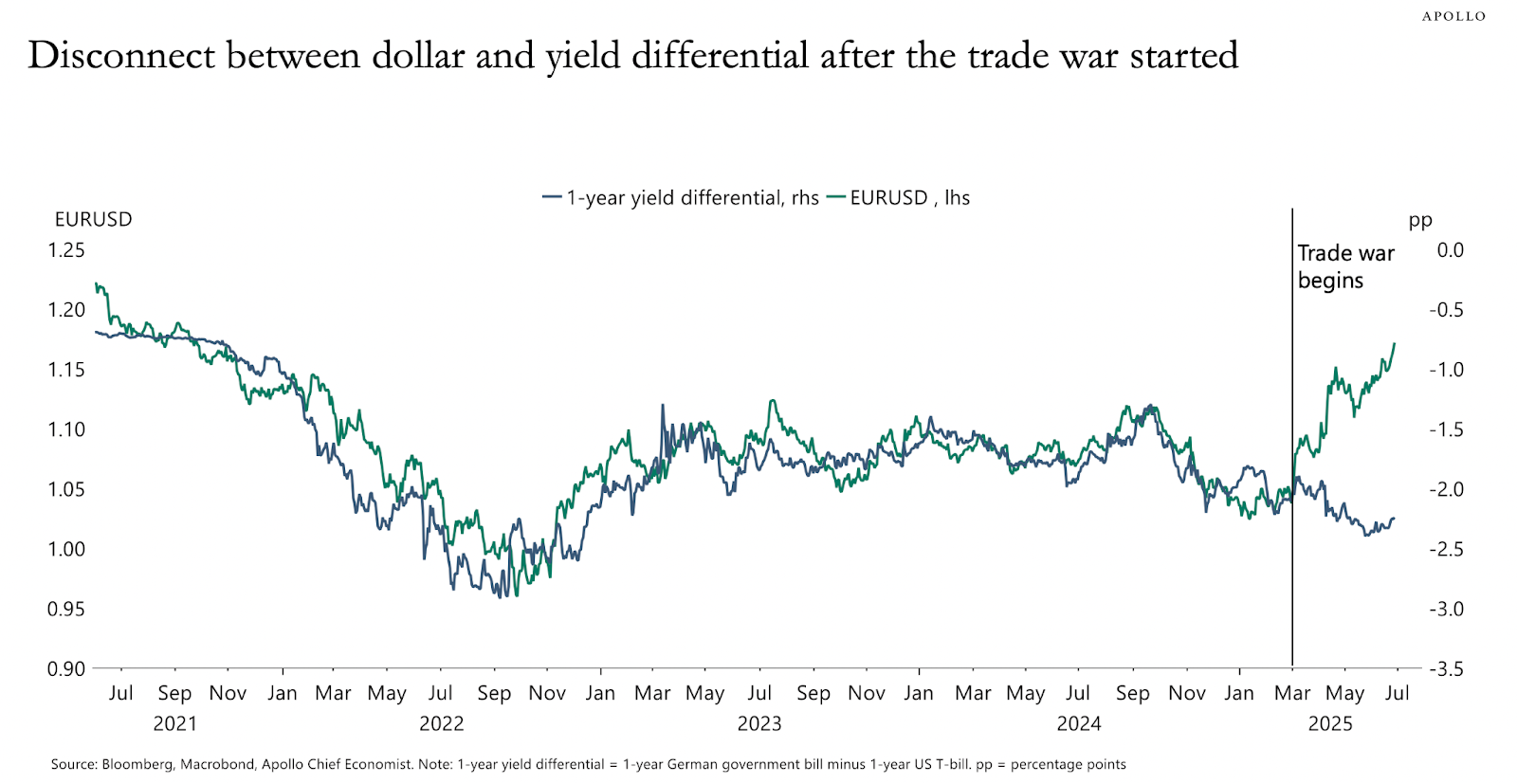
The euro-dollar exchange rate is usually a function of the difference in interest rates between the US and EU. These two things have decoupled since the start of the trade war, which suggests that currency markets (unlike stock markets) think that tariffs do matter.
Try to keep up:
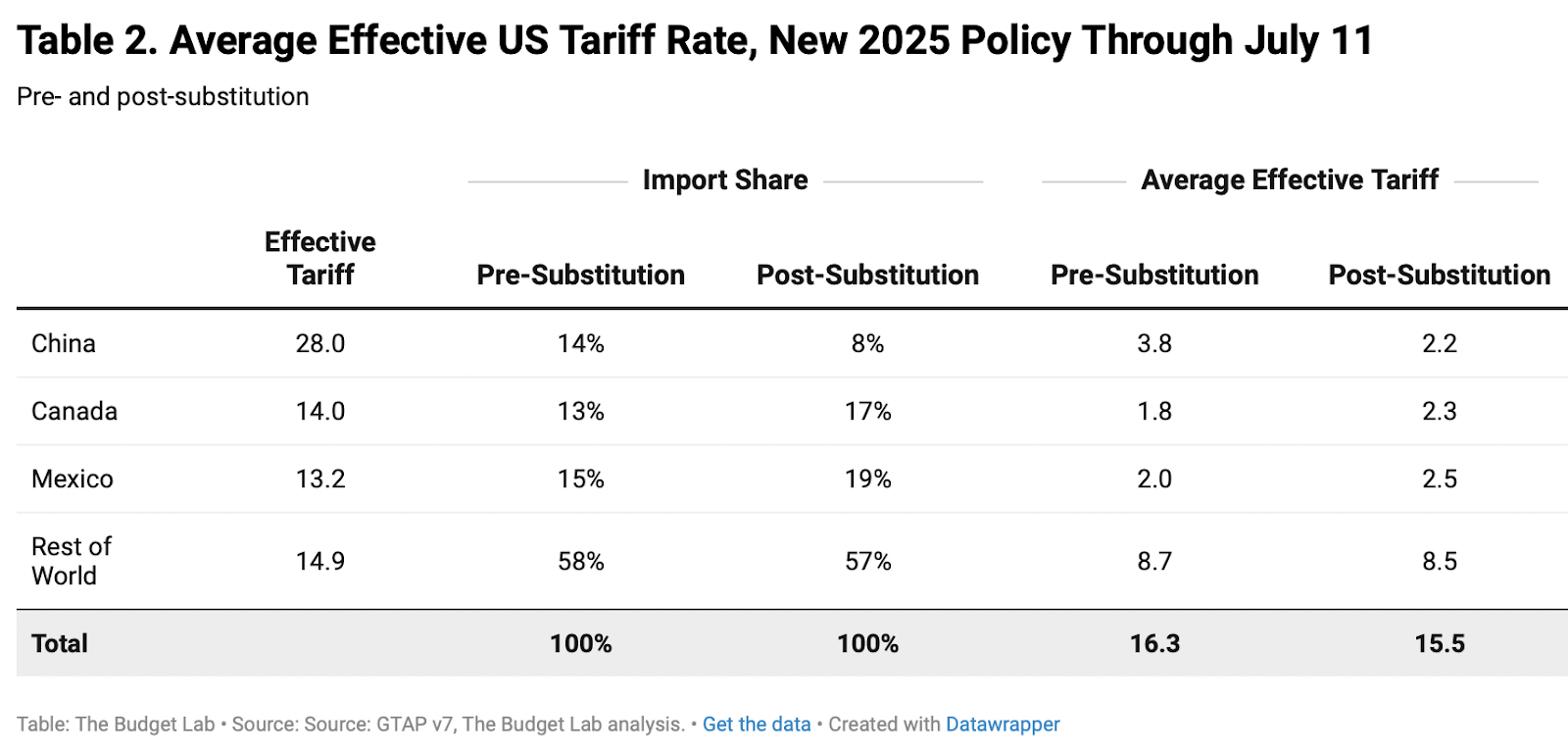
Economists at Yale’s Budget Lab calculate that the announced tariffs — as of today! — amount to an effective rate of 16.3% (pre-substitution). It’ll probably be different tomorrow. And probably higher.
Tariff cheat sheet:
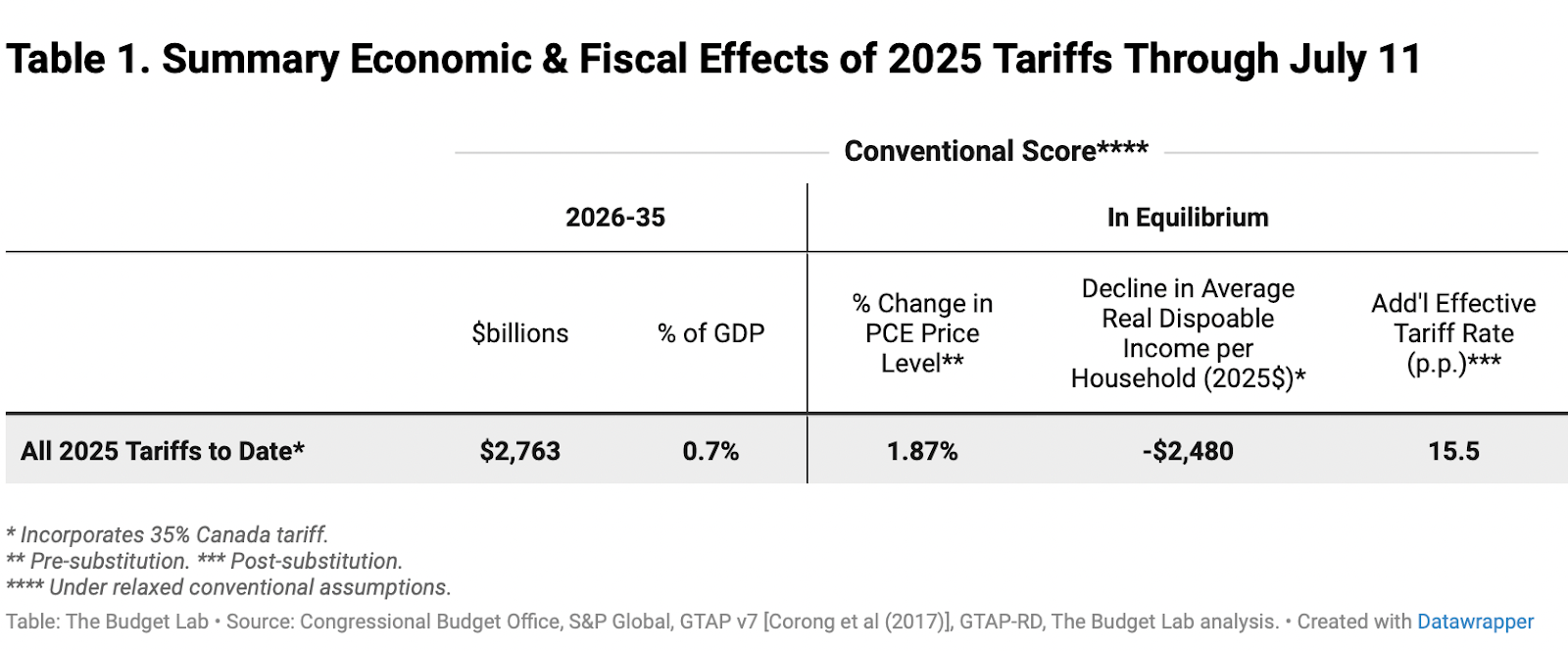
Yale also keeps a running calculation of how tariffs will impact GDP, inflation and our purchasing power. It currently estimates that the annual disposable income of American households will fall by an average of $2,480. (It seems to have read its Adam Smith.)
Is inflation due for a trend change?
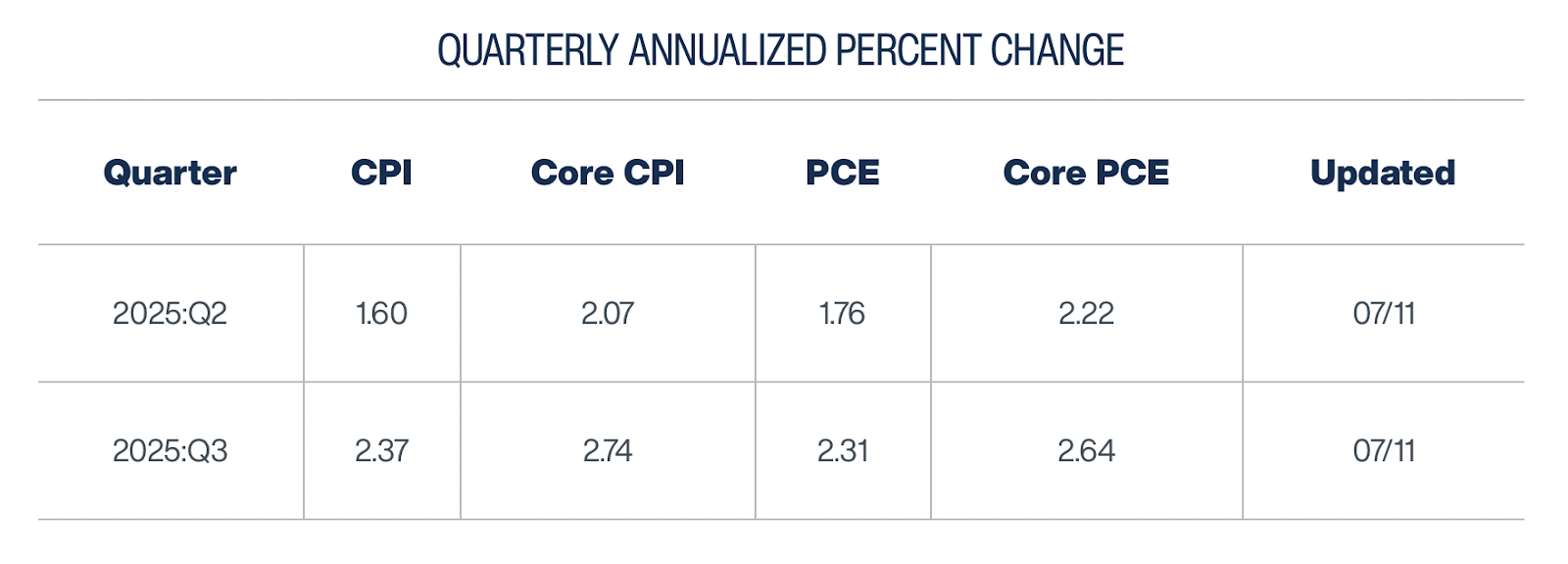
CPI has surprised to the downside four months in a row, but the Cleveland Fed sees inflation nearly 0.8% higher in Q3 vs. Q2. Next week’s CPI report will be scrutinized for a change in the recent trend.
Shrinking the economy:
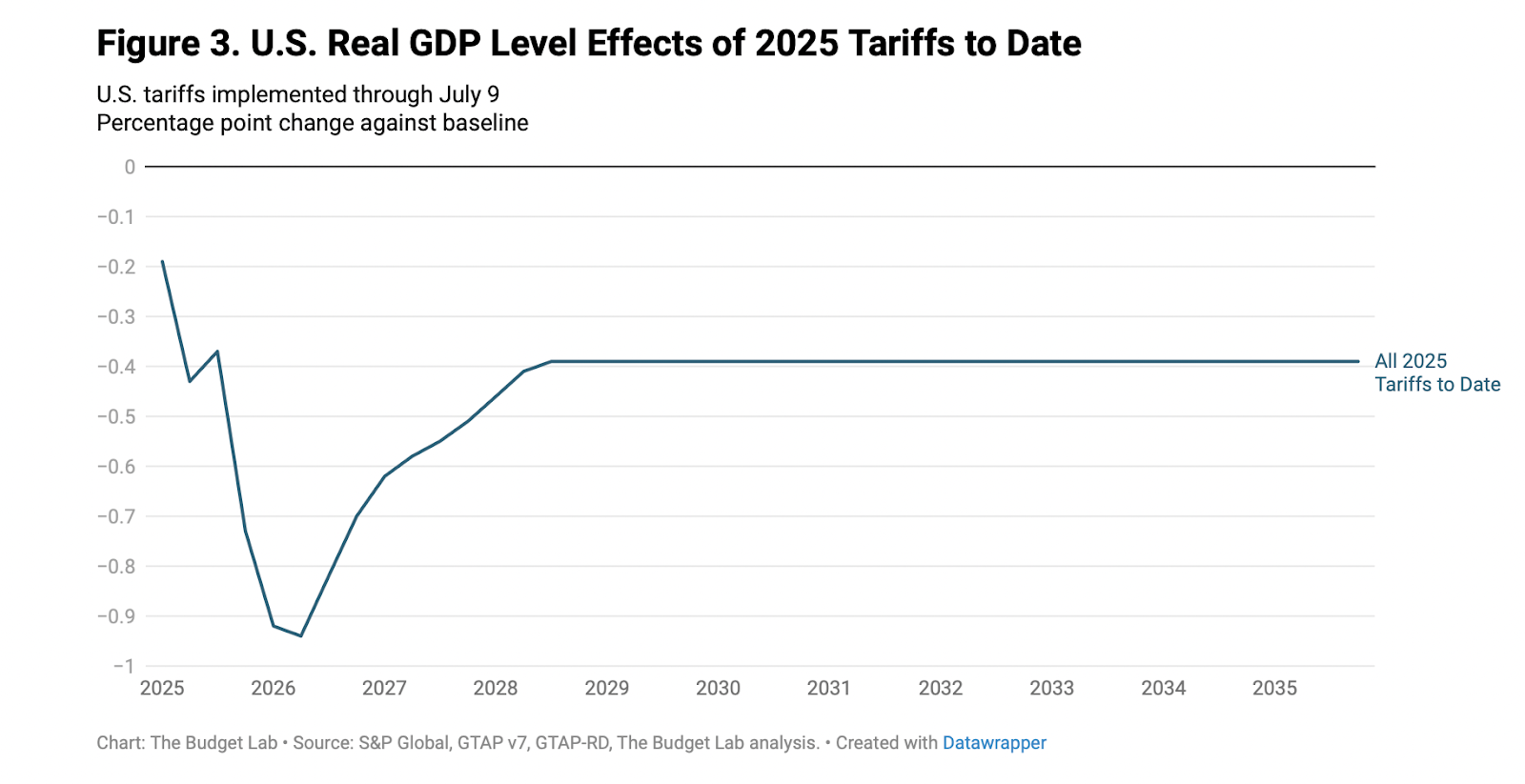
The Budget Lab estimates that tariffs will take about 0.8% off GDP in 2026 and that the US economy, growing from a smaller base, will remain 0.4% smaller than it otherwise would have been, in perpetuity.
Shrinking the economy, part two:
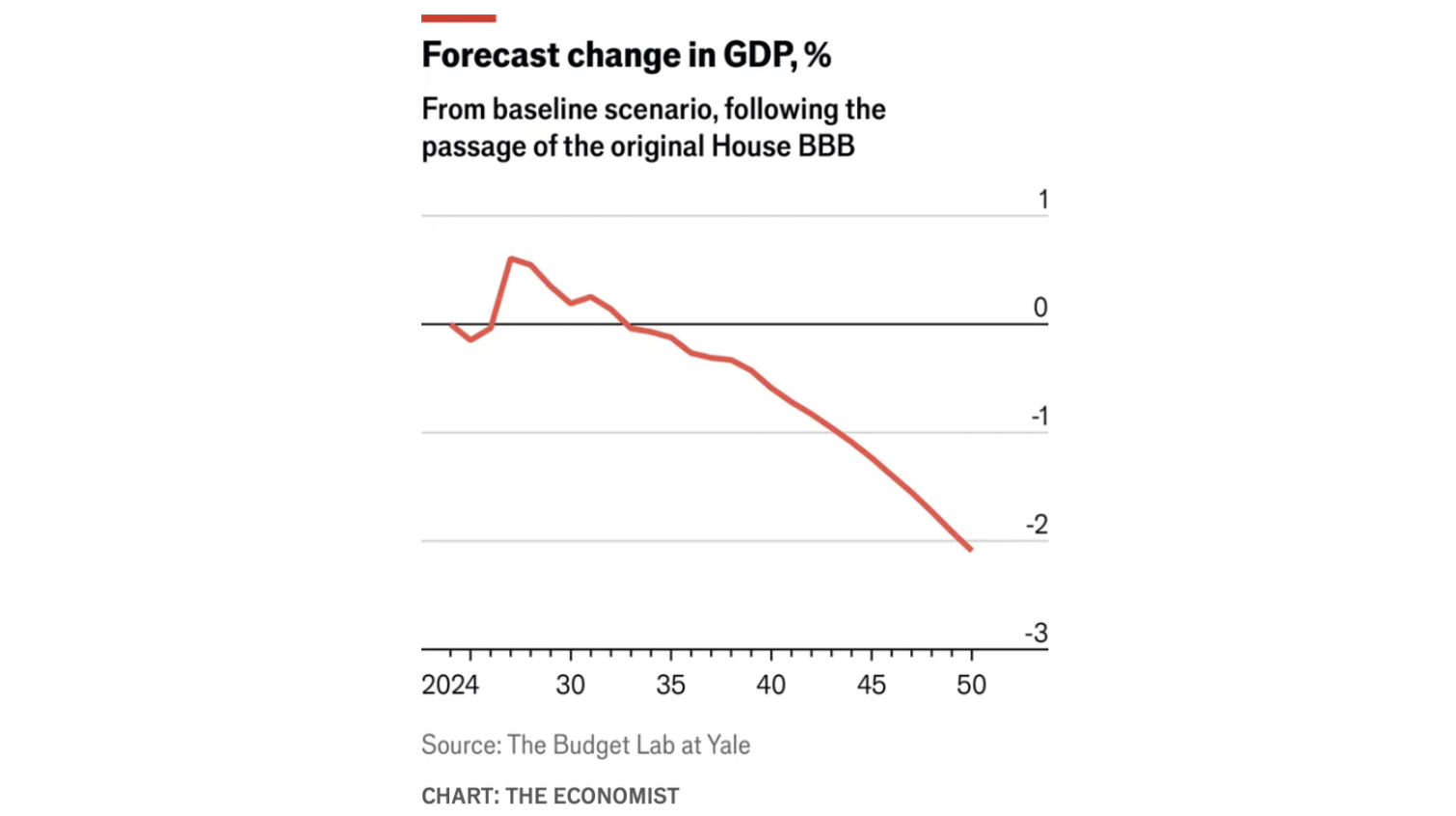
The Economist (using Yale data again) charts the effect of the big beautiful bill, which is expected to have made the US economy 2% smaller in 2050 than it otherwise would have been. Two percentage points in 2050 may not sound like much, but it will happen faster than you might think. I did the math and found out 2050 is less than 25 years away. (Weird, but true.)
In case you missed it:
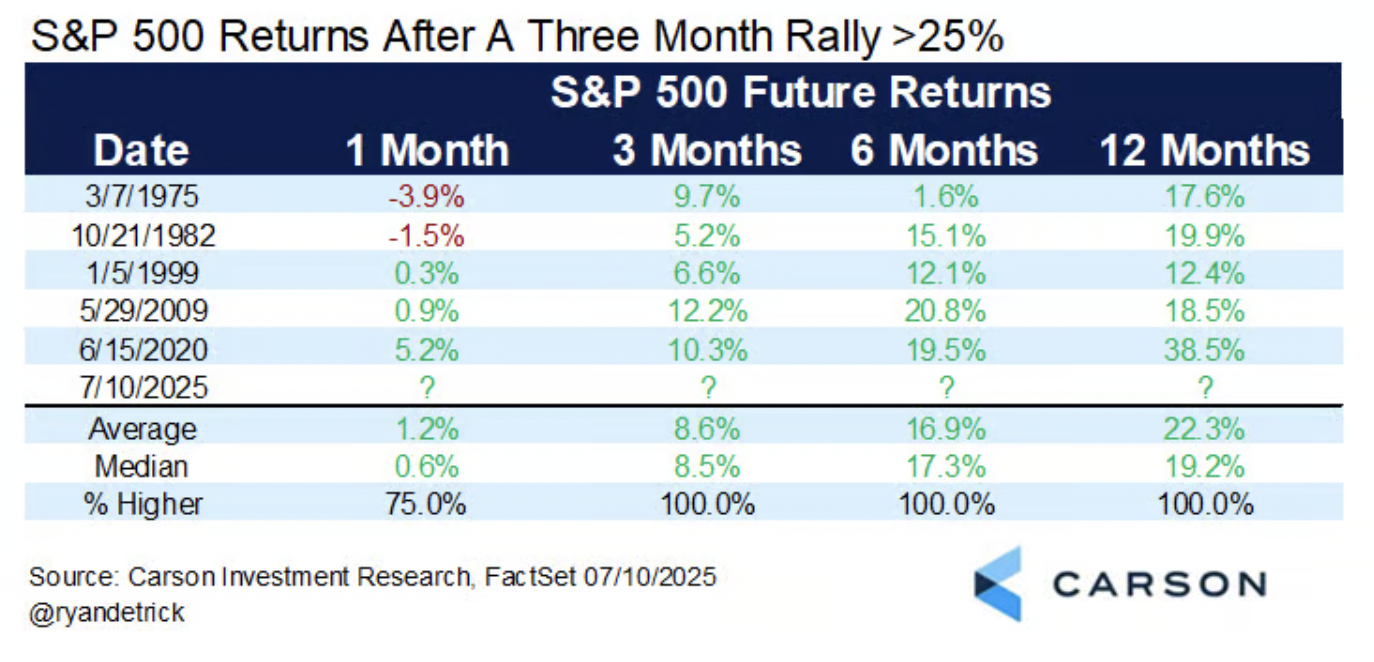
“It” being the stock market. Data from @ryandetrick shows that when stocks are up as much as they are now, they are always higher three, six and 12 months later. That is a mathematical fact…but with a sample size of just four, unfortunately, so maybe don’t bet the house on it.
My favorite chart:
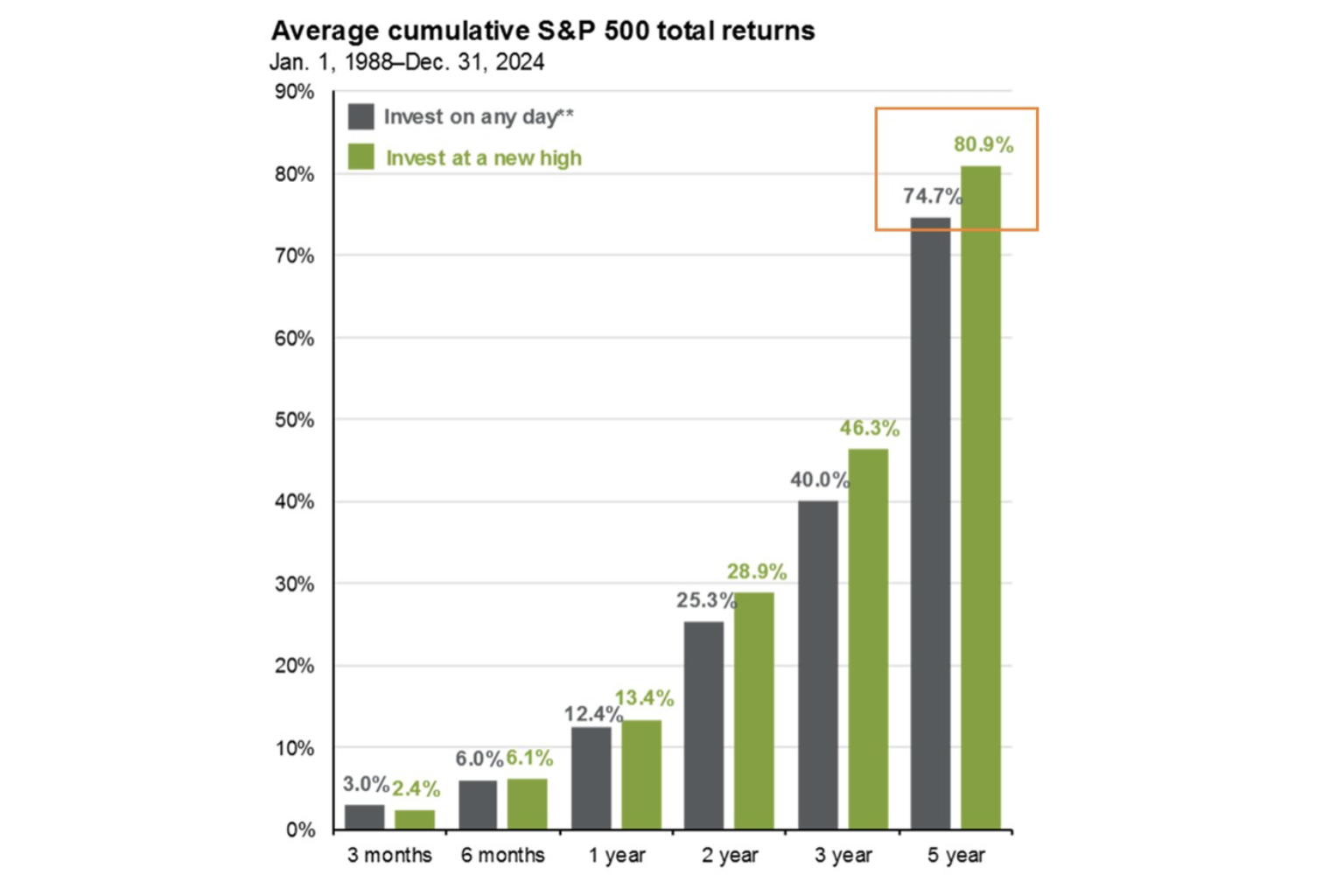
I am excellent at buying high, so I always enjoy seeing the counterintuitive data Mike Zaccardi reprises above. Somehow, buying the S&P 500 only at its all-time highs is better than buying randomly. There’s hope for us all.
Doing more with more:
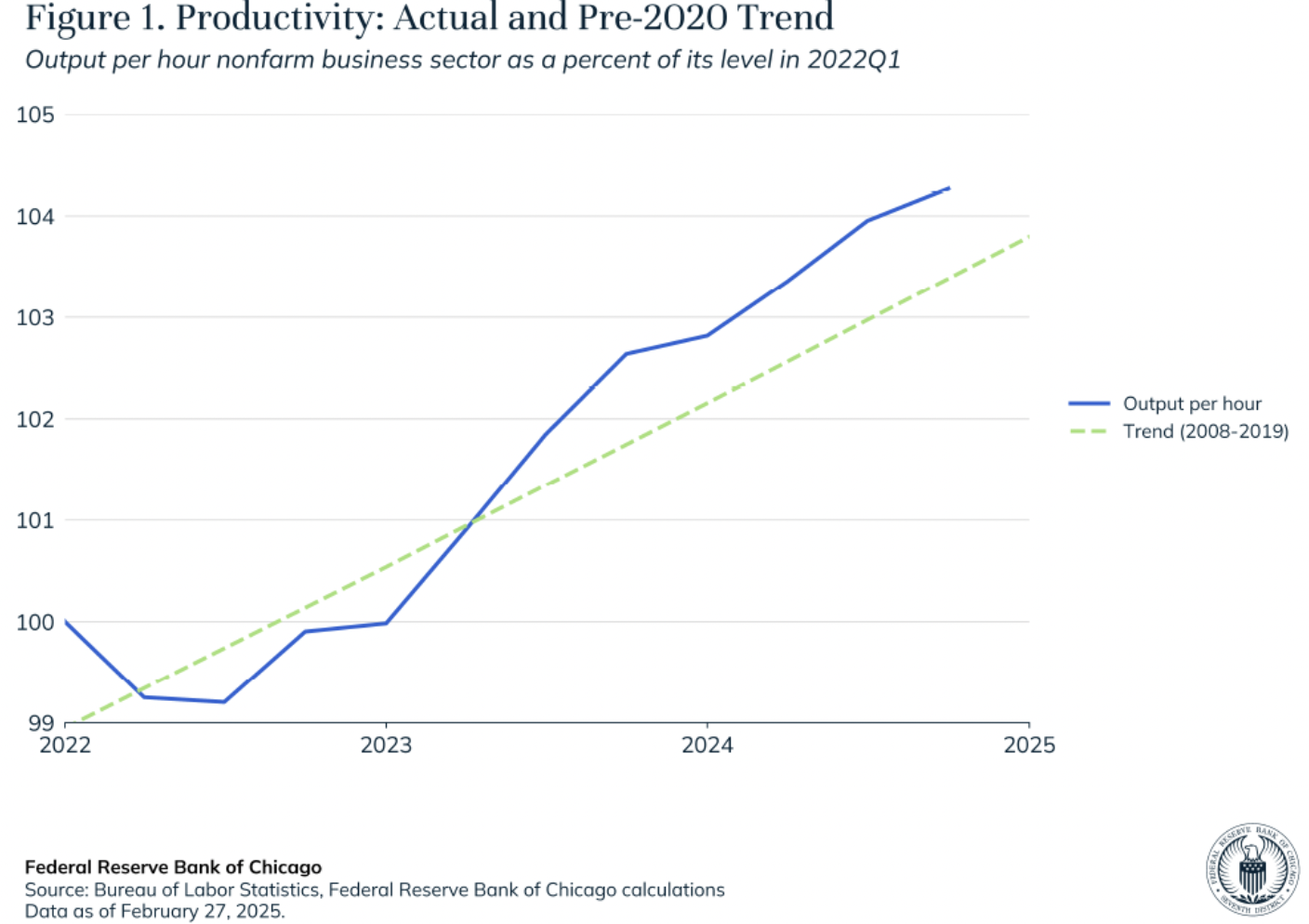
The unsung hero of this longer-than-expected economic expansion has been a surge in productivity, as measured by output per hour. Economists are not yet sure why we’re getting more productive, but Timothy Taylor’s best guess is that we have the Covid-induced adoption of technology to thank.
They’d all agree, however, that the way to be even more productive is to keep trading with each other.
Have a great weekend, positive-sum readers.
Get the news in your inbox. Explore Blockworks newsletters:
- The Breakdown: Decoding crypto and the markets. Daily.
- 0xResearch: Alpha in your inbox. Think like an analyst.