Inside Bitwise’s milestone solana ETF launch
“Adjusted for size, I think it may be the most successful ETP launch of all time,” Bitwise CIO Matt Hougan says
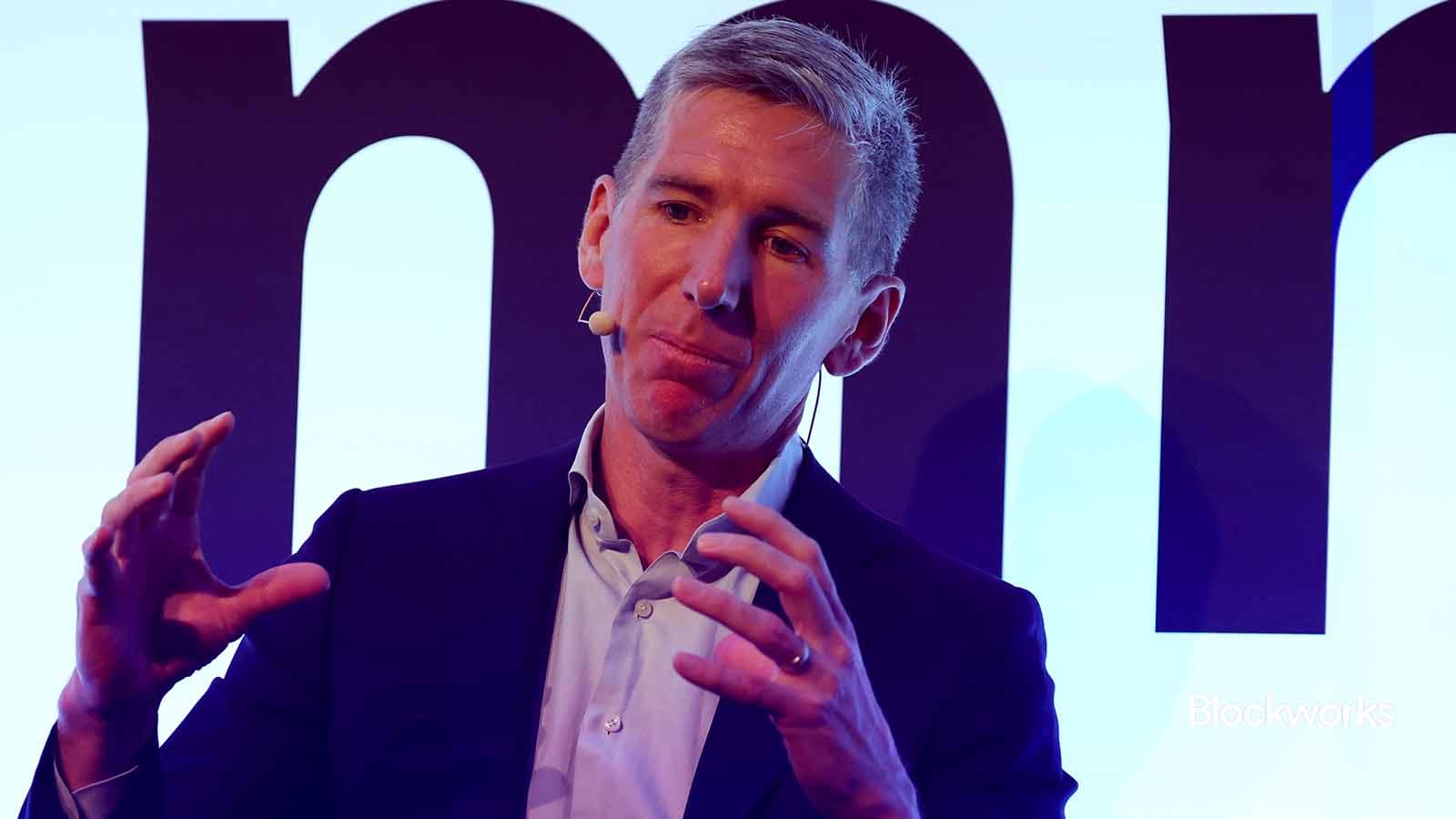
Bitwise chief investment officer Matt Hougan | Ben Solomon Photo LLC for Blockworks
This is a segment from the Forward Guidance newsletter. To read full editions, subscribe.
After a decade of fund issuers trying to offer US bitcoin ETFs, those launches in January 2024 were a huge deal. Ether ETFs then hit US markets six months later.
Today marks yet another date to remember, with the Bitwise Solana Staking ETF (BSOL) going live on the New York Stock Exchange.
“This is one of the big assets; it’s on the Mount Rushmore of crypto,” Bitwise CIO Matt Hougan told me. “We don’t have that many of these launches, so this is a really exciting moment.”
Solana’s market cap is roughly $110 billion — behind only BTC ($2.3 trillion), ETH ($495 billion), tether ($183 billion), XRP ($158 billion) and BNB ($156 billion).
Before we get into the demand for a US solana ETF, let’s start with launch timing — as Bitwise got to market ahead of competitors. Hougan admitted to me that a legal mind — like that of Multicoin Capital general counsel Greg Xethalis — could perhaps more eloquently explain what went down:
The Bitwise S-1 filed on Oct. 8 included the necessary language that Bloomberg Intelligence analyst James Seyffart pointed out (below). That gave BSOL a path to launch 20 days later.
“As an issuer, you can’t let the government being dysfunctional halt your business plans; we don’t know when the shutdown will be over,” Hougan said. “These filings were complete, they were ready and so under the rules set up in the [Investment Company Act of 1940] they sort of marched to market if you don’t have that delaying amendment.”
Bitwise intends to stake 100% of the Fund’s SOL holdings — aiming to maximize exposure to average staking rewards around 7%. BSOL looks to meet redemptions on a T+2 basis given a typical “cooldown” period — to unstake SOL — of 48 hours or less. During extraordinary circumstances, Page 90 of the fund’s S-1 describes what would happen:

With that out of the way, what sort of demand will we even see for SOL ETFs?
Hougan himself said at DAS London earlier this month that many institutional investors driving this bull market “can’t pronounce solana.” BlackRock’s Matt Kunke told me on stage at the same event that the world’s largest asset manager was holding off on pursuing a SOL ETF given many institutions still need education on BTC and ETH.
What a bunch of institutions/financial advisers do want to invest in, though, is stablecoin and tokenization growth, Hougan argued. It’s hard to find people bearish about the potential of those segments. Stablecoin market cap is nearing $300 billion, while the tokenized real-world assets (RWAs) market stands at roughly $35 billion.
While ETH is the dominant player here, Solana has a material and growing share. Solana Policy Institute president Kristin Smith labeled the blockchain as “critical financial infrastructure for the future of the digital economy.”
This chart from RWA.xyz chart shows the value of stablecoins/tokenized RWAs on each chain:
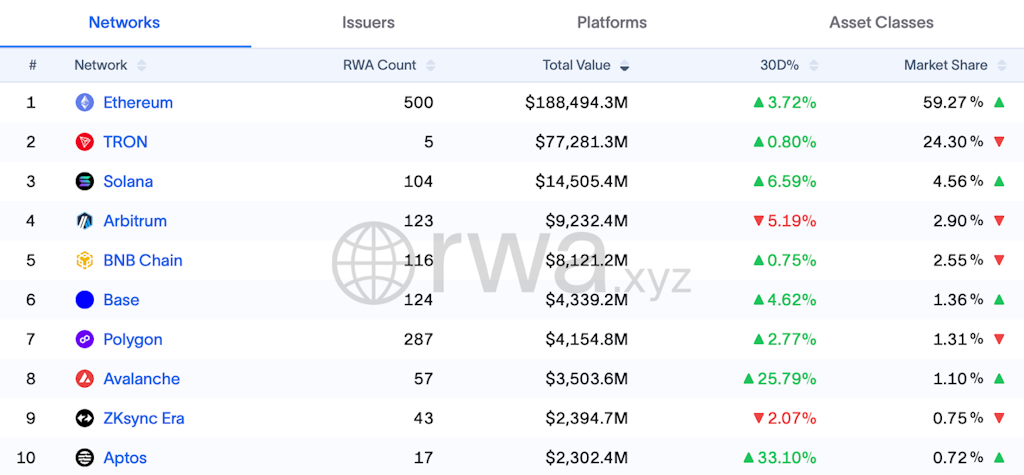
“It’s hard to know over the next five years who will win,” Hougan said. “So I think from the traditional audience, they’re going to want to own both ETH and solana.”
US bitcoin ETFs had unprecedented success out of the gate. ETH products initially saw underwhelming interest — though flows have picked up in recent months, Blockworks Research data shows:
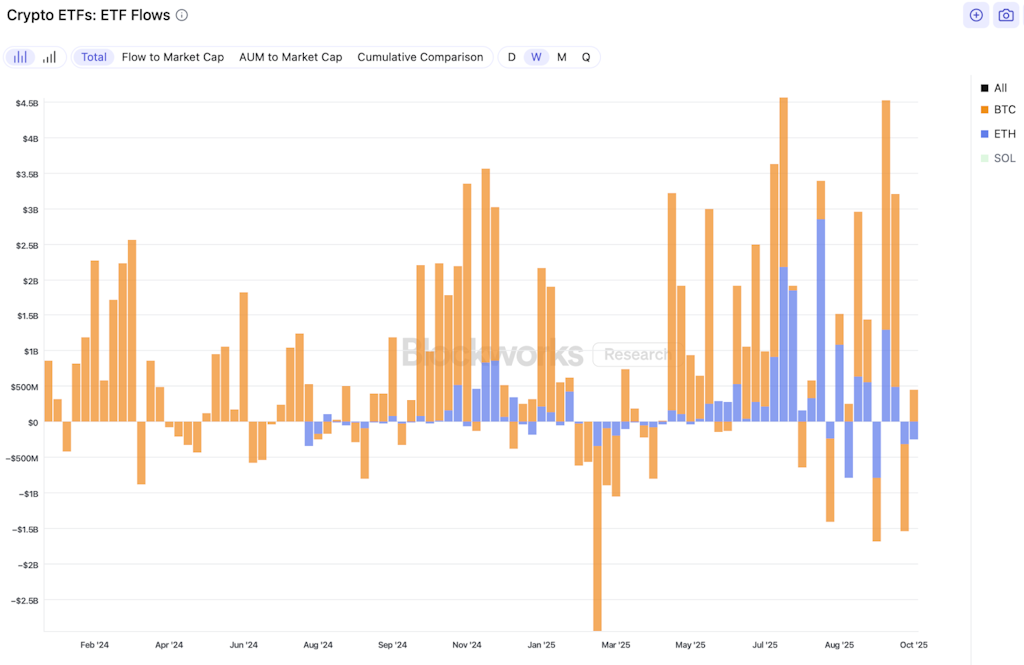
Narrative and timing are critical for ETF launches to be successful. BSOL comes to market when this stablecoin/tokenization theme is more defined. ETH ETFs didn’t have that tailwind back in July 2024.
Thus, Hougan said of solana products: “Adjusted for size, I think it may be the most successful ETP launch of all time.”
Not necessarily anywhere near the $38 billion or so of net inflows bitcoin ETFs saw in their first year, he clarified — calling that an “absurd comparison.” But flows that represent a larger percentage of the much smaller SOL market cap.
While we focused on SOL today, it’s worth noting that Canary Capital’s hedera (HBAR) and litecoin (LTC) ETFs also went live today on the Nasdaq.
The government will likely need to reopen before we get the full flood of crypto ETF launches the market ultimately expects. When that happens is anyone’s guess.
Get the news in your inbox. Explore Blockworks newsletters:
- The Breakdown: Decoding crypto and the markets. Daily.
- 0xResearch: Alpha in your inbox. Think like an analyst.