Stablecoins will drive a ‘decent amount’ of activity in 2025: Polygon Labs CEO
Polygon Labs CEO Marc Boiron thinks that yield-bearing stablecoins could be the next big narrative

ddRender/Shutterstock modified by Blockworks
This is a segment from the Empire newsletter. To read full editions, subscribe.
Looking for a new narrative? Marc Boiron, CEO of Polygon Labs, has one for ya: yield-bearing stablecoins.
Once these stablecoins are better understood, they’re set for takeoff, Boiron said. In fact, he wouldn’t be surprised if it ends up driving “a decent amount of activity in 2025.”
So far, stablecoins (not just yield-bearing ones) are up to a $207 billion market cap, per rwa.xyz data.
It’s not just the yield that’ll draw stablecoin activity, it’s also the regulatory clarity that we’re seeing over in Europe courtesy of MiCA. It’s even looking more and more likely that the US is on the regulatory path as well.
For companies — like fintechs — watching the stablecoin market from the sidelines, it’s hard to not feel the FOMO when looking at Tether’s attestations. And that’s clear from Boiron’s conversations with non-crypto native folks.
This, shall we call them, new set of players are telling Boiron, “hey, we want our own stablecoin, because we can see how much money we can make off of it, and we’ve got a boatload of users, it’s really easy to push them into that stablecoin and get a lot of volume, and obviously revenue from that as well.”
“The second part of it is just having better rails for their users, knowing that there’s a set of users who are [going to want to] send payments, especially remittances, as of right now, and they actually want to make that available rather than incurring” fees, he continued.
I mean, let’s take a look at Tether’s third-quarter attestation from last year. The firm reported a whopping $2.5 billion net profit in that quarter alone, even if it does bundle unrealized gains on bitcoin with other revenue in its disclosures.
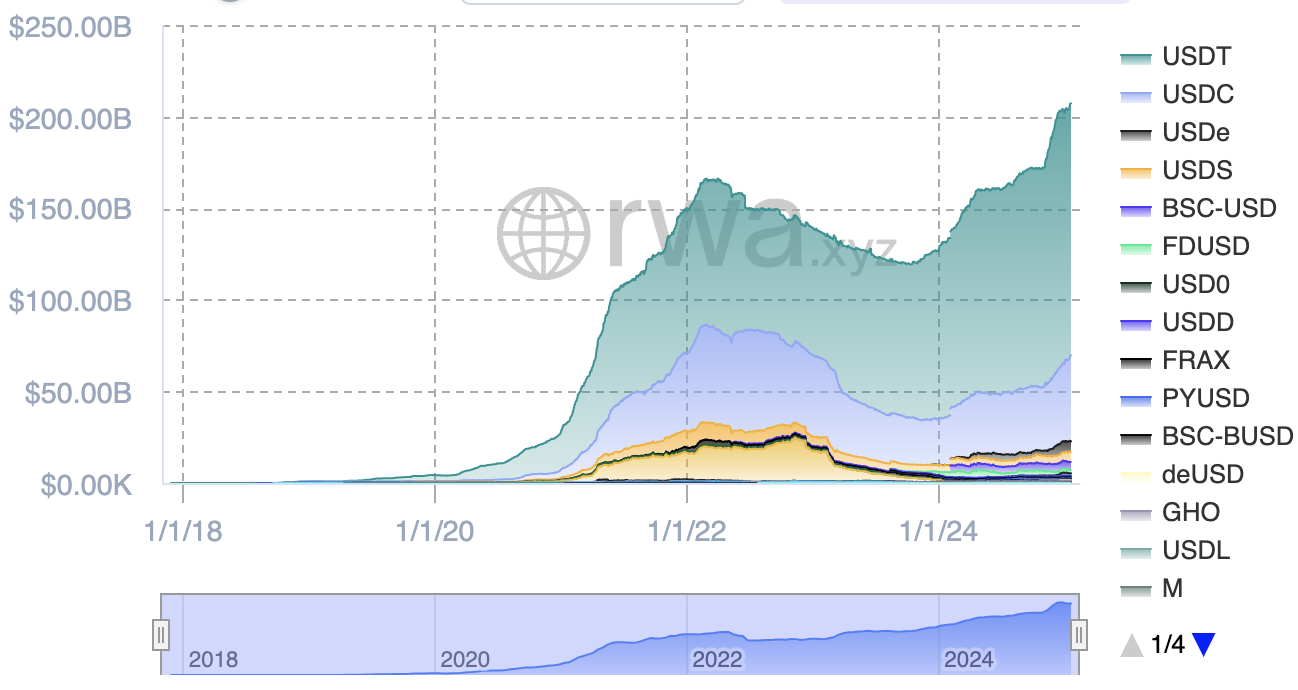 No surprise that Tether’s topping the list
“Everybody sees how profitable Tether is, and they’re like, ‘Okay, I can do that with less risk now,’ especially fintechs, right?” He said. Boiron believes we’ll see new entrants that are looking to enter the space because there may be the opportunity to improve the user experience through yield-bearing stablecoins.
This doesn’t mean we’re going to see companies simply launch their own stablecoins. They’ll also adopt other stablecoins as well, Boiron added.
“They understand that there’s a significant distribution of USDC, and a lot of people hold it. They’ll, for example, want to make that still available through their application, while also launching their own stablecoin,” he noted.
More than that, Boiron thinks that Polygon Labs’ ability to scale and push “massive” amounts of stablecoin volumes onchain means that now is the time for stablecoins to really shine.
I told Boiron that I thought 2024 was the year of the stablecoin, but I’m beginning to think this is just the start.
Get the news in your inbox. Explore Blockworks newsletters:
- The Breakdown: Decoding crypto and the markets. Daily.
- 0xResearch: Alpha in your inbox. Think like an analyst.