Weakening US Dollar Provides Tailwind For Bitcoin, Despite Rumor-Driven Flash Crash
The inverse correlation between Bitcoin and the US dollar tends to support crypto prices, but surging volatility underscores how fickle the market can be
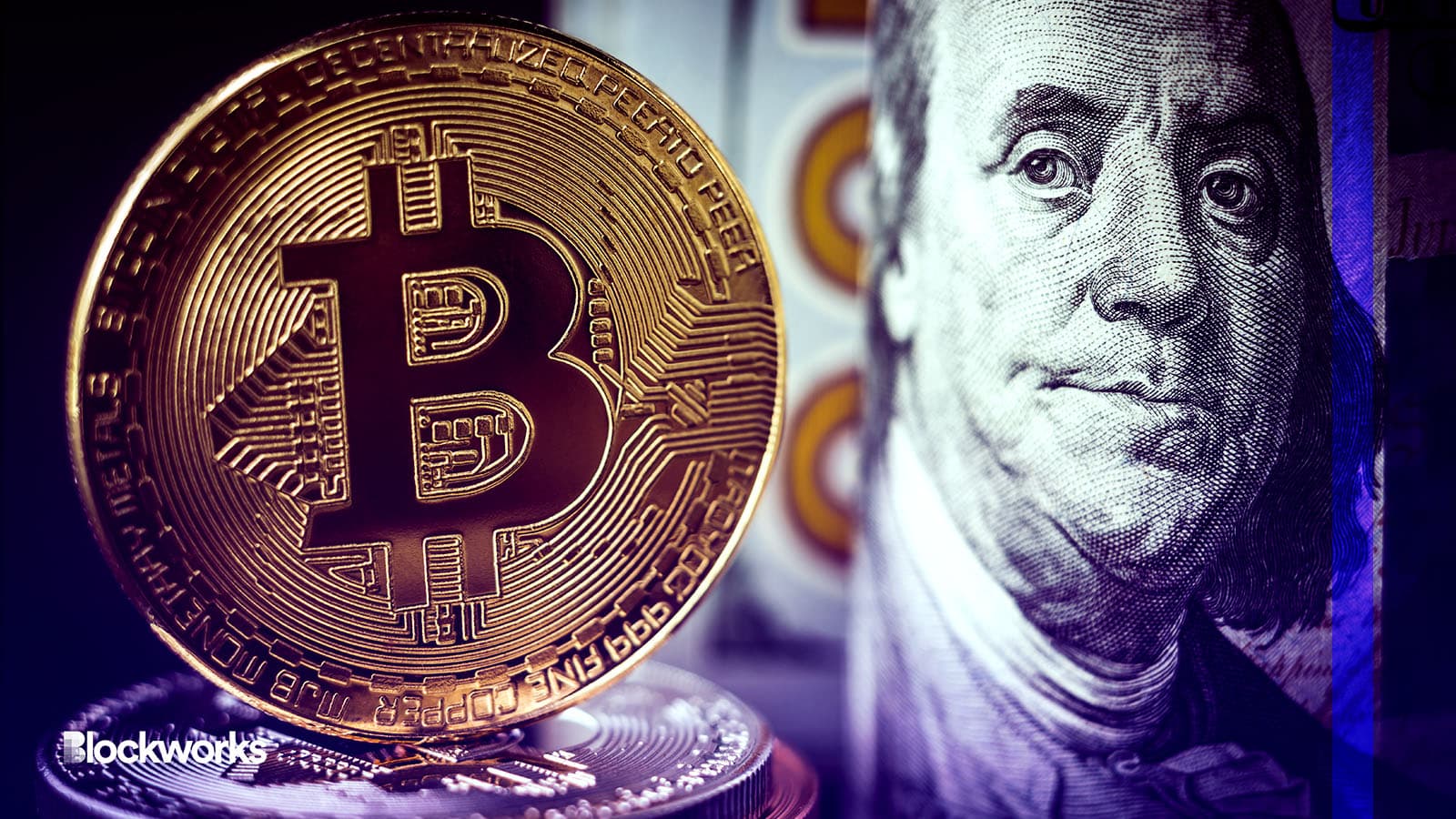
Source: Shutterstock / In Green, modified by Blockworks
A potential decline in the reserve status of the US dollar is causing investors and nations to explore alternatives to the greenback, including commodities, both physical and digital — such as bitcoin (BTC).
This gradual shift in the global financial landscape is benefiting the crypto market; bitcoin has often shown an inverse correlation with the US dollar.
Over the past 24 hours, Bitcoin is down slightly (-0.6%) to about $29,000, after erasing most of Wednesday’s rally which saw the asset rise as much as 9% on the day.
A Twitter tizzy
A -7% swan dive between 3:00 and 4:00 pm ET was preceded by a tweet from crypto data analytics provider Arkham Intelligence, which cited on-chain data to claim that Jump Trading deposited $26.6 million in BTC to crypto exchanges. Blockworks reached out to Jump for comment.
After the sell-off, Twitter and Telegram-based news aggregator Tier10k, attributed an on-chain alert to Arkham indicating bitcoin from wallets associated with Mt Gox and US government seizures were on the move.
Further on-chain analysis disputed the claim, and Arkham later chalked up the incident to a misconfiguration while pointing out the timing could not possibly have been responsible for the crypto market’s sudden reversal.
The price of bitcoin subsequently rebounded over the next 8 hours.
Medium-term trends
Over a 30-day period, bitcoin’s value has increased as the dollar has weakened, demonstrating its potential as a digital store of value alternative to gold.
 BTC correlation to DXY; Source: TradingView
Over a one-month period, the US dollar index (DXY), which measures the greenback relative to a group of other international currencies, has turned negative, down 0.48%. The DXY is now down 2.48%, data shows.
“Heavy geopolitical tensions and liquidity pumped into the US financial system through Quantitative Easing after COVID-19 have caused soaring inflation,” says Sylvia To, lead researcher at crypto exchange Bullish.
The DXY has been in a downtrend since September 2022 — a February bounce of roughly 4.5% has been completely erased in the wake of the US regional banking turmoil.
Seeking alternatives
Strong dollar dominance has put developing countries in a tough spot, as their USD-denominated debt has resulted in inflated debt-to-GDP ratios.
Countries like Russia, China, and the BRICS nations are considering alternatives due to concerns about the use of the world’s reserve currency as a political tool and the impact US sanctions have on the global economy.
As interest in bitcoin grows as an alternative to the dollar and a hedge against inflation, demand for digital assets may increase over the long term. More investors are likely to diversify their portfolios to mitigate currency risk.
In Argentina, BTC tapped its previous all-time high against the peso on April 14. The country’s central bank raised its benchmark interest rate to 81% in an effort to curb soaring inflation
Bitcoin’s inflation rate has steadily declined to 1.75% since its inception more than a decade ago, thanks to its fixed supply of 21 million BTC and supply halving events that reduce miner rewards.
Meanwhile, the US dollar’s inflation rate has of late consistently decreased month-to-month, dropping from a peak of 9% in June 2022 to around 5% in March.
“The future of dollar dominance is the big question,” To added. “It’s really going to set the precedent for the space.”
Macauley Peterson contributed reporting.
Get the news in your inbox. Explore Blockworks newsletters:
- The Breakdown: Decoding crypto and the markets. Daily.
- 0xResearch: Alpha in your inbox. Think like an analyst.