ConstitutionDAO Will Shut Down After Raising $49M
Organizers say that the DAO “still made history” with its attempt to rally thousands together to buy the historic document but would not be “embarking on a new chapter.”
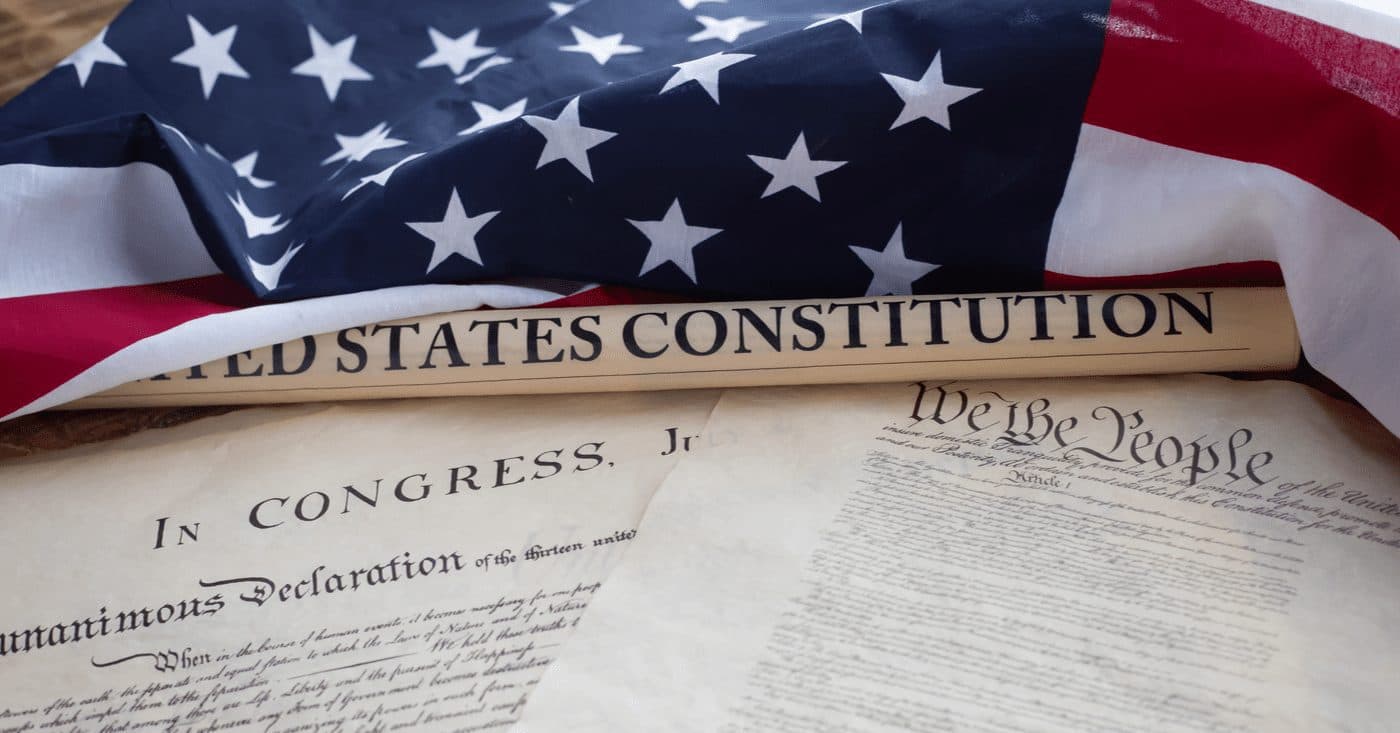
Source: Shutterstock
- ConstitutionDAO said they would be shutting down five days after Sotheby’s auction where they lost their bid to hedge fund billionaire Kenneth Griffin
- Investors have spent roughly 200 ETH or $866,918 on gas fees in making donations to the DAO, according to Dune Analytics
A group of crypto investors raised roughly $48.9 million to buy a rare copy of the US Constitution at Sotheby’s auction house last week. Despite the efforts invested by 17,437 people, the ConstitutionDAO lost the bid to hedge fund billionaire Kenneth Griffin.
Today, the group announced that its nascent operations would be shutting down.
“The community has taken all actions that it was organized to accomplish,” Graham Novak, a ConstitutionDAO organizer, said in the group’s Discord.
Following the auction at Sotheby’s on Thursday, an admin in the project’s Discord posted that the DAO “still made history” adding that the group’s efforts “have educated an entire cohort of people around the world — from museum curators and art directors to our grandmothers asking us what ETH is when they read about us in the news.”
The big question then was, what would happen to the money? There were discussions about how to keep the project going, to pivot to a new focus or perhaps fund a political organization. But, ultimately, the primary mission of the ConstitutionDAO was to win the US Constitution, and that didn’t happen.
“Ultimately, we’ve come to the decision that continuing on without the unifying mission of buying the constitution, setting up more official governance and embarking on a new chapter is not something that we as a core team are able to support,” the DAO said in a tweet.
If the group had won the bid at Sotheby’s, token holders could vote on what happened to the copy of the US Constitution. In exchange for financial contributions, donors had the option to redeem a governance token called PEOPLE through Juicebox at a rate of 1 million PEOPLE tokens per 1 ETH donated.
ConstitutionDAO promised to return contributors’ donations, but some members remain concerned over how much would actually be returned.
For context, the funds collected were being held in a multi-signature wallet controlled by 13 “core contributors” to the ConstitutionDAO. This was an attempt to mirror the 13 colonies at the time of the nation’s founding, according to the project’s website. Nine of the 13 core contributors were required to sign a transaction in order to move any funds.
Over the weekend, the project issued specific guidance to donors, describing the option as “the fairest and safest path forward available at [the] time.”
“After careful consideration of feedback given by our community members and partners, we’ve decided to issue donation refunds through the same Juicebox mechanism by which donations were originally collected, rather than attempting to immediately launch a new governance plan and token at the same time as the refund.”
The process to refund the donated ether has been the subject of controversy, particularly after an investigation from Nick Bax, who outlined in a tweet on Sunday that core contributors of the DAO may have been “making internal decisions that are causing insane volatility.”
According to Bax, the team announced via Twitter a snapshot of PEOPLE holders at a specific Ethereum block — at approximately 6:12 UTC on Friday — despite warnings from Juicebox team members of possible ramifications of such an approach.
Following the appointed snapshot time, certain token holders dumped their PEOPLE holdings in exchange for ETH at the expense of liquidity providers. This dropped the value of the PEOPLE token in relation to ETH by over 82% within minutes on Uniswap.

Since the snapshot had already been taken, the former PEOPLE holders expected to receive their pro rate share of ether, and no longer had any use for the token, thus traded it for as much ether as they could.
Speculators jumped in and purchased the token, a move which Bax described as either “incompetent or malicious.” The team later decided that the previously announced snapshot method would be scrapped, a move which resulted in PEOPLE reclaiming its prior ratio to ETH.
ConstitutionDAO has maintained that they would make refunds available to contributors, and later announced that they would shut down.
Donors still have to pay gas fees if they wish to claim the amount of ETH originally put into the project. Specifically, investors in the DAO have spent nearly 200 ETH or $866,918 on fees while making donations, according to Dune Analytics.
For some smaller donors, the cost of fees many be worth more than the contribution itself under the current state of demand for Ethereum block space. The ConstitutionDAO multi-sig address holds $2.3 million, as of press time.
“We hope this project will inspire others to build together and use the power of web3 to make a positive impact in the world,” organizers said in a statement via Twitter.
ConstitutionDAO’s press contact did not immediately respond to Blockworks’ request for comment.
Sam Martin and Macauley Peterson contributed reporting for this story.