Index Coop RWA basket builds on hyETH experiment
Non-US investors have a new way to access RWA-focused tokens
Source: Index Coop, modified by Blockworks
The term “RWA” — for Real-World Assets — in the DeFi context is sometimes considered confusing and controversial.
For one, in finance and banking, “RWA” typically refers to “Risk-Weighted Assets,” which are used to determine capital requirements under regulatory frameworks.
Even within DeFi, the concept can encompass a wide variety of asset types, including real estate, commodities, and bonds.
Nevertheless, it’s a part of the current crypto cycle narrative that is here to stay.
Read more: Empire Newsletter: Crypto natives dig themselves in to the RWA space
To provide a simple way to access the category, Index Coop has added a Real World Asset Index Token to its growing suite of DeFi-native products.
The product is developed in partnership with Fortunafi, a leading methodologist in the DeFi space.
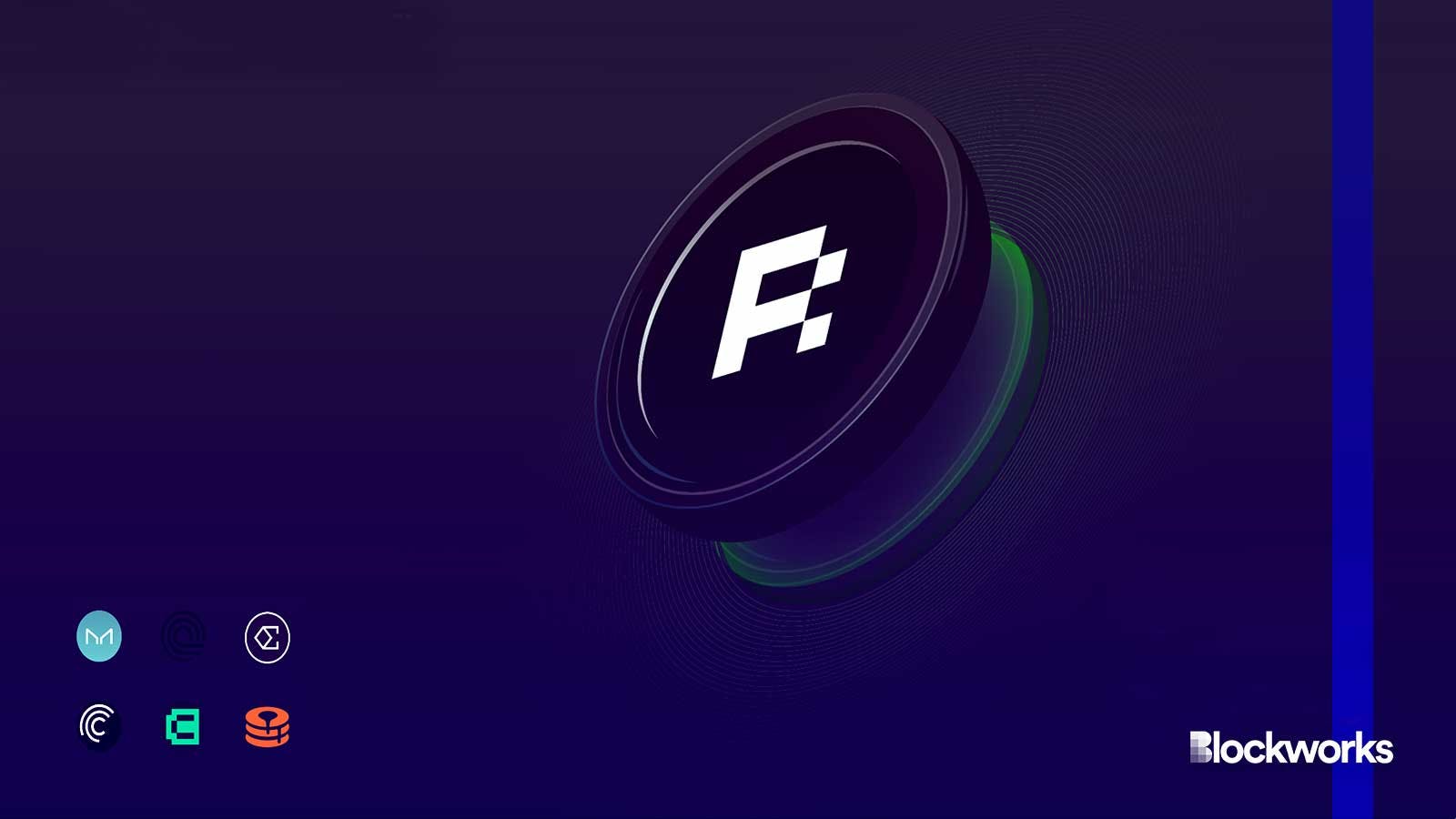
Initial components of the index are slated to be Maker (MKR), Ondo Finance (ONDO), Ethena (ENA), Centrifuge (CFG), Canto (CANTO), and Maple Finance (MPL), projects which provide a cross-section of RWA-linked investments, from real estate tokenization to US Treasurys to the tokenized futures basis trade.
Like the High-Yied ETH index before it, Index Coop is employing Product Revenue Tokens (PRTs) to attract early investors. PRTs entitle holders to a share of the revenue generated by the RWA Index and are distributed through a presale over the next 30 days.
Read more: Index tokens offer new path to diversified ETH yields
The presale serves as “a demand signal” and the RWA index will only launch if the presale is successful. That worked well for Index Coop’s prior experiment using PRTs — hyETH launched last week and currently has about $5 million in TVL and is yielding about hyETH is yielding around 9% APY, lower than initially forecast as demand for leverage has subsided in recent weeks.
PRTs are designed to align incentives by rewarding early depositors more generously, but one of the lessons learned from hyETH is that Index Coop should focus on more than just TVL, Crews Enochs, ecosystem growth lead, told Blockworks.
With the new iteration, Index Coop is “trying to incentivize other behaviors which add further value to the product,” such as market liquidity, securing oracle services and integrations with other DeFi dapps such as borrowing and lending markets, Enochs said.
Initially both RWA and hyETH are on Ethereum mainnet only, but they are eventually expected to branch out to layer-2s, with hyETH access to be provided by Chainlink’s CCIP-based Transporter bridge.
Get the news in your inbox. Explore Blockworks newsletters:
- The Breakdown: Decoding crypto and the markets. Daily.
- 0xResearch: Alpha in your inbox. Think like an analyst.