‘Political animal’ taking shape in latest US crypto legislation
Legal expert says the market structure discussion draft is a good start, but politics are always going to matter
Phil Pasquini/Shutterstock modified by Blockworks
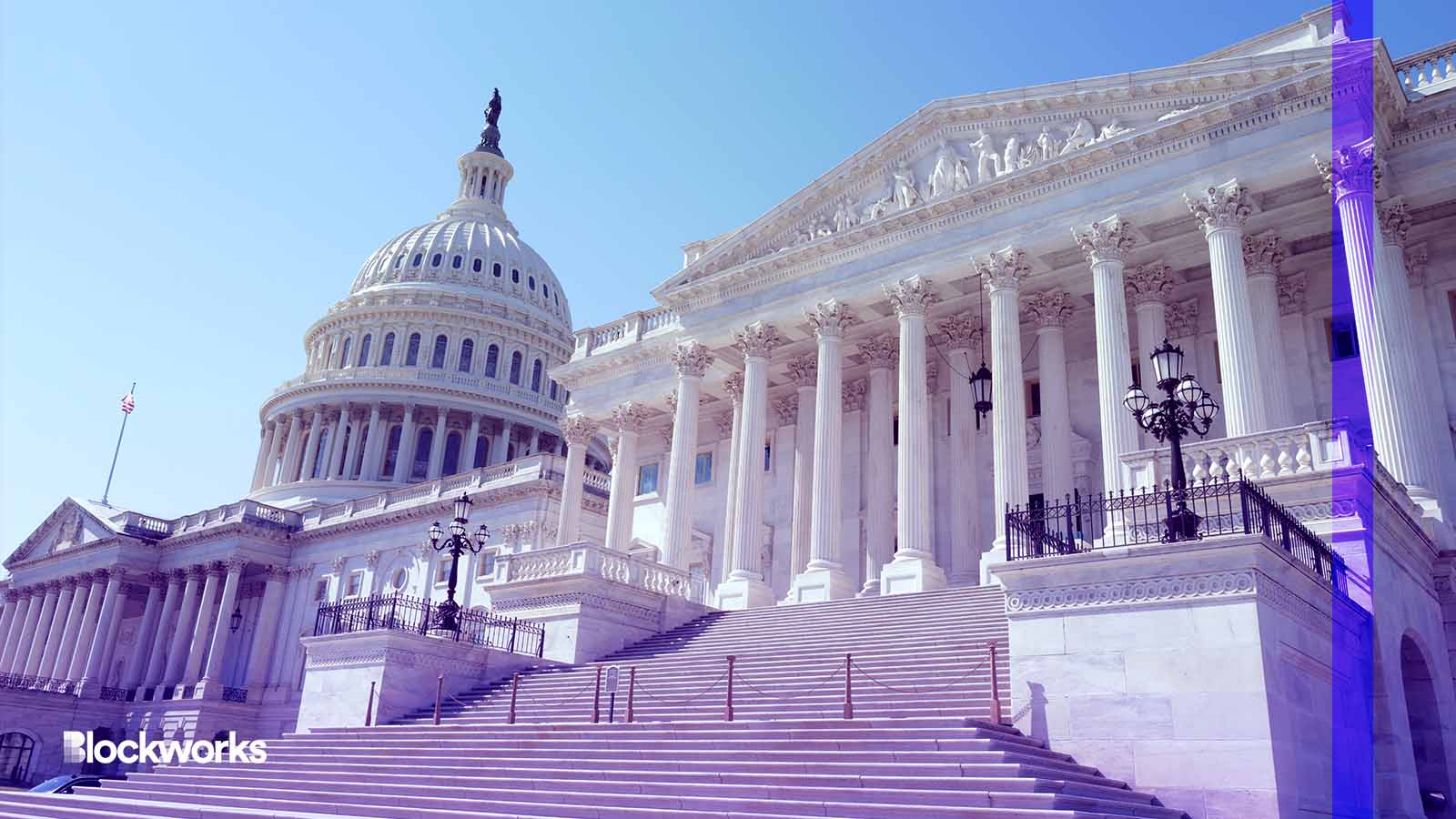
When it comes to getting crypto legislation off Capitol Hill and onto the president’s desk, politics still carries weight, former SEC Special Counsel Coy Garrison said this week.
During a webinar Thursday sponsored by crypto advocacy group Global DCA, Garrison, who now works as a partner at Steptoe & Johnson LLP, said the current market structure discussion draft is a good starting point. But Republicans are going to need to get Democrats on board.
“This is very much a political animal, as all legislation is,” Garrison said.
The legislation was proposed by two House Republican Committee leaders, Patrick McHenry of the Financial Services Committee and Glenn Thompson of the Agriculture Committee. It’s a working draft, Garrison said, and there are some major sections that require ironing out.
“Chairman McHenry of the House Financial Services Committee cares deeply about crypto, [he] cares deeply about providing clear rules of the road, on one hand,” Garrison said. “On the second hand, I think, not only in this context, but in many other contexts, he’s deeply concerned about SEC Chair Gensler’s approach to regulation.”
Thursday’s webinar came shortly after Garrison appeared before the House Financial Services Committee to testify on the state of the crypto industry and the future of policy. His remarks were focused on why Congress needs to act, a point of contention with which the industry has become increasingly frustrated.
The strong parts of the bill include how it establishes a path forward for token issuers to register, Garrison said, a key issue exchanges and crypto companies have brought forward.
It also makes the disclosure requirements appropriately clear and strict, ensuring regulators will have adequate information about a token’s economics and distribution plan.
The bill also “requires the SEC to get in the game with respect to secondary trading of digital assets,” Garrison said. “That’s just been a complaint for a long time; the SEC is refusing to write rules that acknowledge the benefits of a technology.”
The bill has not yet been formally introduced, and it’s likely that lawmakers will wait on bipartisan support before bringing it forward to the floor.
“I think the chance for this bill to become law is certainly not great, but with that being said, crypto legislation addressing market structure in this Congress, this is it,” Garrison said.
Get the news in your inbox. Explore Blockworks newsletters:
- The Breakdown: Decoding crypto and the markets. Daily.
- 0xResearch: Alpha in your inbox. Think like an analyst.