Despite Upstaging Uniswap’s TVL, Curve May Still Not be Largest DEX
TVL is far from the only indicator of the health of a DeFi protocol
WindAwake/Shutterstock modified by Blockworks
Uniswap may have slipped from its standing as the largest decentralized exchange — depending how you define it.
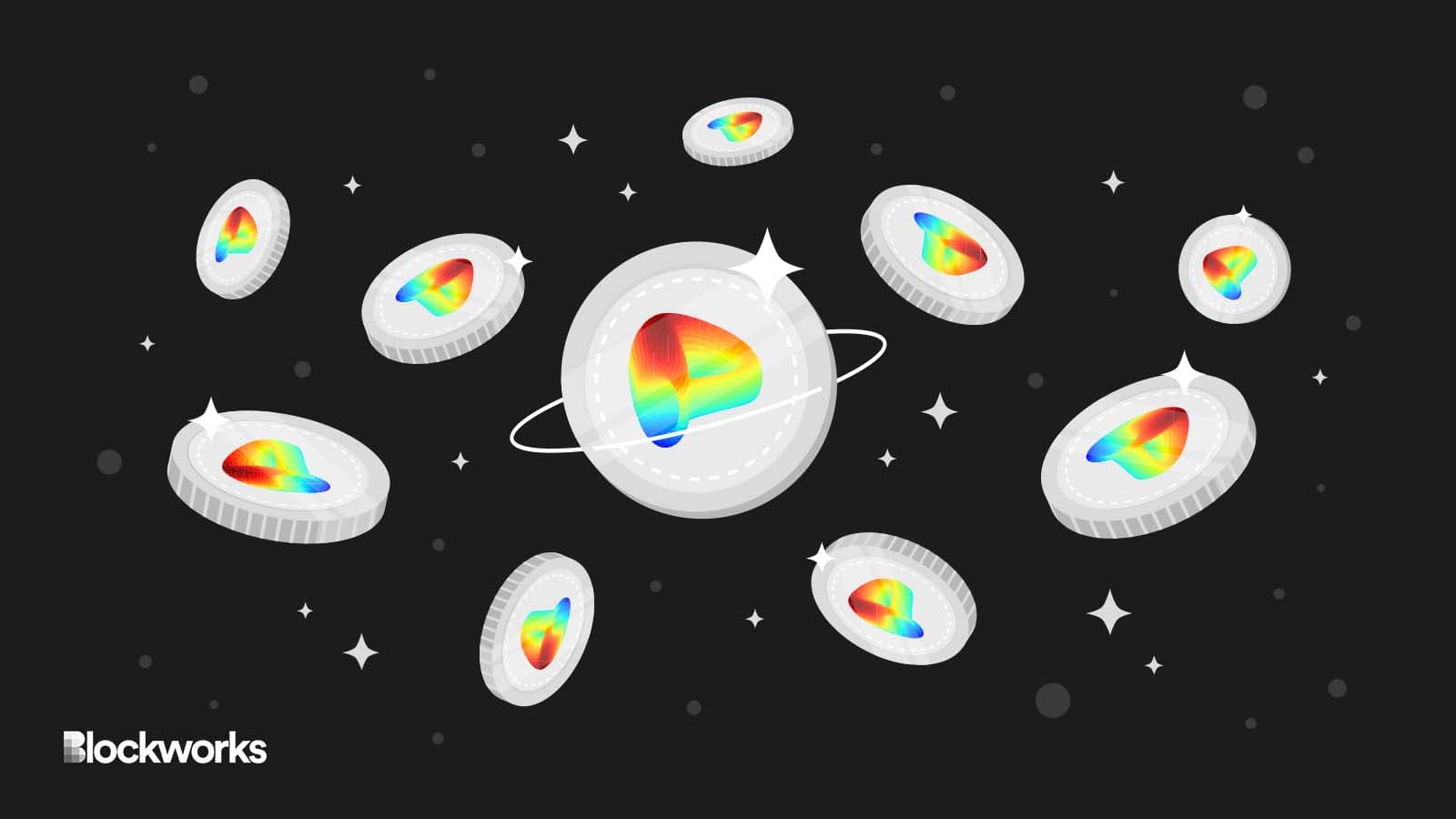
Curve Finance has surpassed Uniswap in terms of total value locked (TVL), according to data compiled by DeFiLama.
As of publication, Curve had a TVL of about $3.7 billion, marginally leapfrogging Uniswap’s $3.4 billion tally.
TVL is calculated by compiling the number of staked assets on a given smart contract. The commonly referenced metric represents funds available to a protocol to exercise daily market function including spending and borrowing.
The figure often skews toward volatility and is heavily affected by market conditions. Traders, as such, typically use TVL as one measure of many to evaluate the overall health of a protocol.
Other indications include the number of unique active wallets on a protocol and its market capital (the decentralized equivalent of TradFi’s market capitalization). DappRadar data show that over the past 30 days, Uniswap V3 has an estimated 440,000 unique active wallets.
Curve has just a fraction as many: 13,700.
Curve’s trading volume also appears to be lower than Uniswap’s — which has a seven-day volume of $28.3 billion compared to Curve’s $1.2 billion.
Although it may be too soon for Curve to declare its dominance over Uniswap, long one of the biggest players among decentralized exchanges (DEXes), the general sentiment around DeFi protocols has been trending up since FTX’s collapse.
With confidence in centralized exchanges tanking, a report by Messari points out a few decentralized silver linings. DEX users have been more active, with both Uniswap and Curve gaining market share in the duration.
“Curve’s unique users reached a new monthly all-time high in November,” the report said. “It was an 11% increase from the previous all-time high set in May 2022.”
But DeFi protocols have not been left unscathed by the bear market.
Curve’s TVL significantly dipped after the de-pegging of USDT in May, from $17.5 billion to $9.1 billion in a matter of days. And it was weighed down by June 2022’s stETH depegging, when its TVL sank from $8.6 billion to $5.3 billion.
Most recently, FTX contagion spurred yet another TVL falloff: from $6 billion to $3.7 billion.
Get the news in your inbox. Explore Blockworks newsletters:
- The Breakdown: Decoding crypto and the markets. Daily.
- 0xResearch: Alpha in your inbox. Think like an analyst.