What the SEC’s new crypto task force could mean
Some have called it “a relief” that the task force will be led by the crypto-friendly Hester Peirce

SEC Commissioner Hester Peirce | Permissionless II for Blockworks
This is a segment from the Forward Guidance newsletter. To read full editions, subscribe.
If you’ve been reading Forward Guidance, you know the last few days in crypto land have been — to put it mildly — eventful.
Bitcoin surged to a new all-time high the day Donald Trump was sworn in. After a pullback, BTC’s price rebounded yesterday to $107,000. BTC hovered around $104,200 at 1:30 pm ET.
Despite a lack of crypto-specific executive orders, optimism stemmed from word of a new Hester Peirce-led SEC crypto task force.
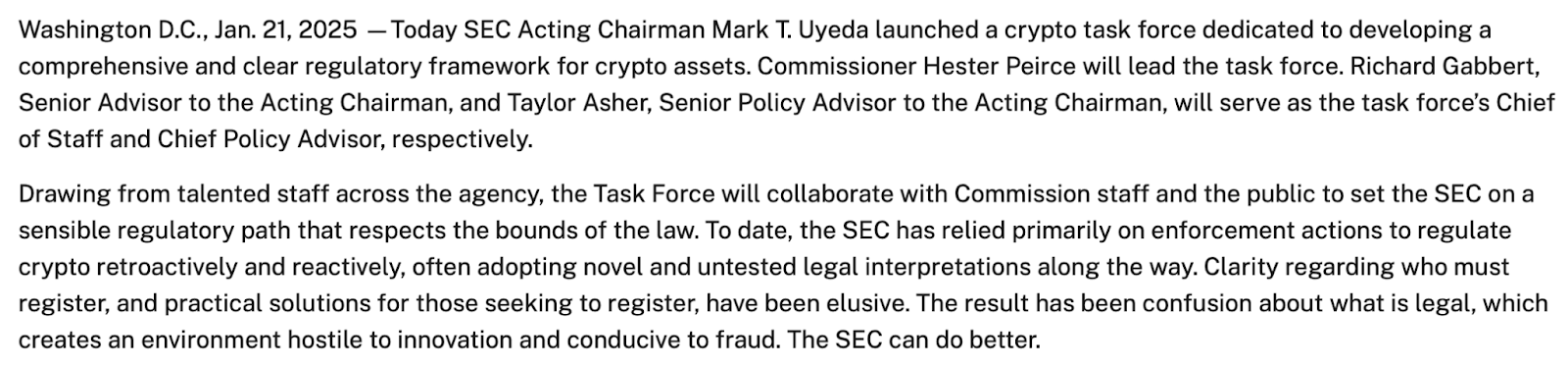
Those watching the space know Peirce’s name; Wormhole Foundation general counsel Cathy Yoon called it “a relief” that she would guide this unit.
“She is proactive, engaged and most importantly, rational when it comes to thoughtful regimes concerning digital assets,” Yoon said of the SEC commissioner in a statement.
Peirce’s crypto-friendly record is clear, and spans years. She first floated a “token safe harbor proposal” in 2020 to spur developer innovation by temporarily exempting builders from securities laws registration provisions. She said US spot bitcoin ETFs should have been approved years before they got the green light in January 2024.
And in an era marked in part by SEC lawsuits against crypto companies, Peirce said bluntly in 2023 that “litigation is not the most effective way to carry out regulations.”
Philip Moustakis, a partner at Seward & Kissel LLP and an ex-senior counsel in the SEC’s enforcement division, noted that while former SEC Chair Jay Clayton paired enforcement actions with informal guidance, that essentially stopped under Gary Gensler.
The task force announcement signals the return of valuable informal guidance and potentially more formal direction in the works, Moustakis added.
“This is not to say the federal securities laws will not apply to crypto offerings or transactions under appropriate facts and circumstances,” he said. “Ideally, however, there will be more clarity with respect to when and how they apply, and they will be applied in a way that lets crypto [be] crypto.”
Arthur Jakoby, co-chair of the securities litigation and enforcement practice at Herrick, Feinstein LLP, said he considers the group creation “a sign that the SEC will review all current crypto-related enforcement actions and likely discontinue existing cases which the new leadership…views as ill-conceived or inconsistent with promoting the growth of the crypto industry in the United States.”
Perhaps some of that will be discussed in this meeting slated for Thursday:
We can’t mention the SEC’s move without noting what it could mean for the growing number of crypto ETF filings in front of them.
After plans for solana, XRP and litecoin ETFs, newer proposals now include funds that would hold DOGE and Trump’s memecoin.
The industry shouldn’t expect any approvals overnight, many agree. Still, the SEC unit promoting structured disclosure frameworks, practical registration paths and regulator-industry engagement would go a long way, 21Shares crypto research strategist Matt Mena said.
That, he added, “could create a more transparent approval process, addressing key SEC concerns such as custody, investor protection and market integrity — just as was done for spot bitcoin ETFs.”
Get the news in your inbox. Explore Blockworks newsletters:
- The Breakdown: Decoding crypto and the markets. Daily.
- 0xResearch: Alpha in your inbox. Think like an analyst.