Offchain Labs Acquires Ethereum Consensus Client Prysmatic Labs
“It just felt like a very natural decision,” Steven Goldfeder from Offchain Labs told Blockworks
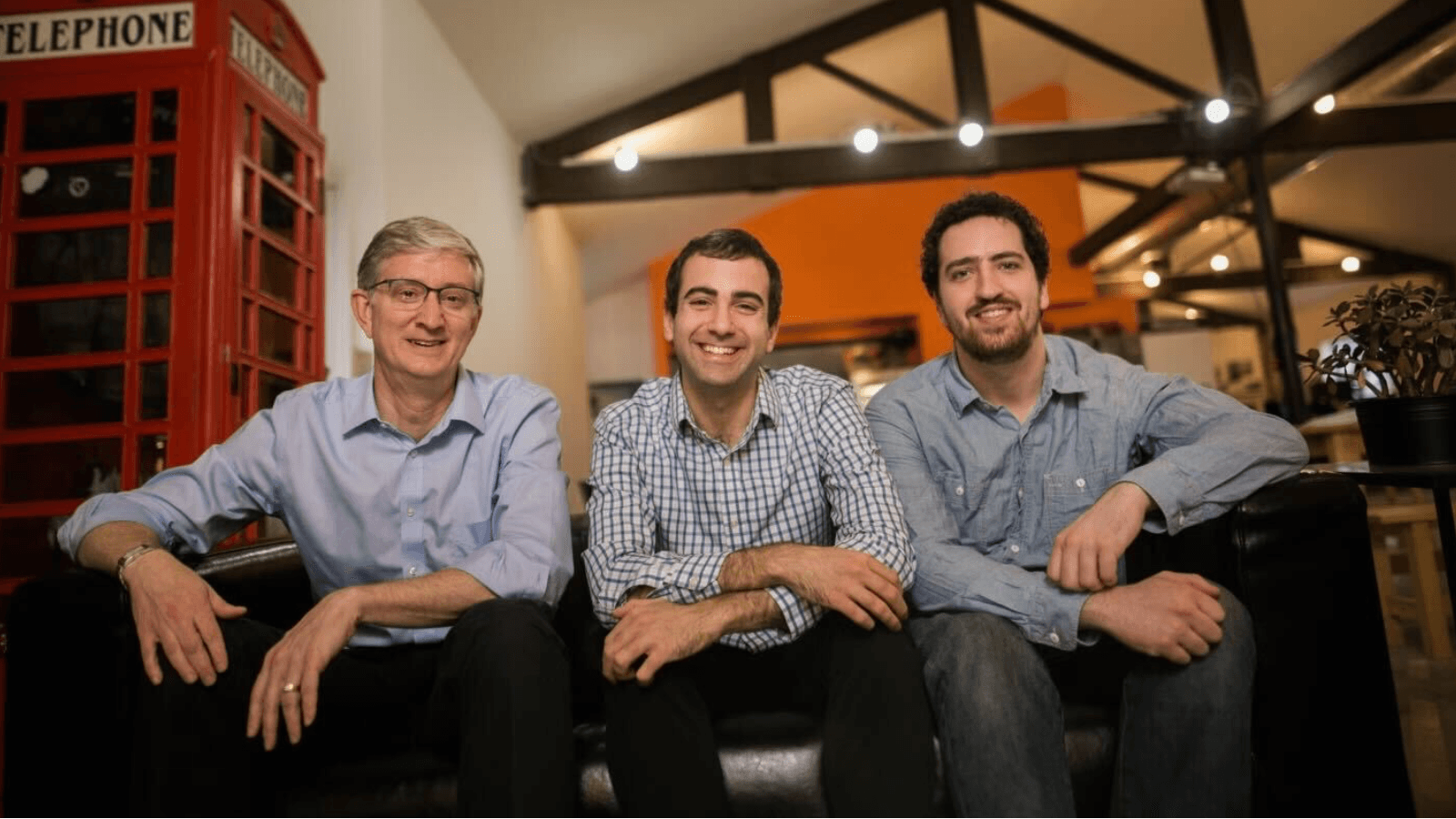
Offchain Labs founders (from left) Ed Felten, Steven Goldfeder and Harry Kalodner | Source: Offchain Labs
- The financial terms of the acquisition have not been disclosed
- Scaling will be a primary focus for the team moving forward
Ethereum smart contract scaling solution developer Offchain Labs has acquired Prysmatic Labs, a core force behind the architecture of the Merge.
Offchain Labs — the leading Ethereum consensus client now powering the blockchain’s proof-of-stake validation system — is also behind Arbitrum One, a market-leading layer-2 secure scaling solution for decentralized application development on Ethereum. The company was co-founded by Princeton professor Ed Felten and Ph.D. students Steven Goldfeder and Harry Kalodner.
Goldfeder told Blockworks acquisition talks began about a year ago but only gathered steam in recent months. The purchase would bring the Offchain Labs team to roughly 60 employees.
“From a values perspective but also from our fascination with the technical problems here and our desire to solve these problems, it just felt like a very natural decision,” Goldfeder said. “We’re just increasing our capacity by joining forces.”
The companies declined to comment on the terms.
Joining forces to scale Ethereum
Last month, Ethereum founder Vitalik Buterin said post-Merge, the top priority of the second largest cryptocurrency would be to improve its ability to scale.
This next step in the Ethereum roadmap is dubbed “the Surge” — a series of events intended to eventually speed up the blockchain while making transactions more affordable.
“Our goal is to deliver scale to users — which means a large volume of transactions at a low cost — we want to continue to increase the volume of transactions at that low price point while doing so securely,” Goldfeder said.
Arbitrum is Ethereum’s leading roll-up solution with a total value locked (TVL) of $965.5 million. Its acquisition of Prysmatic Labs, the developer of Prysm — the most widely used software to run Ethereum’s consensus — is said to allow for better communication between teams developing Ethereum’s layer-1 consensus and data availability technology, as well as layer-2 execution and scalability mechanisms.
There is, however, a slight conflict of interest. Prysmatic Labs will need to ensure no layer-2 applications are getting special treatment as it continues to grow Ethereum, even if the layer-2 will be bearing the bulk of its expenses. Aware of potential issues, Goldfeder said both parties are “committed to continuing to develop Prysm as a neutral client.”
“A lot of it comes down to the commitment to the values of developing Ethereum — serious values that we share as an open and decentralized platform that favors the ecosystem at large,” he said. “A lot of ethics also comes down to the integrity of the people — and the Prysm team have shown themselves over the past few years — from the top leadership down the line, to be people with high integrity.”
Get the news in your inbox. Explore Blockworks newsletters:
- The Breakdown: Decoding crypto and the markets. Daily.
- 0xResearch: Alpha in your inbox. Think like an analyst.