Government shutdown could delay new crypto ETF approval
Should Congress not pass a budget, the SEC will be operating with a skeleton staff starting Wednesday
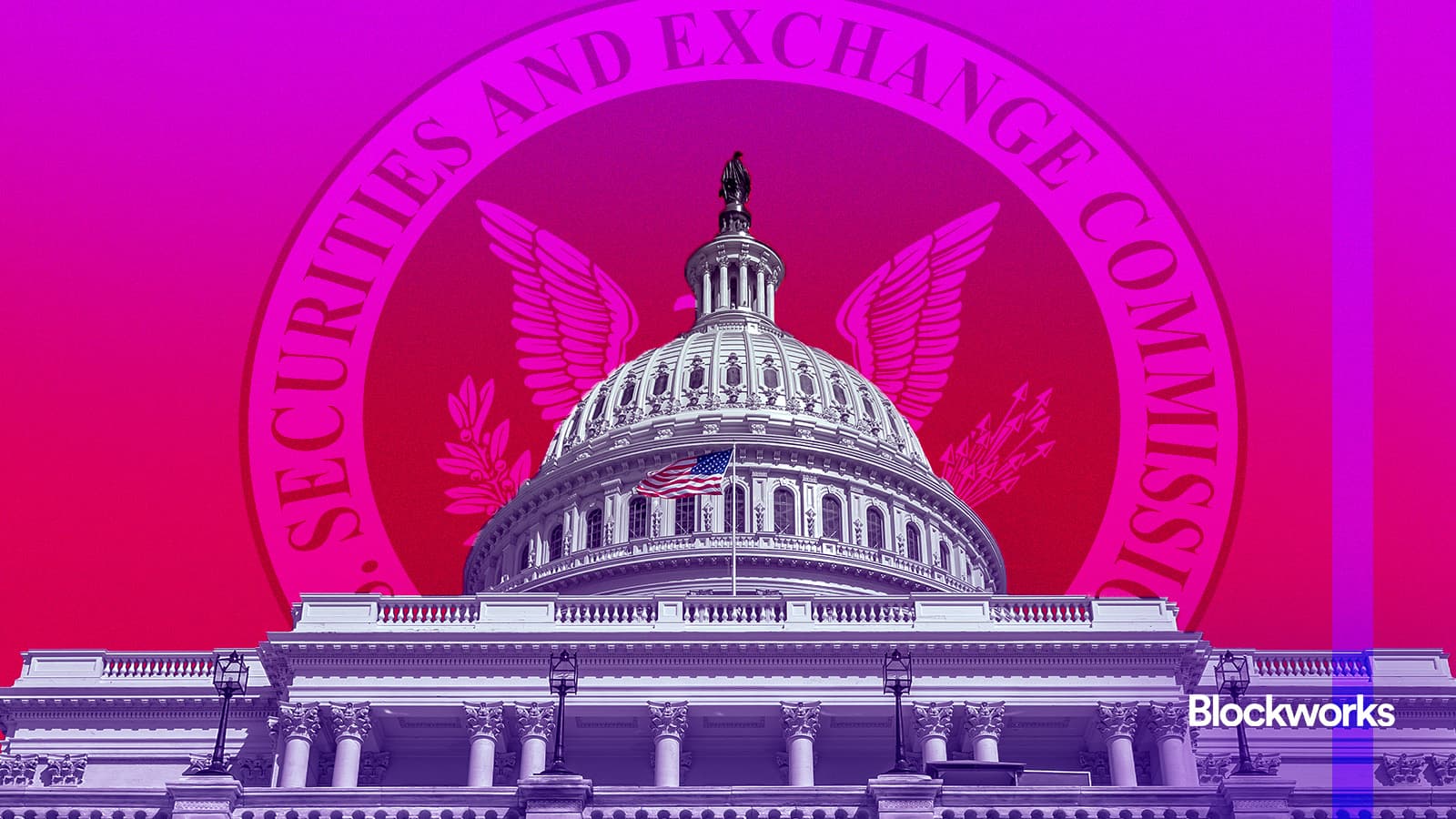
shuttersv/Shutterstock and Adobe modified by Blockworks
With Democrats and Republicans still at odds over how to fund the federal government and only hours to go before a shutdown, it’s looking like new cryptocurrency exchange-traded funds will face an additional hurdle.
The US Securities and Exchange Commission approved generic listing standards for spot crypto ETFs earlier this month, establishing set guidelines to replace the case-by-case approval process previously used with bitcoin and ETH ETFs.
The standards mean things can move much faster, but if Congress cannot pass a budget before midnight on Tuesday, a significant portion of the SEC — including the division responsible for approving new ETF listings — is set to pause most operations.
“Things won’t be approved if the government shuts down,” Bitwise Chief Investment Officer Matt Hougan said.
A person familiar with the matter who spoke with Blockworks on the condition of anonymity added that actions like listing approvals are very unlikely to happen during a shutdown when agency staff is limited.
The SEC’s Division of Trading and Markets and the Division of Examinations “will not be able to review pending filings, consider new or pending applications or registrations, provide interpretive advice, or issue no-action letters,” the SEC said in its operations plan for a government shutdown.
An “extremely limited number” of SEC staff will be monitoring emergency email addresses and phone lines for each commission division, the guidance added.
A representative from the SEC declined to comment beyond the guidance.
While a shutdown may delay the listing date for new crypto investment vehicles, any hold-up will be temporary, Jason Allegrante, chief legal and compliance officer at Fireblocks, told Blockworks.
“The SEC might hit pause on non-essential work, which could delay decisions, but it doesn’t change the fact that the demand for these products isn’t going away,” Allegrante added. “Once the lights are back on in DC, I expect them to pick up right where they left off because crypto will keep moving forward.”
Speaking from the Oval Office Tuesday afternoon, President Trump said that the federal government is “probably” headed to a shutdown.
Get the news in your inbox. Explore Blockworks newsletters:
- The Breakdown: Decoding crypto and the markets. Daily.
- 0xResearch: Alpha in your inbox. Think like an analyst.