Fed holds rates, cites increased risk of setbacks in the labor market, inflation
However, they noted there’s now an increased risk that unemployment and inflation will rise in the coming months.
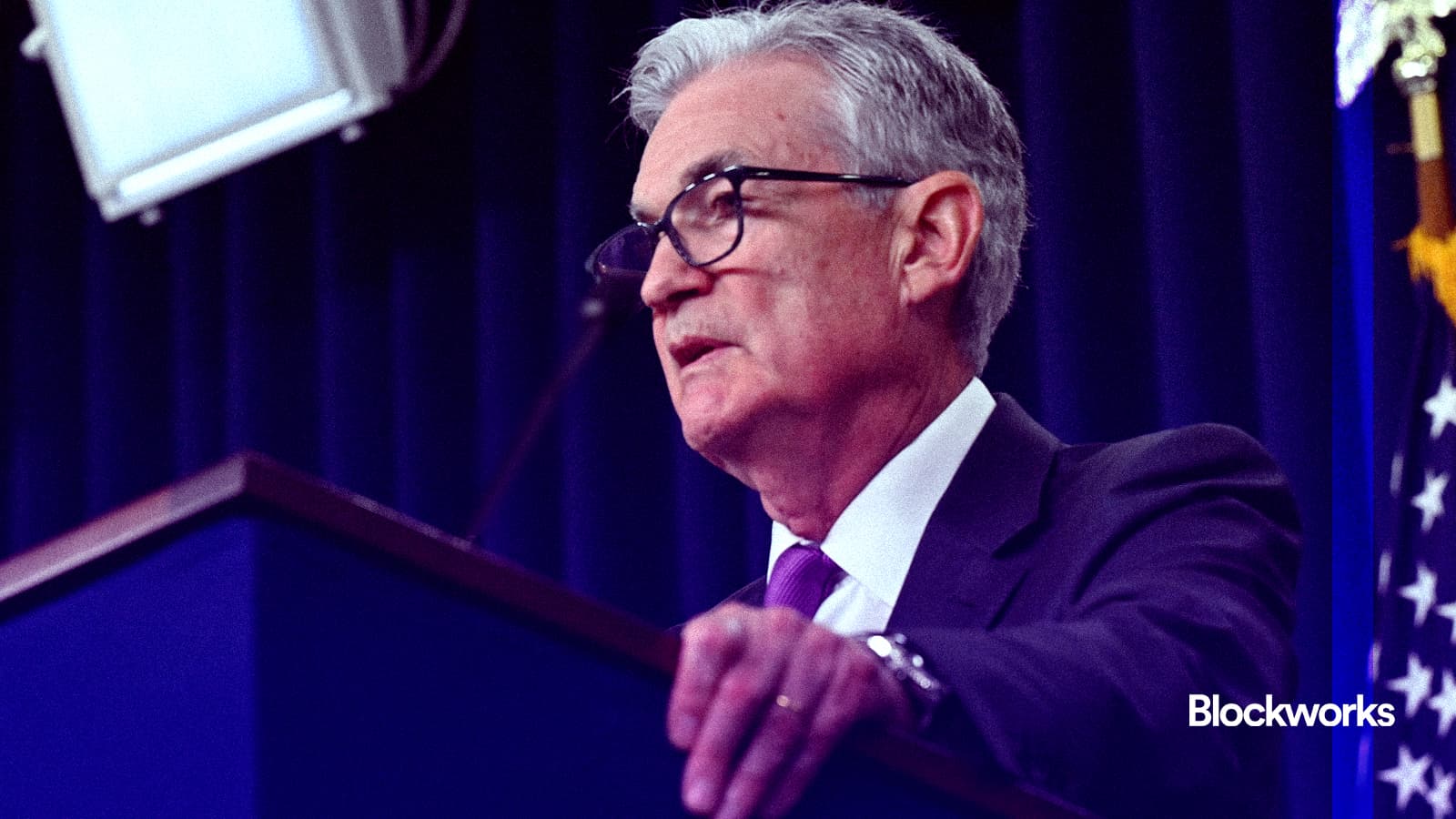
Federal Reserve Chair Jerome Powell | Federal Reserve/"_DSC4210″ (CC license), modified by Blockworks
This is a segment from the Forward Guidance newsletter. To read full editions, subscribe.
The Federal Open Market Committee (FOMC) today, as expected, kept interest rates unchanged.
Committee members cited a “stabilized” unemployment rate, “solid” labor market and continued elevated inflation. However, they noted there’s now an increased risk that unemployment and inflation will rise in the coming months.
Stocks were mostly flat on the news. The S&P 500 was up 0.2% on the day, as of 2:30 pm ET. The Nasdaq Composite was trading 0.3% lower.
“If the tariffs that have been announced are sustained, they’re likely to generate a rise in inflation, a slowdown in economic growth and increase in unemployment reflecting a one-time shift in the price level,” Fed Chair Jerome Powell said shortly before publication.
The Fed’s focus on the unemployment rate in today’s statement suggests that a so-called “Fed put” (the central bank stepping in to lower rates and prevent a sharp market decline) will not come until — or unless — the labor market starts to deteriorate.
In other words, should tariffs spur significant layoffs, we could be looking at an interest rate cut sooner rather than later.
Committee members did not release projection materials this month, so it’s hard to know how they’re thinking about the impact of new and pending tariffs. In March, FOMC members indicated they still expect two cuts in 2025.
It’s been a tumultuous six weeks for markets since the Fed’s last meeting in March. Stocks whipsawed along with President Trump’s tariff policies at the beginning of April — rising and falling as optimism over trade deals fluctuated.
In the past couple of weeks, though, major indexes have erased their “Liberation Day” losses. As of Tuesday’s close, the S&P 500 was up 0.5% from April 2. The Nasdaq Composite gained 2.8% in that period, no doubt benefiting from tech giants’ positive Q1 earnings.
Investors are, apparently, confident that the looming trade war won’t be so bad after all. Pushing the start date for most tariffs on foreign imports and granting exemptions for the select tech and auto levies helped markets rally.
While fears around tariff impact may be easing, analysts warn that many of the trade policies — and their impact on prices, consumer spending and the labor market — remain to be seen.
In a constantly changing situation, traders must be cautious to give credence to any single statement. Case in point: Trump just after 2 pm ET said he wasn’t open to lowering the 145% tariff rate on China. This comes hours after China said it agreed to meet with the White House.
The decision comes after weeks of President Trump urging Powell to cut rates. Trump quelled fears that he’d attempt to remove Powell, but tension between the two remains.
Since November, Powell has been consistent in his stance that he will be waiting and watching the data before making any decisions. So don’t expect committee members to cut rates on headlines.
Get the news in your inbox. Explore Blockworks newsletters:
- The Breakdown: Decoding crypto and the markets. Daily.
- 0xResearch: Alpha in your inbox. Think like an analyst.