Solana funds logged $39M in outflows last week
Some analysts suspect the selling came from investor concerns regarding Solana’s “heavy reliance on memecoins”
Artwork by Crystal Le
Today, enjoy the Lightspeed newsletter on Blockworks.co. Tomorrow, get the news delivered directly to your inbox. Subscribe to the Lightspeed newsletter.
Howdy!
If you’re in need of a little brain break, today might be a good day to head over to Dunkin’. Drinks of any size are $2 there after 12 pm today and tomorrow if you order on the app.
Welcome back to Lightspeed, your go-to newsletter for fast food alpha. And crypto alpha, sometimes:
Someone in Switzerland is selling Solana ETPs
Yesterday, CoinShares’ weekly digital asset fund flows report revealed something interesting: Solana saw $39 million in outflows, marking the largest week of outflows on record for Solana funds.
That’s a pretty big rout for Solana funds. The next-highest week of outflows came in March, when Solana ETPs totaled $11 million in outflows. Diving more deeply into the report, you can see that $37 million of the $39 million came from the 21Shares Solana ETP. There were also $2 million in outflows from the WisdomTree Solana ETP. The funds both trade broadly in Europe.
In both cases, the selling happened from the Swiss versions of these exchange traded products, CoinShares head of research James Butterfill told me in an email.
Since ETPs trade anonymously, it’s not possible to tell who exactly is selling, though the fact that multiple products saw outflows hints that more than one customer was involved, Butterfill added.
“Last week some investors may have rotated some of their holdings to other 21Shares ETPs, as we also saw inflows of more than USD 35M into TONN ETP,” which is an ETP tracking TON tokens, a 21Shares spokesperson told me, adding that it’s normal for investors to take profits on ETP holdings.
Butterfill was surprised by the outflows.
“Solana has been the darling of the crypto world,” he noted. Last year, Solana funds saw $167 million in inflows, compared to just $80 million for its higher-cap rival Ethereum.
Butterfill says the tide seems to have turned, as SOL fund inflows are sitting at just $31 million year to date, compared to $867 million for Ethereum. The obvious complicating factor here is that spot ETH ETFs launched in the US, but the lack of interest in SOL funds is still noteworthy — it’s one of the only digital assets to see net outflows from funds this month, Butterfill noted.
Butterfill guessed the selling came from investor concerns regarding Solana’s “heavy reliance on memecoins.” Memecoin trading has come to be a very large driver of Solana’s volume in recent months.
As readers of this newsletter likely know, VanEck and 21Shares both filed for spot Solana ETFs in the US in late June and early July. These outflows from European Solana investment products might raise some questions about demand for Solana ETFs were they to get approved (which is very much up in the air as the SEC has privately reiterated its stance that Solana may be a security, The Block reported).
In a forthcoming episode of the Lightspeed podcast, VanEck head of research Matthew Sigel told me that demand for SOL and ETH ETFs should stem from the fact that investors are “crowded” into the so-called magnificent seven stocks: Apple, Microsoft, Alphabet, Amazon, Nvidia, Meta and Tesla.
With these stocks facing “structural growth issues,” smart contract blockchains like Ethereum and Solana can serve as hedges against drawdowns in major tech stocks, Sigel said.
The ETP outflows don’t necessarily mean institutional investors are out on Solana. Toronto-based CypherPunk holdings has acquired roughly 86,300 SOL after holding none as of March 31. GSR has also disclosed that it’s long on SOL.
– Jack Kubinec
Zero In
ASOL’s $37 million in weekly outflows were a significant aberration from the product’s typical direction:
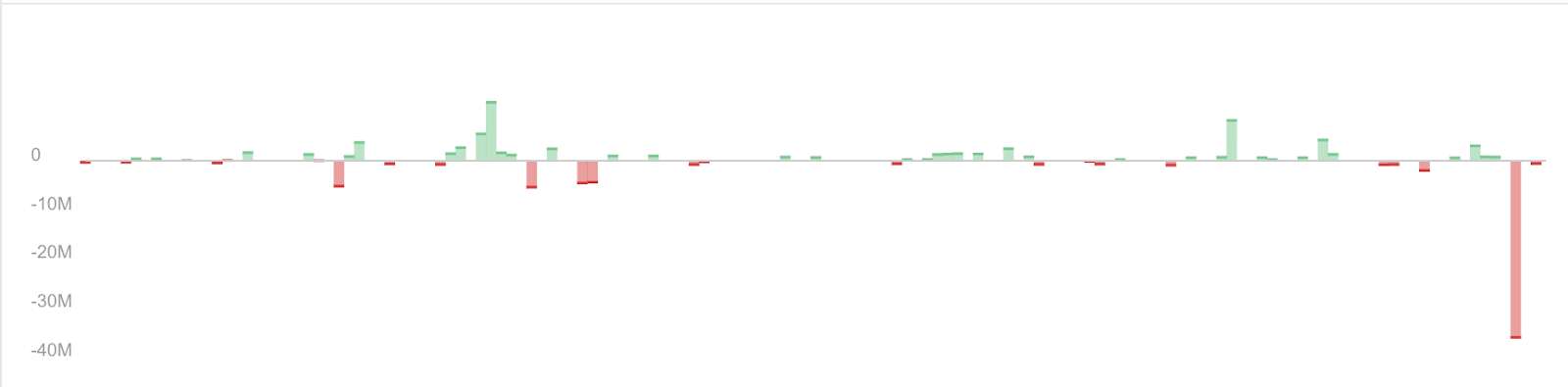
This chart shows daily flows for the 21Shares Solana staking ETP in 2024. $36 million in outflows came on Tuesday exactly a week ago. The product’s next-highest day of outflows amounted to $5.7 million on March 12.
For the most part, the product had seen strong inflows in 2024. It’s unclear who exactly was selling, and for what reason, but last week’s outflows undid quite a bit of progress for the fund.
— Jack Kubinec
The Pulse
It looks like getting a solana ETF across the finish line in Washington, DC might not be so easy.
Reporting from The Block indicates that the SEC isn’t exactly keen on letting the SOL-centric products fly, at least a first blush. Specifically, 19b-4s filed by exchanges seem to have been withdrawn. The S-1s, meanwhile, are still active.
As usual, we don’t know precisely why this happened. But we have the apparent what: both sides chatted and the SEC didn’t like what it heard.
To speculate for a moment, the reported rejections could reflect institutional reticence to approve more crypto ETFs. Or it’s something more specific to SOL. Remember, the SEC has presented SOL in past court filings as a crypto security when filing suit against exchanges operating in the US. The Block also reported that the SEC reiterated to potential ETF issuers that it hasn’t changed its stance on SOL potentially being a security.
Yes, the agency amended its complaint against Binance to remove the case-specific allegation against SOL (and others), but the cat’s kind of out of the bag. The agency, at some level, is iffy on Solana’s native asset.
Eric Balchunas, one of Bloomberg’s ETF whisperers, said this morning that there’s “a snowball’s chance in hell” that the SEC plays ball “unless there’s change in leadership.”
Reluctance or not, VanEck itself is still in the game, according to its head of digital asset research. This approach makes sense. After all, it wasn’t that long ago that the SEC was a bit iffy on bitcoin and ether ETFs and, well, you know how it went. I’m not saying the SEC will one day welcome SOL into the fold, but its collective mind has changed in the past.
Or maybe we’ve reached the limit on this particular administration’s crypto ETF appetite. Will Trump be collecting donation checks at Breakpoint this fall?
— Michael McSweeney
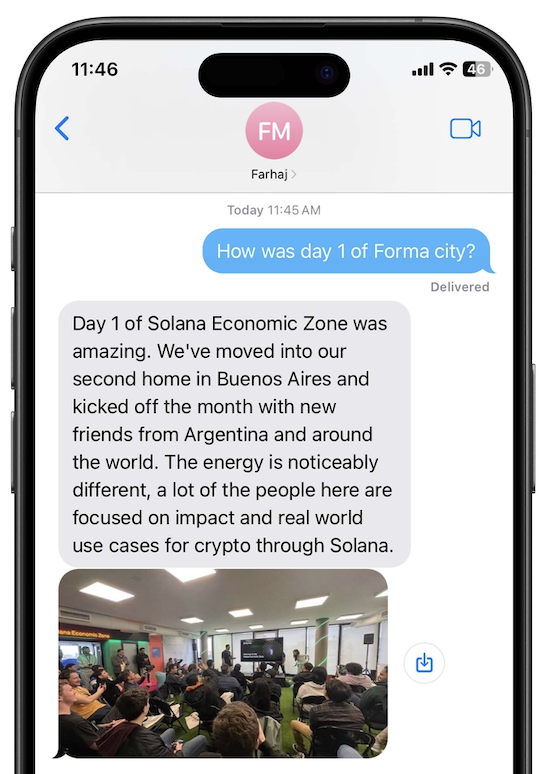
One Good DM
A message from Farhaj Mayan, co-founder of Forma:
Get the news in your inbox. Explore Blockworks newsletters:
- The Breakdown: Decoding crypto and the markets. Daily.
- 0xResearch: Alpha in your inbox. Think like an analyst.